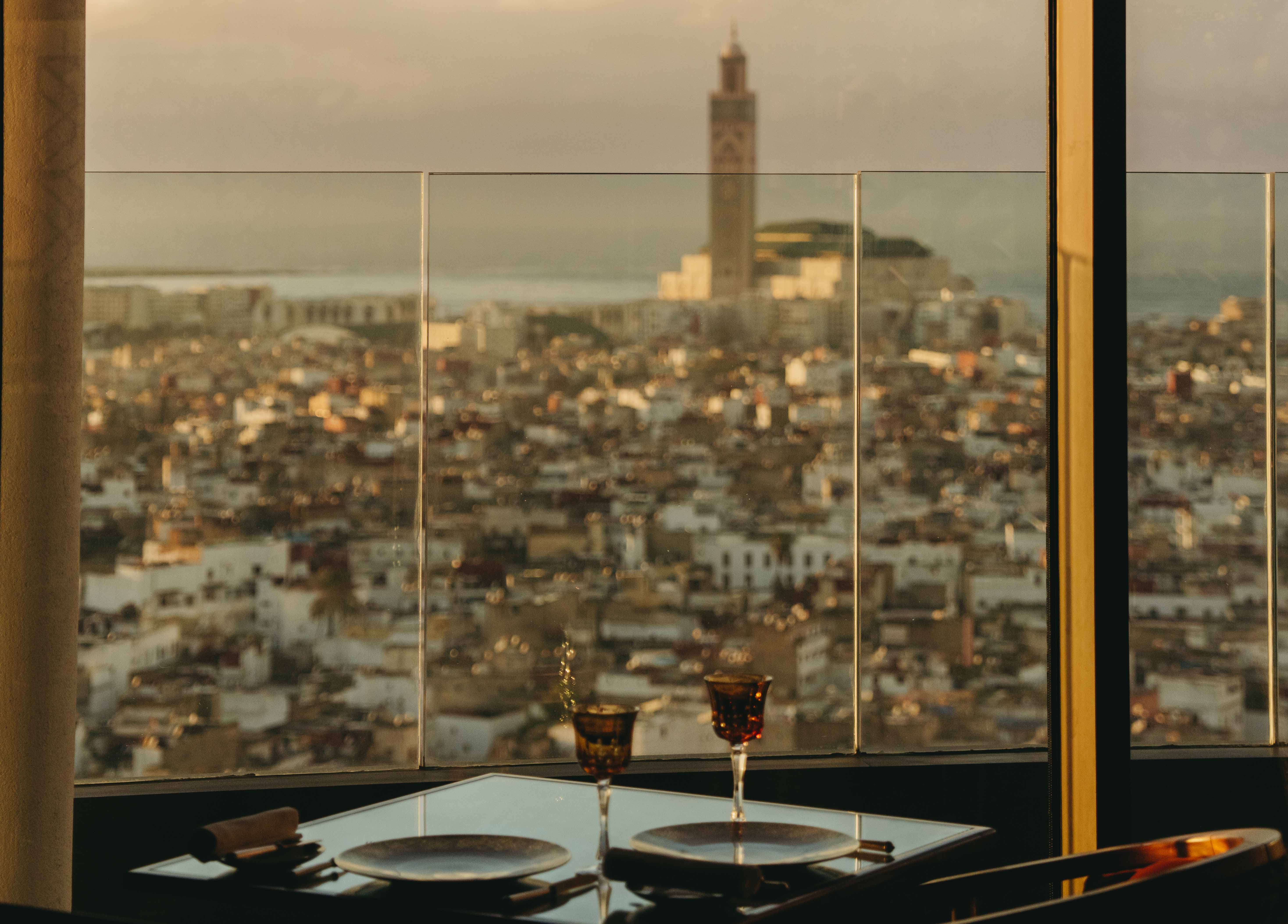
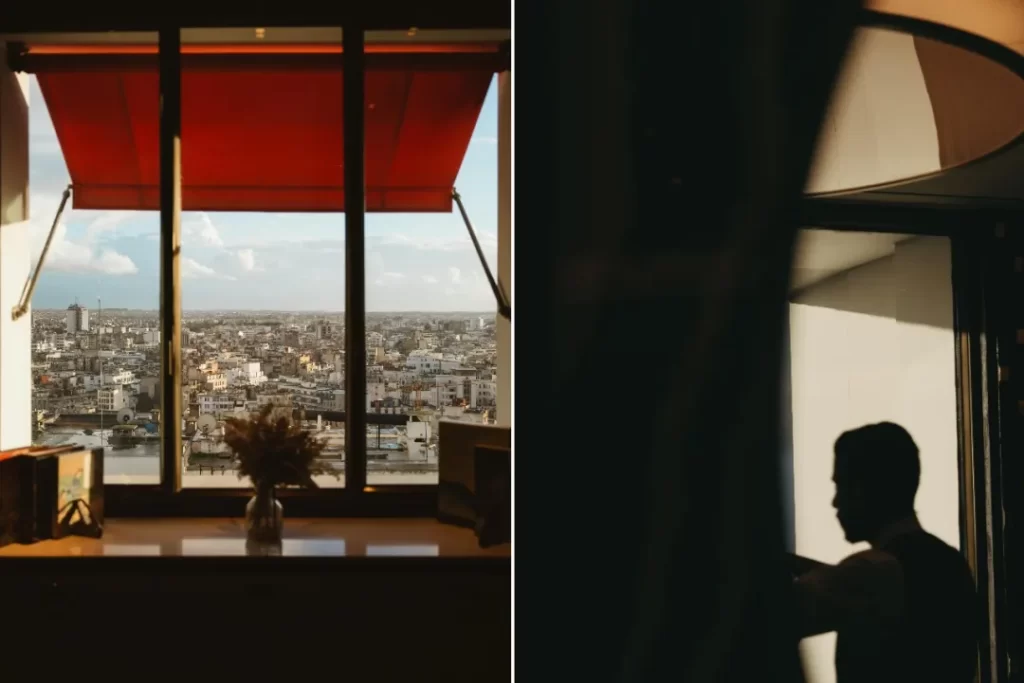
It is nine o’clock on a Casablanca morning. I am having breakfast on the twenty third floor of the Royal Mansour Hotel. Below my window, just across the street, lies the old Medina: roofs and narrow alleys spreading from the hotel’s feet toward the distant Atlantic. At the fragile line where land gives way to sea, the city’s most emblematic monument stands in quiet solitude, the Hassan II Mosque. The winter mist has not yet lifted, and the vast structure seems to rise from the ocean like something half imagined. Even from three kilometers away, its scale commands awe. The light feels spare, almost withdrawn, as if the world were folding in on itself beyond the horizon, while the call to prayer drifts between rooftops. The city seems held, briefly, in a tender and invisible embrace.
Behind me, beyond the glass, lies Casablanca’s “new” city: broad avenues, ordered grids, the measured confidence of modern planning. Yet here, the divide between old and new is not truly about time. The city that once carried the world’s expectations for the future saw its golden age end abruptly in the 1950s and 60s.
The future imagined for Casablanca by the outside world never fully arrived.
A quiet melancholy lingers in the streets, shaped by ambitions left unfinished, by futures once imagined but never claimed.
When I first came to Casablanca eight years ago, I wrote that it felt like a city suspended between the old world and the new. Returning now, I am staying at the Royal Mansour, precisely at that seam. Reborn within a heritage building that once embodied the city’s golden age of opulent living, the hotel feels, in both time and place, like a reply to history. It is a meditation on the Casablanca that might have been fully lived, and on how radiant that future was meant to be.
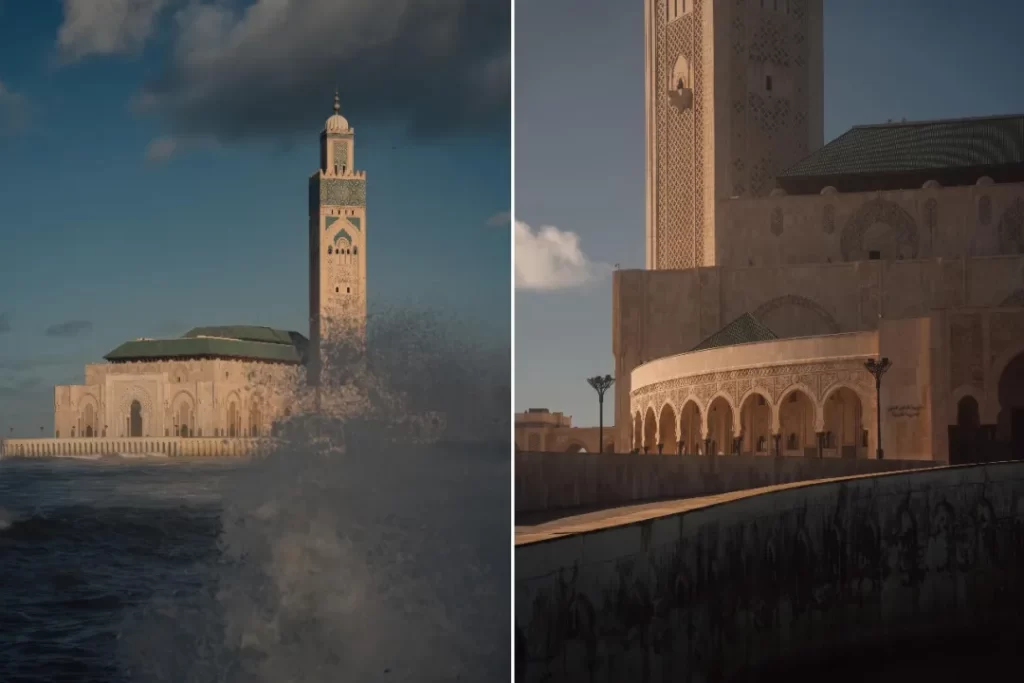
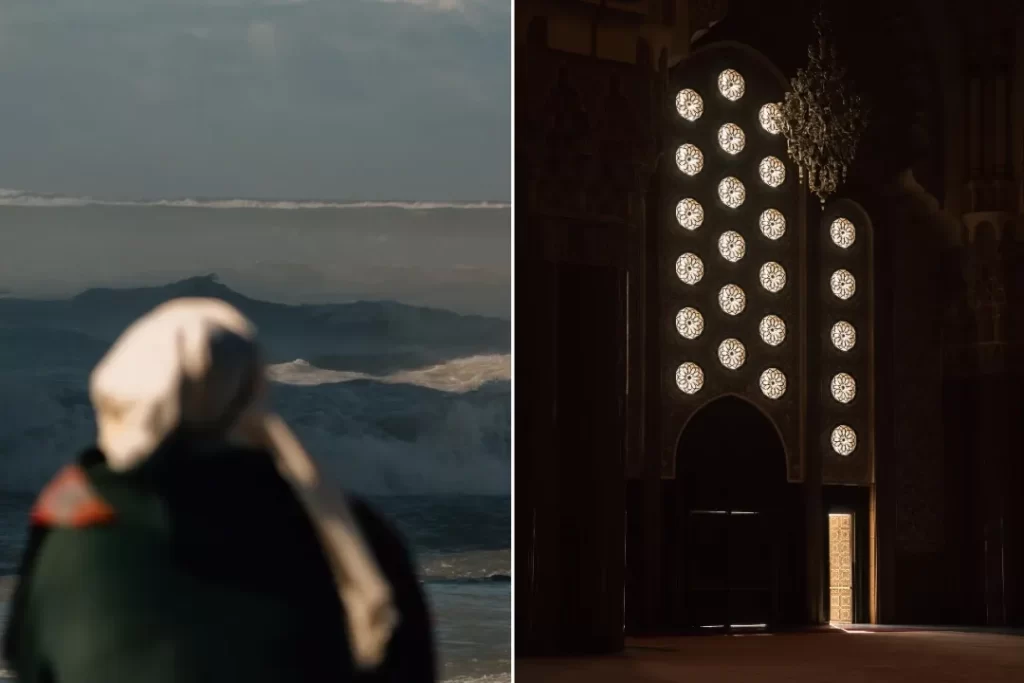
Returning to Casablanca’s Golden Age
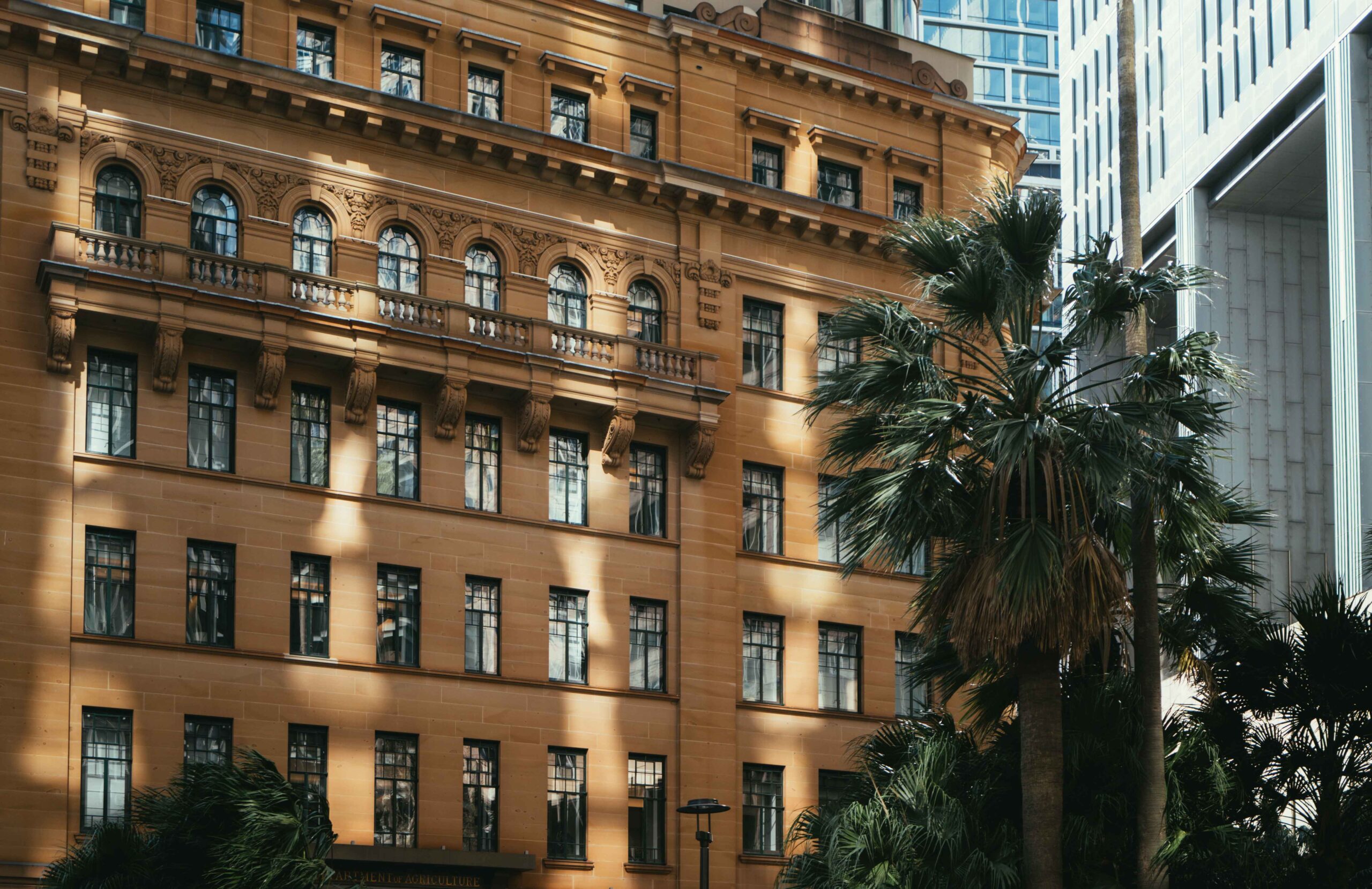
The hotel stands within the Art Deco district, which in itself feels like a discreet clue, guiding me back into another layer of Casablanca’s time. The building occupies the site of what was, in the 1950s, the city’s first luxury hotel. In those years, Casablanca carried an almost naive confidence in the future, a belief held as much in silence as in ambition. A product of modernism’s golden age, the structure became one of the clearest vessels of the city’s memory and continuing identity. After Casablanca passed through the brilliance of its high moment and the long weightlessness that followed, the Royal Mansour, through eight years of careful transformation, has returned this place to a state of quiet attention, reshaping it into one of Morocco’s most distinguished urban hotels.
Those familiar with the Royal Mansour will recognise its unhurried manner of telling stories. Conceived under the patronage of the Moroccan royal family, the brand is deeply rooted in the country’s history and craftsmanship. Within the language of contemporary luxury hospitality, it seeks to preserve a way of life that is quietly receding, the dignity of handwork, the hierarchy of space, and the slow authority of time itself. Whether in Marrakech or in Casablanca, its true concern lies in inhabiting that fragile middle ground between tradition and modernity, holding the tension rather than resolving it, allowing each place to speak in its own measured voice.
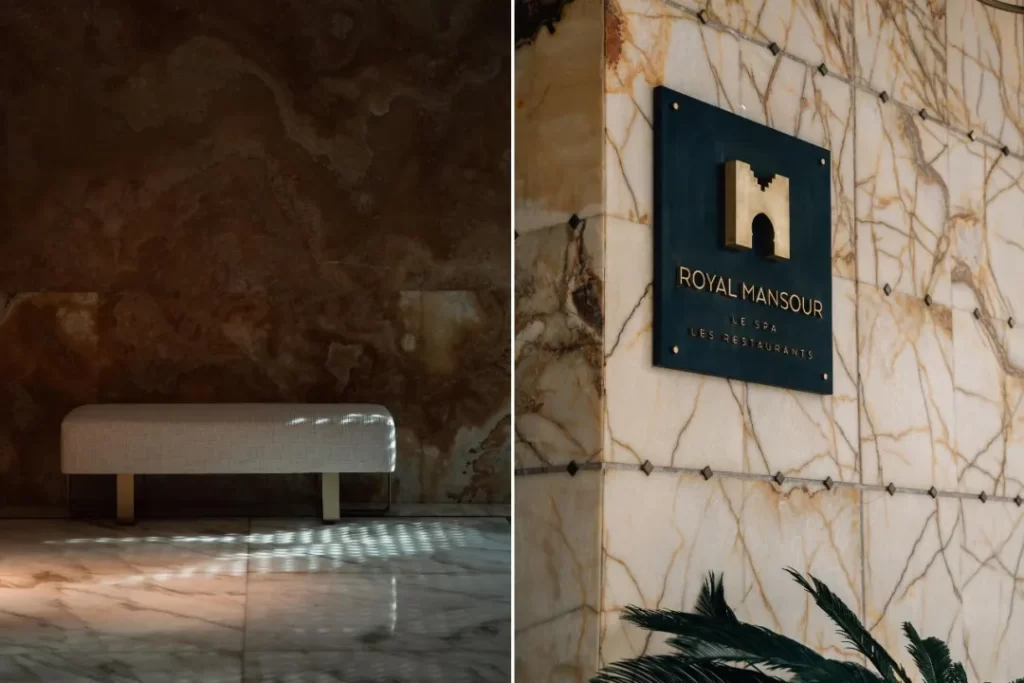
Each day, crossing the movement of Mohammed V Boulevard and stepping into a grove of palm trees before returning to the Royal Mansour, I feel a gentle dislocation, as though I were not entering a hotel but crossing a threshold in time. The entrance still follows its original 1950s design. Marble columns and floors carry a composed gravity, the residue of Casablanca’s former confidence and ambition. When the doorman lowers his voice to say, “Welcome home, sir,” the words seem addressed not only to me, but to a version of the city itself, as if both of us were being briefly acknowledged for having endured.
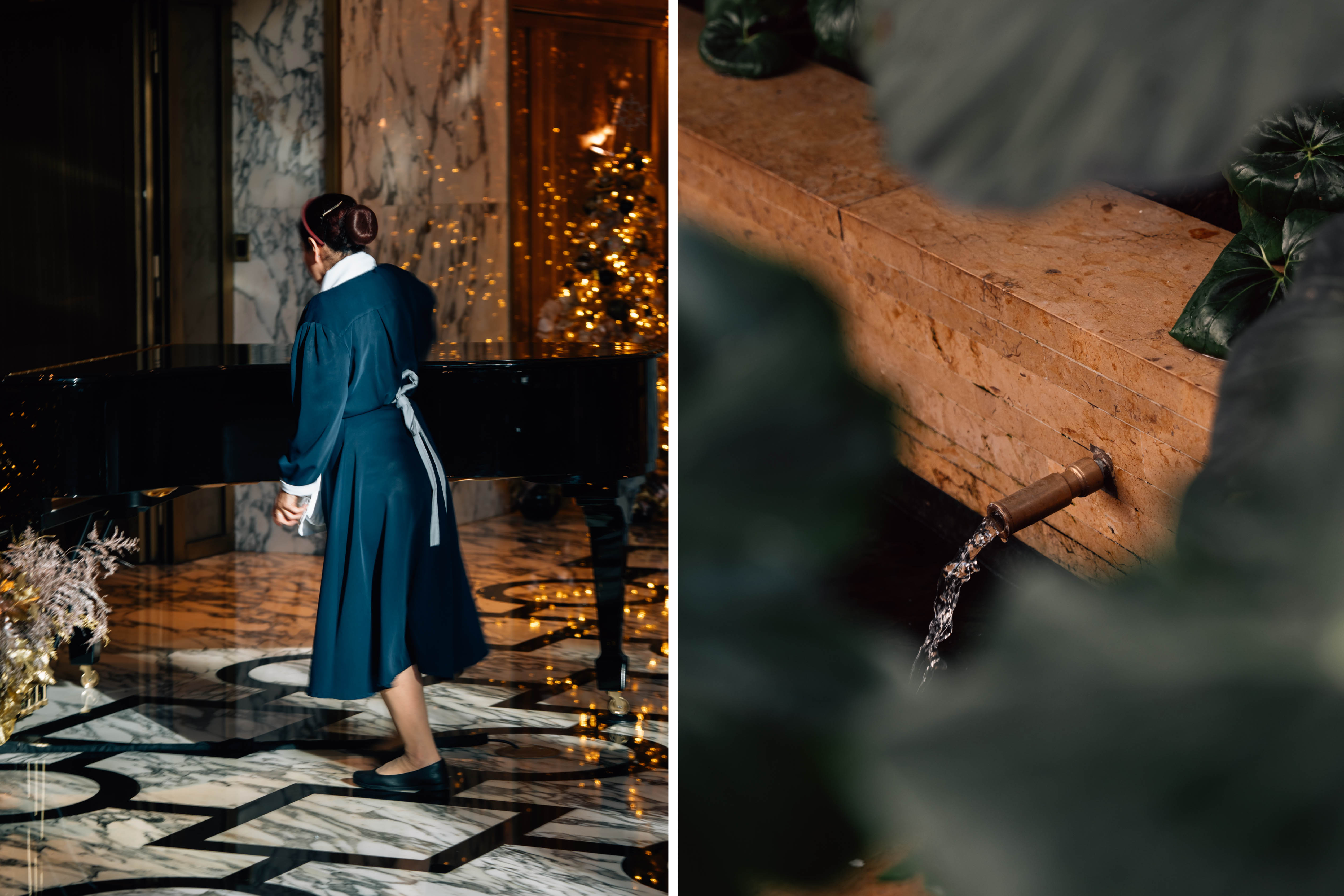
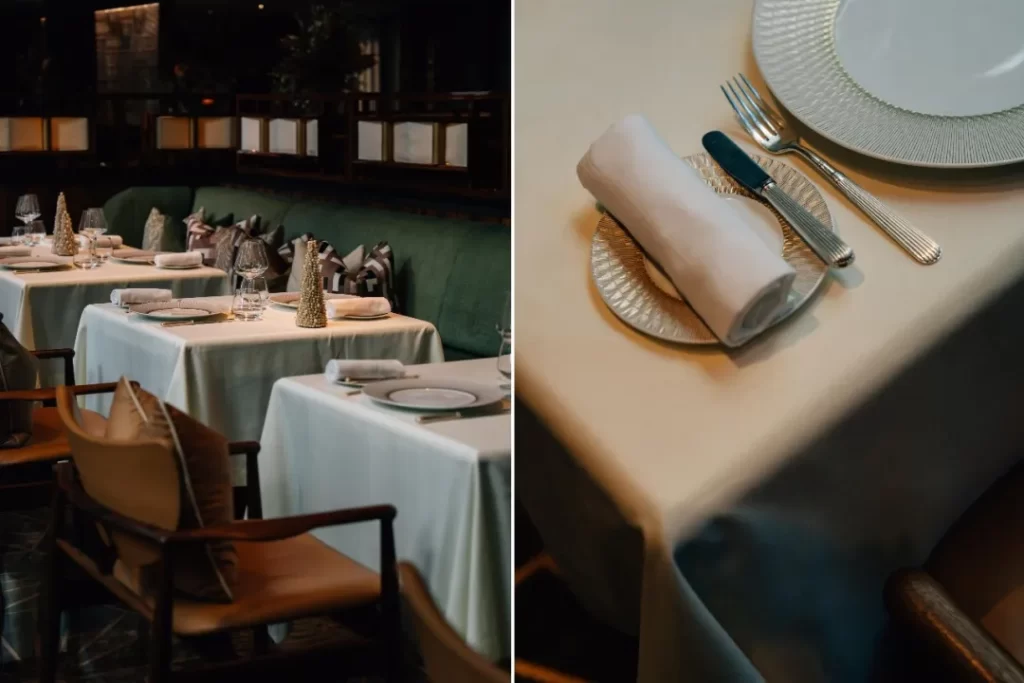
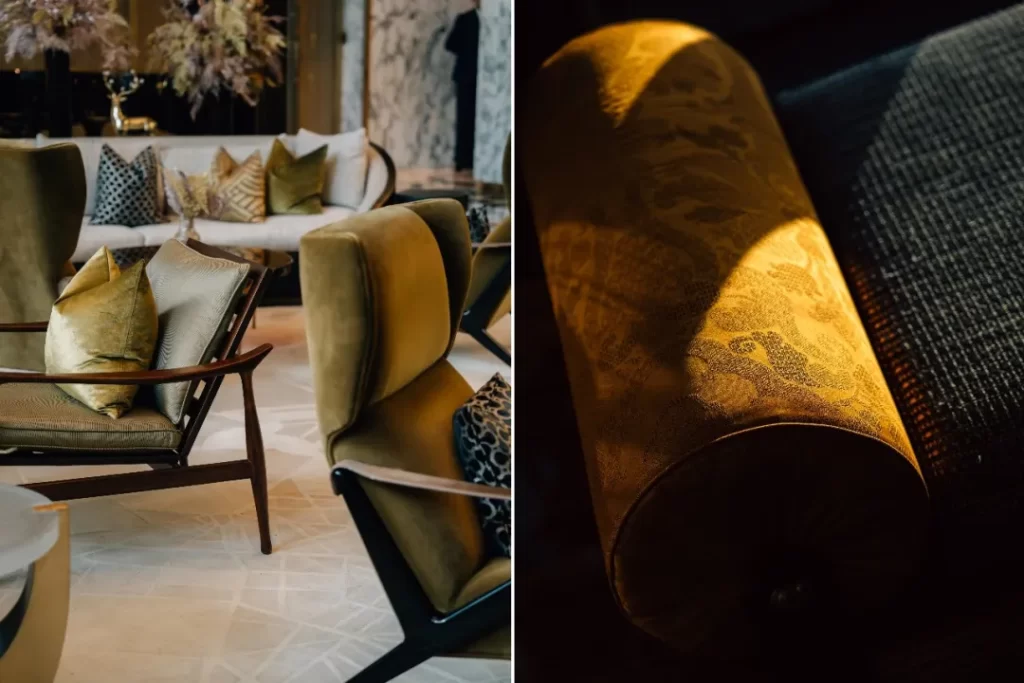
Standing in the central courtyard, I often forget that I am in Morocco. What unfolds before me feels closer to New York, Paris, or London, or perhaps to a remembered idea of the international city, shaped less by geography than by longing. Soft marble stretches across nearly all the public spaces, while light descends from above in slow, shifting patterns. Staff members, dressed in variations of 1950s style uniforms, move quietly through the space with restraint and care. At certain moments, there is the faint presence of jazz in the air, not as sound but as memory, like a private assurance that somewhere in the past, things once felt possible.
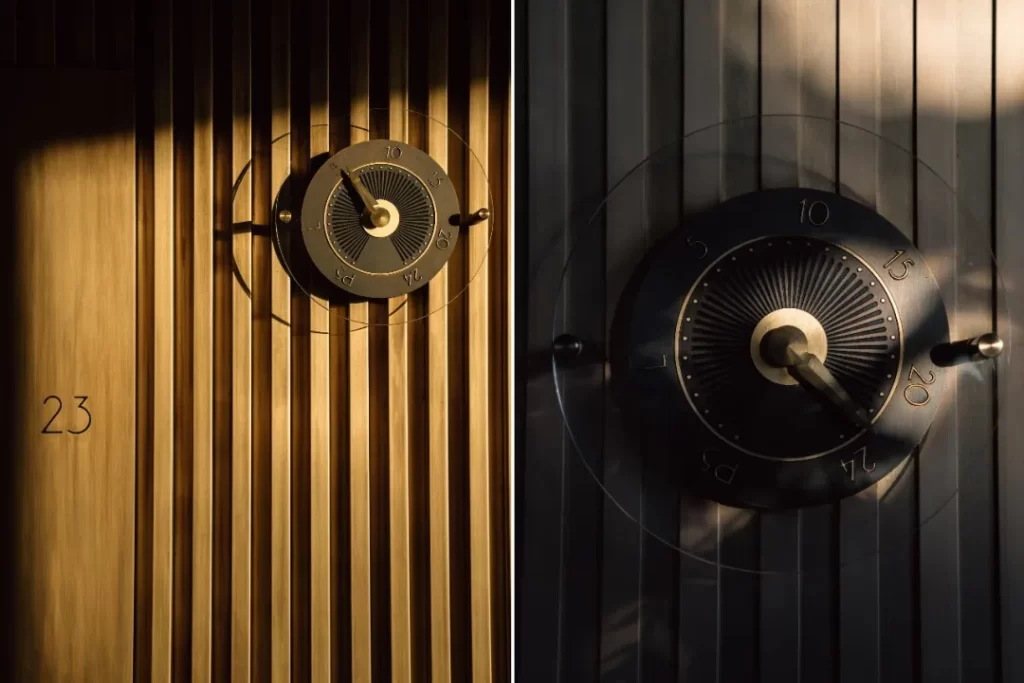
Even the journey by lift to the guestrooms and rooftop becomes an inward act of looking back at Casablanca. In fidelity to the period, the elevators are clad in marble and brass, deliberately free of digital displays. Floor indicators appear as old fashioned dials, their needles advancing with deliberate slowness. When the doors open, a clear chime sounds, carrying the faint echo of glasses touching at a ballroom dance that has already ended. The panoramic elevator on the eastern side preserves a full view of the city. As it ascends, the outlines of Casablanca’s newer quarters gradually unfold, until the whole city reveals itself at the top, distant and hushed. It feels like a final gesture of remembrance, offered to the Casablanca that once believed in modernity, and in a future that now exists only as an idea carefully held.
Yet the very act of calling any period a golden age implies that we are already standing among its ruins.
Present day Casablanca, as the economic lifeline of Morocco’s modernisation, bears little resemblance to the glamour and allure of the 1920s. Founded originally by the Portuguese, the city did not begin to grow into its present scale until the arrival of the French in the early twentieth century. Its architecture is a collage of European and North African echoes. Art Deco, Art Nouveau, Neo Moorish, Modernist and Brutalist buildings stand side by side along the same streets. As the architectural language that most forcefully embodied power and modernity within the French colonial system, Art Deco once asserted itself here with almost unabashed confidence. Even the city’s planning spoke carefully of this self assurance, luxurious, seductive, emphatic.
When the French departed in the late 1950s, this grand vision seemed suddenly drained of substance, and the city began, little by little, to dim. That slow decline was not Casablanca’s own failing; it felt instead like a fragment of history left behind, gradually collapsing under its own weight.
Still, I have always believed that our fascination with a city’s former elegance often arises more from ourselves than from the city itself. We habitually mistake charm for external beauty, memory for the texture of reality, rather like trying to discern a city’s truth through an inverted telescope.
Perhaps for this reason, Casablanca asks of us a particular kind of patience, a willingness to slow down, to draw close to the details that lie beneath the surface.
The Royal Mansour Casablanca has gathered precisely these details of elegance into its interior, with great care. From the outside alone, it appears not so different from the newer buildings around it, simply taller, more orderly, more immaculate. Yet once inside, even in a fleeting moment, in some quiet corner detail, one can glimpse the city’s former glory, its hopes, and its pride.
A city’s true soul never disappears; it is merely softened, its voice lowered by time.
An Imagination of the Future
Whenever I walk through the streets of Casablanca, my attention is inevitably drawn to the slightly faded Art Deco façades.
Curved staircases, metal doors etched with geometric patterns rendered with near stubborn precision, fan shaped window arches, striped awnings, green ceramic tiles blooming beneath cascades of bougainvillea—within these details lie both craftsmanship and fatigue, both past pride and the gentleness worn smooth by time. As I study these façades, I often feel a curious sensation, as if Casablanca’s shattered mosaic were quietly reassembling itself, piece by piece.
Art Deco was never the invention of a single city. It emerged almost simultaneously in Paris, New York, Shanghai, Mumbai, Casablanca. This was no coincidence, but a resonance of its era. It marked the first moment after the First World War when the world arrived at a shared vision of what future life might look like. Cities were thrust onto the foreground of history, poised to become humanity’s dominant mode of settlement, and Art Deco became the visual expression of this acceleration of time.
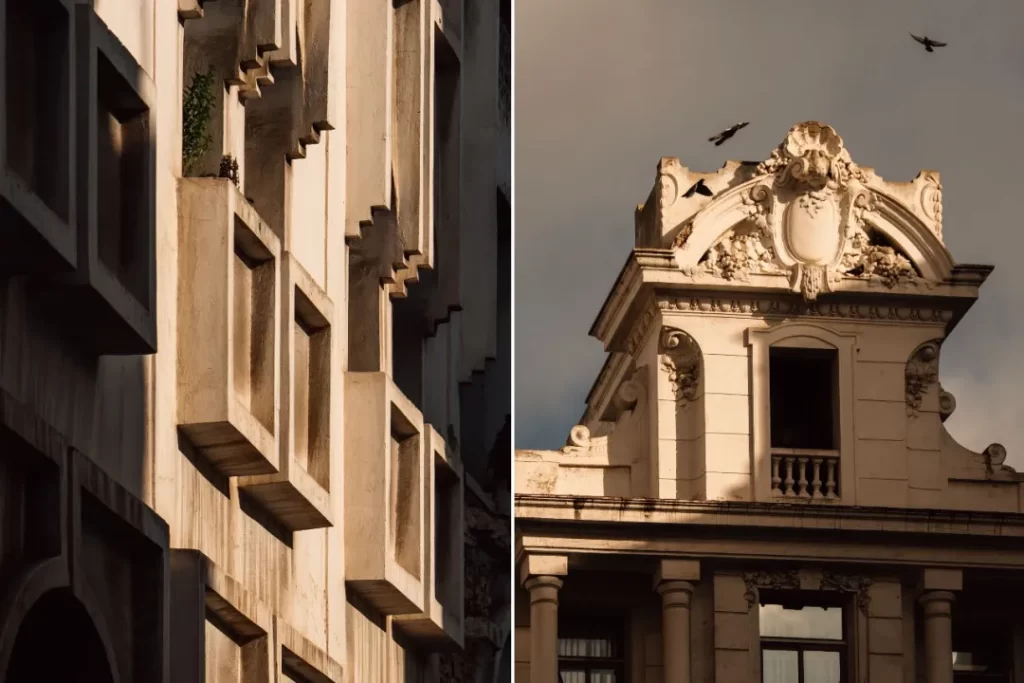
If Parisian Art Deco belongs to interiors and to the night, then Casablanca’s Art Deco belongs to sunlight, shadow, and sea air. The fierce North African light compelled architects to rethink ornament as something that must cast shadows, something capable of conversing with light itself. Façades no longer relied solely on colour, but shaped layers of light and shade through relief, angles, and rhythm. And so, when I look at Casablanca’s Art Deco buildings, even now faded and peeling, they remain extraordinarily captivating at dusk. For their true material was never stone, but light itself.
As a core element of golden age life, Art Deco in contemporary Casablanca has begun to assume the role of a narrative device for the city. Perhaps this marks the first time that a city once thrust overnight onto the international stage has been asked, in its own lifetime, to tell a story that truly belongs to itself.
This memory of urban rebirth has also quietly become the deeper context behind the Royal Mansour’s extensive use of Art Deco in its design.
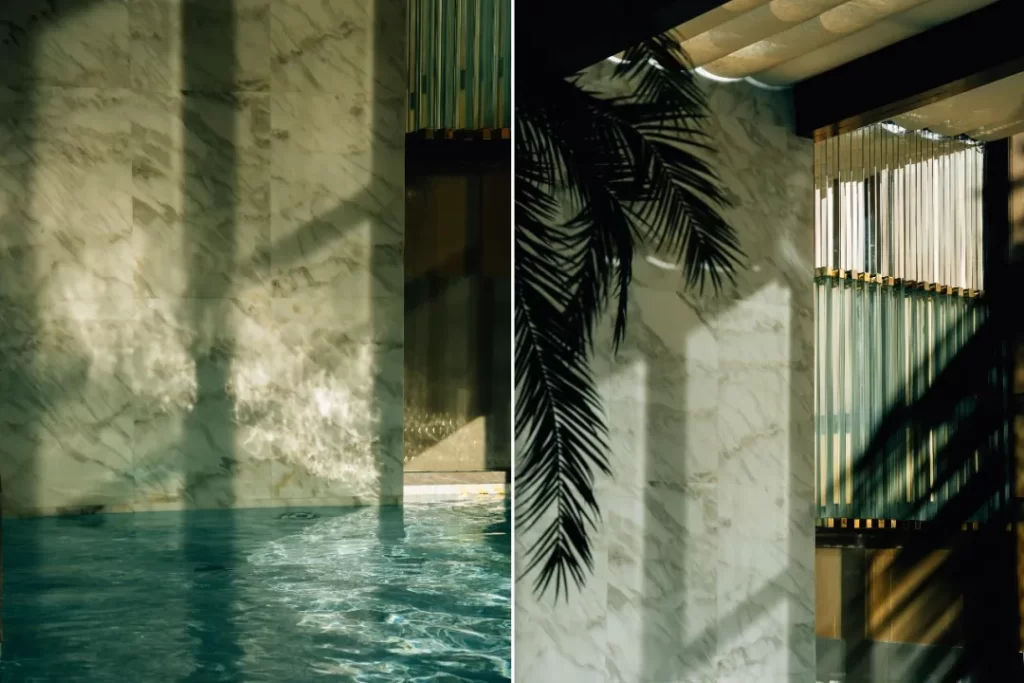
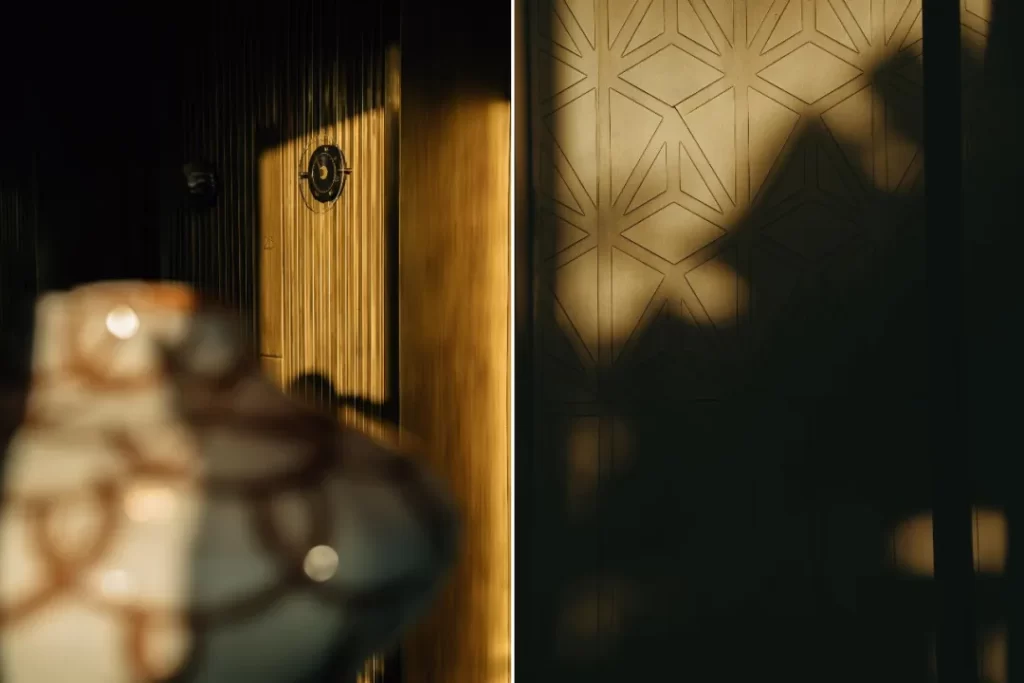
The hotel stands at the very heart of Casablanca’s most concentrated Art Deco quarter. In its proportions and massing, the building continues the logic of the original structure, allowing it to resonate with its surroundings rather than asserting itself as a deliberately signposted new landmark. Once inside, the familiar vocabulary of Art Deco begins to surface.
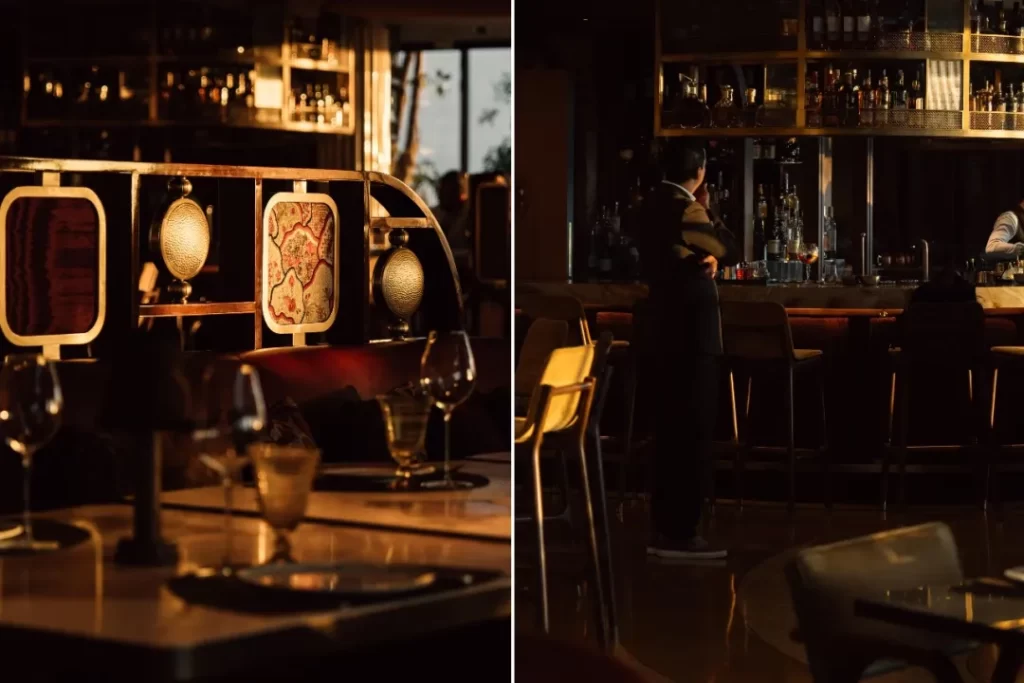
At the entrance, an installation unfolds from a bird’s eye perspective. Through layered glass and brass, the city is reimagined as a narrative of modern space. Carpets and walls rely heavily on repeated geometric motifs to establish a visual rhythm. Corridors, doorframes, and rooms are divided through symmetry, preserving the comfortable scale of contemporary living while echoing Art Deco’s voice in the present tense. Throughout the hotel, marble, brass, mirrors, and polished metals appear in abundance, materials emblematic of Art Deco from the 1920s to the 1950s. In recent decades, many of Casablanca’s Art Deco buildings have been demolished, severing entire strands of the city’s modernist memory. Against this backdrop, the Royal Mansour has chosen a different path, one of respect for Casablanca’s original modern tradition. Art Deco details are allowed to drift within the building’s architectural language rather than being ostentatiously applied to its surface, letting history become part of the spatial experience itself.
This restrained and measured approach aligns precisely with Casablanca’s long standing, understated character.
On winter afternoons, walking through the streets, Casablanca’s Art Deco carries an unmistakable air of melancholy.
This feeling has little to do with decay and everything to do with time. These buildings were born in an era that believed the future could be planned, yet that future never fully arrived.
In the early twentieth century, Casablanca did not bear the weight of deep history in the way Istanbul or Cairo did. Instead, it was a modern city written rapidly onto something close to a blank page. The French colonial administration did not intend it to become a natural extension of Morocco’s traditional urban fabric; rather, it was conceived as a functional, orderly, and governable modern port city. Casablanca’s modernity, therefore, was not incremental but injected all at once. It defied the logic of organic urban evolution, bypassing the hesitations, compromises, and self corrections through which cities usually come into being.
Art Deco proved to be the most fitting visual language for such an injection. It required no historical legitimacy, only efficiency, clarity, and symbolism. Poised between order and ornament, it was perfectly suited to the public face of a colonial city.
Casablanca’s predicament, however, lies in the fact that this Art Deco urban order was originally designed for a limited population, stable social strata, and slow growth. Once these conditions disappeared, the city lost its right to continue writing its own history. The buildings became spaces still in use, yet no longer supported by the worldview that had produced them. This is why they feel so melancholic today, not because they are ruined, but because they belong to a logic of time that has already ended.
Casablanca’s Art Deco may be the world’s first and perhaps last proof of confidence in a future that could be planned in its entirety.
Here, the future was once imagined as a condition that could be designed, replicated, and promoted.
The world we inhabit today no longer believes this.
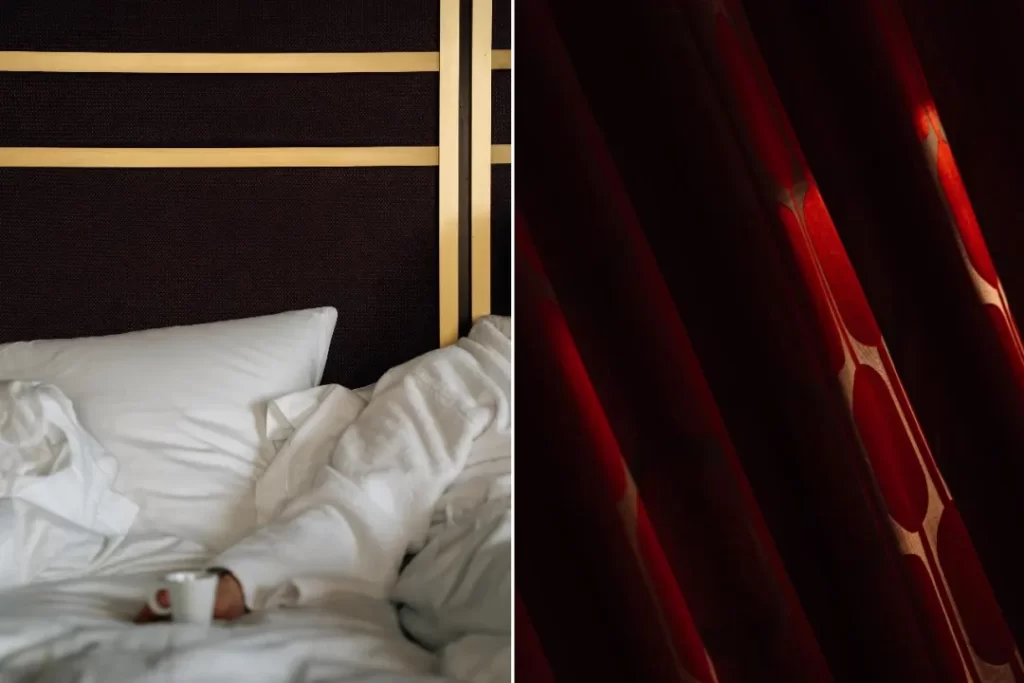
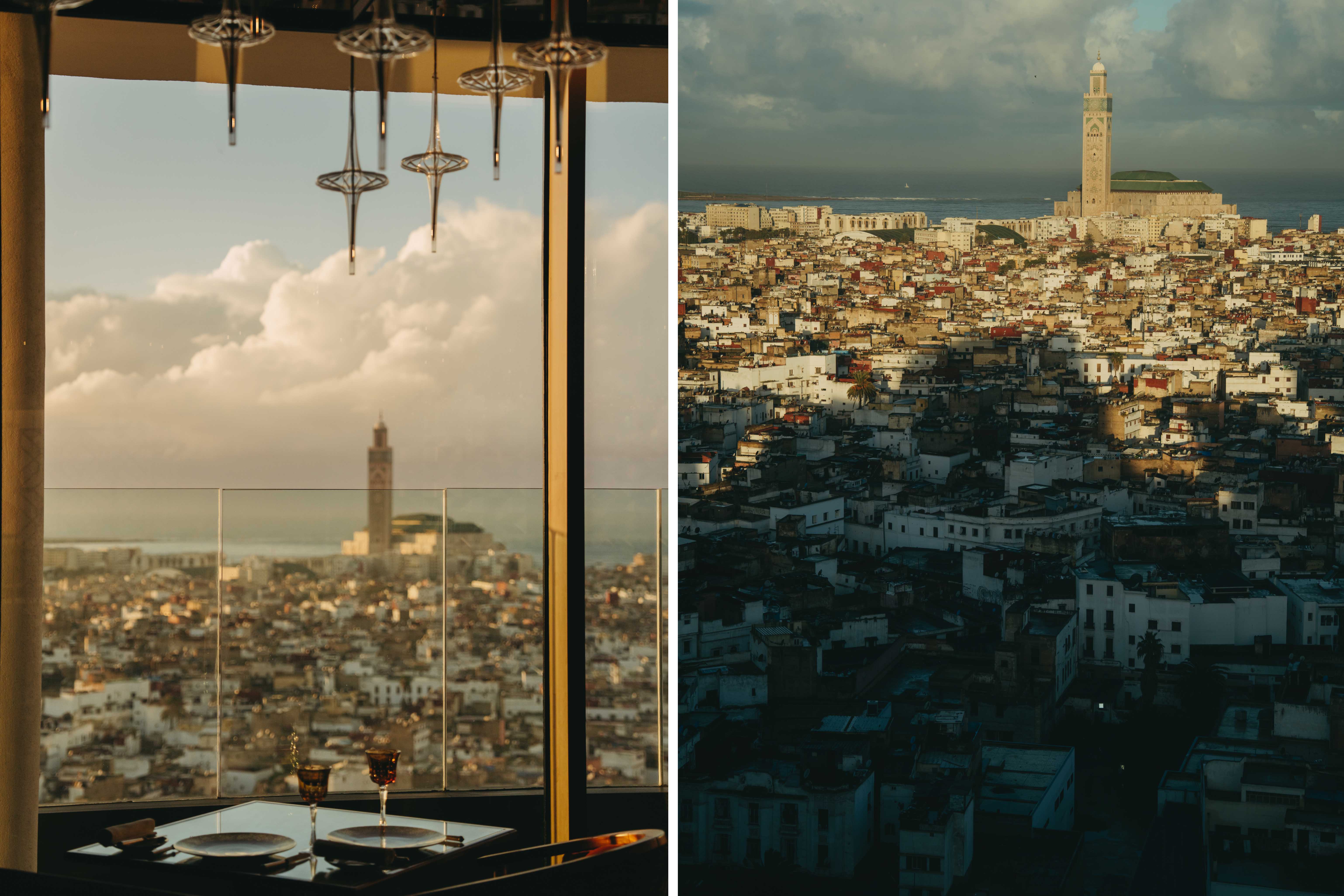
Casablanca learned how to survive quietly during the Cold War, how to be reinterpreted in the age of globalisation. Yet its architecture and living spaces have silently preserved questions that predate us, questions of order, of time, and of humanity’s once unshakable faith in a certain vision of future life.
In past journeys, I have often written about a city’s golden age and its slightly fatigued present. Eight years ago, in Casablanca, this temporal dissonance felt especially pronounced. On this return visit, however, the Royal Mansour has offered me a new way of seeing the city’s vitality.
Casablanca feels alive again, not because it has recovered something lost, but because it has reclaimed its identity, its memory, and its pride. The city’s present begins to overlap with personal memory. Those who live here are quietly, without haste or spectacle, rebuilding an order of their own and nurturing the seeds of Casablanca’s next golden age.
A city’s golden age is never found in the height of its domes or the scale of its streets. It resides instead in the small places where life is taken seriously, and in the private memories the city has once held. Collective splendour only exists insofar as it is felt by individuals. And the histories truly worth remembering are often hidden in details. A city does not begin to age when its buildings collapse, but when everyday life starts to be treated lightly.
So long as Casablanca’s Art Deco continues to be looked at, to be cherished in the light of dusk, the city’s glory will not drift far away. As long as life within it unfolds slowly yet with conviction, its imagination of the future will endure.