Even on Corfu, an island that always seems capable of producing surprises, the scene before me still felt almost too perfect.
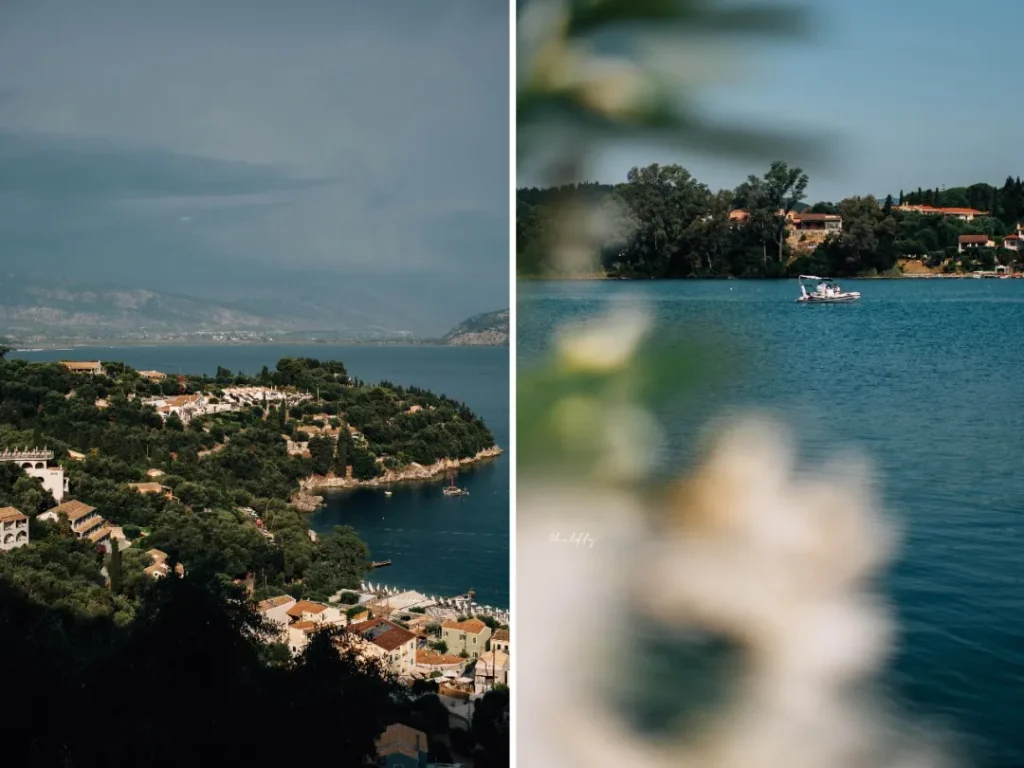
I was lying on a beach of dark pebbles in Kalami Bay. Low hills surrounded the bay, their slopes stretching into the distance, where olive trees sheltered one another among their grey green leaves. The sound of cicadas came in waves from deep within the woods, occasionally scattered by the sea breeze. The air was filled with the mingled scents of lemon, cypress and wildflowers, along with the voices of a family talking beneath an old olive tree not far away.
An Ionian summer needs nothing more. Sunlight, vegetation, seawater, the languor of the afternoon, and the almost careless attitude of the local people towards time are already enough to form a complete vision of Mediterranean life.
The sea was so clear that it seemed almost transparent. Sunlight fell upon the surface and broke with the waves into fragments of orange light, shimmering all the way to the white house a short distance to my right. It stood where the pine woods met the hillside, with several private yachts moored in front. From a distance, it looked like an entirely ordinary Corfiot house. Yet because an English family arrived here in the nineteen thirties, it was given a different fate over the course of the century that followed.
A hundred years ago, this was still a remote bay in the north of Corfu. Kalami and the surrounding villages were separated from Corfu Old Town by long and winding mountain roads, and local life depended largely on fishing, sheep herding and the cultivation of olives. Fishermen dried their nets and repaired their boats in the bay, while olive trees stretched from the hills almost to the sea. Tourism in the modern sense had not yet arrived, and the island had not yet been transformed into the Mediterranean holiday destination we know today. In a sense, it was precisely this remoteness that allowed Kalami Bay to preserve one of the oldest and most characteristic landscapes of Corfu, a landscape in which an inherited pastoral world and modern life still seem to meet naturally.
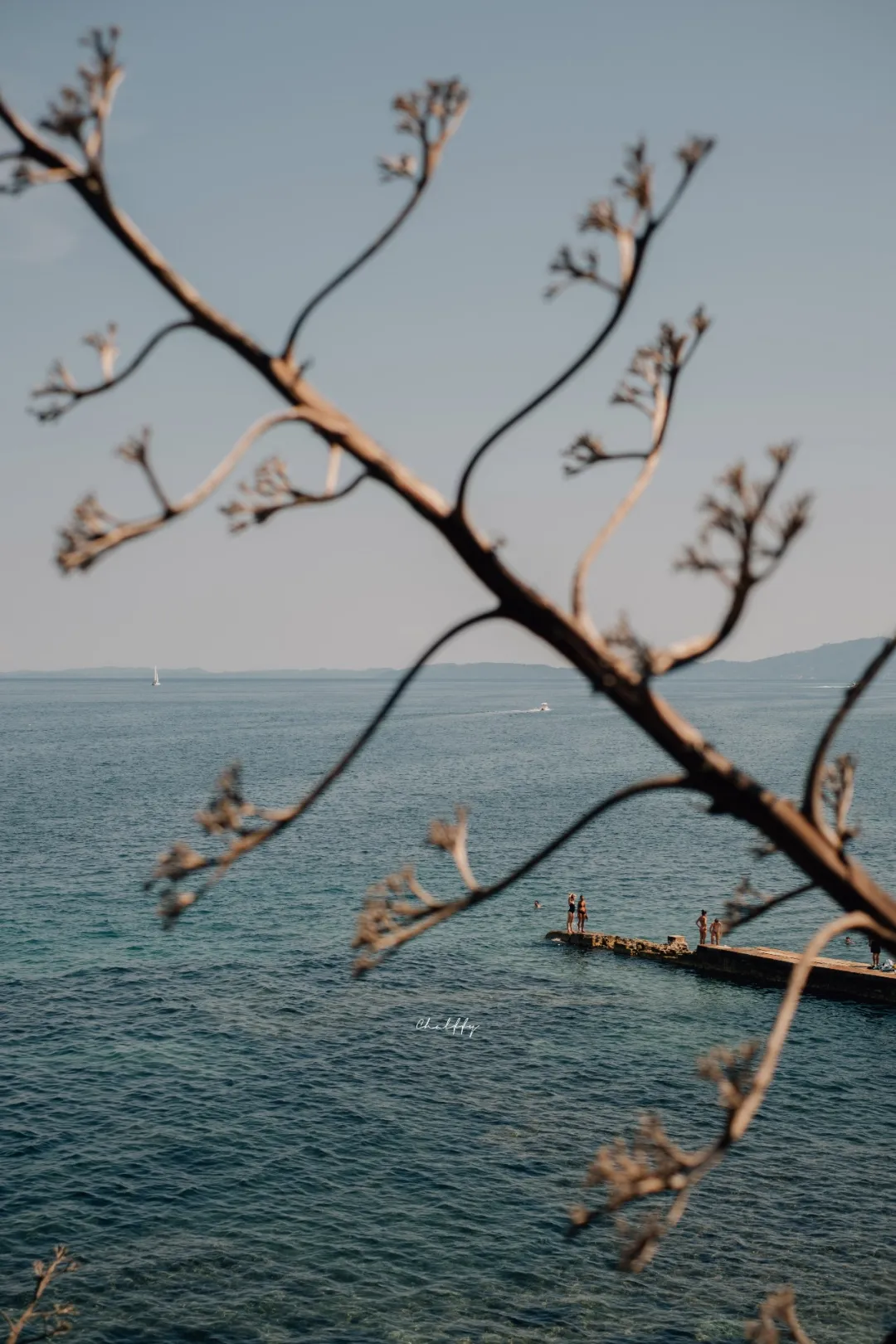
The place became known to the wider world because of the Durrell family, who arrived from Britain in 1935. Troubled by their modest circumstances and the long grey rains of England, they moved together to this sunny island in the Ionian Sea. Far from the old town, they rented at a modest price a fisherman’s house in Kalami Bay, which Lawrence Durrell would call the White House. They lived here for four years, until the war forced them to leave.
From where I lay, the two storey white house looked like a die resting upon the rocks, rocks that had already been made ancient and solemn by the scars of wind and sea. Behind the house, the hillside rose towards the sky, while cypresses and olive trees leaned down from above, almost suspended over the room where Lawrence Durrell sat and wrote.
When Henry Miller came to Corfu in 1939, he too stayed at the White House. He swam and went boating with the Durrells, moving between the coves around Kalami. The Corfu he wrote about was made of people, land and the sensation of the body returning to sunlight and seawater. He was rather critical of Corfu Old Town, but had a greater affection for the northern countryside around Kalami Bay, for its roughness, its earthiness and its imperfections.
The Durrells have long since left, and the White House no longer belongs to them. It has become a well known restaurant on Corfu. In the afternoons, visitors drive here from the old town, while others arrive directly from the sea in private yachts. Whichever way one chooses, getting here still requires a little effort. The narrow mountain road winds through the olive groves, while the route by sea must pass around numerous bays and headlands.
It is still not a place one simply happens to pass through. In this sense, something of the rhythm of the Durrells’ life here has survived. To come here is, in itself, a form of leaving.
On my first visit to Corfu, I was completely immersed in the literary world that the Durrell brothers and Henry Miller had left behind on the island. I walked through the old town again and again, searching the Venetian streets for traces of their books, trying to recognise in the sea, the lanes and the olive groves before me the island they had described. At the time, Corfu seemed to me to possess only beauty, a beauty that existed in imagination, lived in the memories of others, and had little to do with the life of the island as it was actually being lived.
Or perhaps Corfu seemed beautiful the first time precisely because I knew nothing about it.
When I returned after a long absence, that earlier haze of imagination and memory had faded, and life on the island had become more tangible. Places I once thought I knew now belonged only to memory, gradually separating themselves from the Corfu before my eyes. I began to notice the lives of the Corfiots themselves. How does an island grow old? How does it remember its history and former splendour, and how does it slowly forget them? Among the three thousand islands of Greece, amid the currents of modern life, what allows it to preserve its own character and its connection to the land?
Every afternoon at five, I would walk along the edge of the old town towards Faliraki Beach to the north. In my blurred memory, Corfu seemed to consist of almost nothing but two bays, Faliraki on this side and Mon Repos across the water.
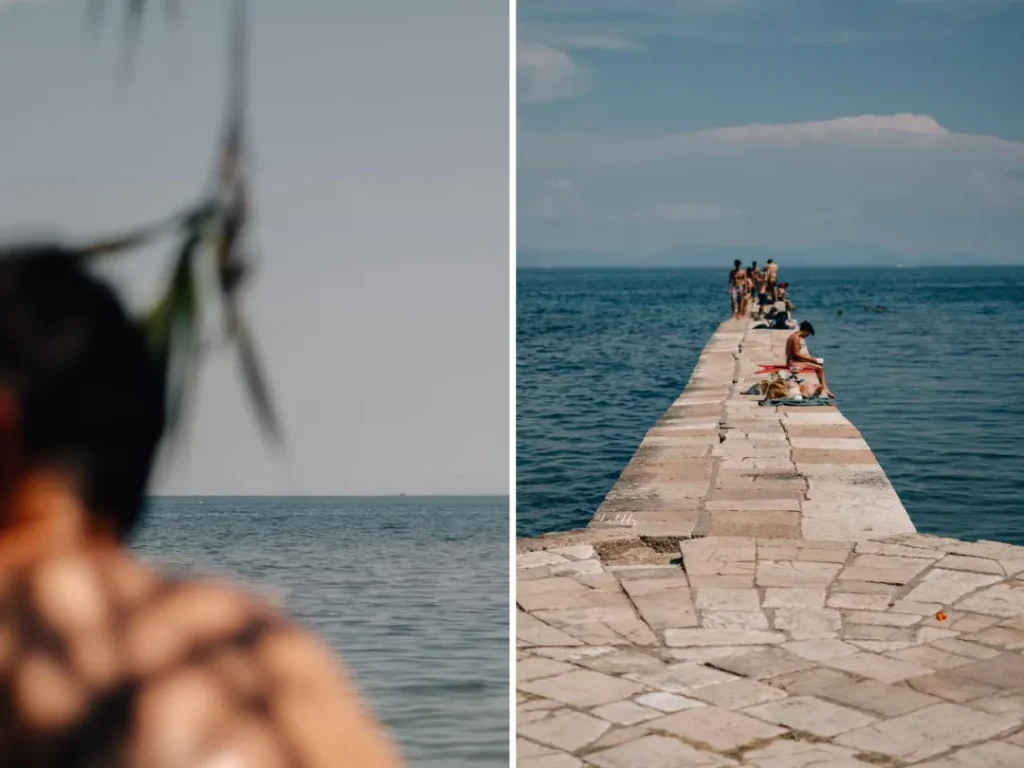
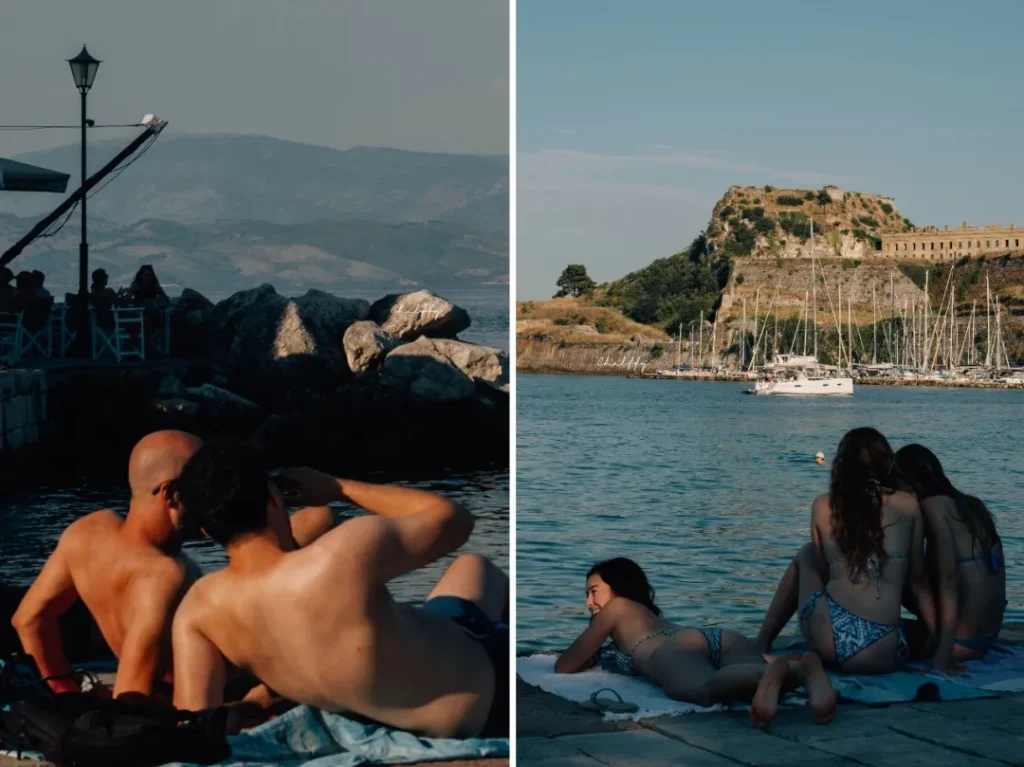
Faliraki lies beneath the fortress and walls of the old town. It is little more than a tiny stone paved square, a restaurant, a café, and a few steps leading down into the sea. When the fierce light of noon begins to soften, Corfiots come here from every direction. In most parts of the world, evening means the end of the day. Here, it feels more like an interval, a moment of restoration that the people of Corfu have kept for themselves.
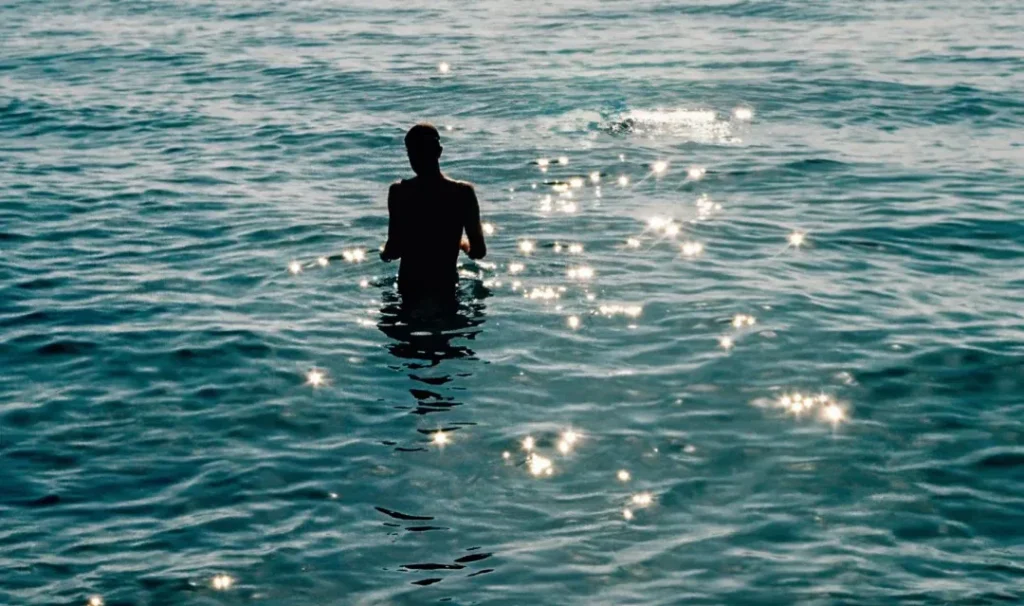
Even today, local people believe that the water between Faliraki and Mon Repos possesses an almost miraculous power to heal. The sea deepens gradually, and the stone square is already filled with people lying in the sun. A flight of steps leads down into the water. In the evening, the Ionian Sea is as calm as a mirror, although that mirror is crowded with men, women and children of all ages bathing in the water.
Faliraki lies close against the old town, yet it is one of the few places in Corfu Town beyond the Venetian walls. Walking from the Campiello quarter towards the sea, one passes through the Gate of Saint Nicholas. During Venetian rule, this was an important passage from the old town to the sea, a route from a heavily fortified inner city into the open world of water, harbours and shipping lanes. Seen from the balconies beside Liston Square, Faliraki therefore has a peculiar sense of space. It is not a beach that grew beside an ancient coastal town. It is a door that an ancient city has opened towards the sea.
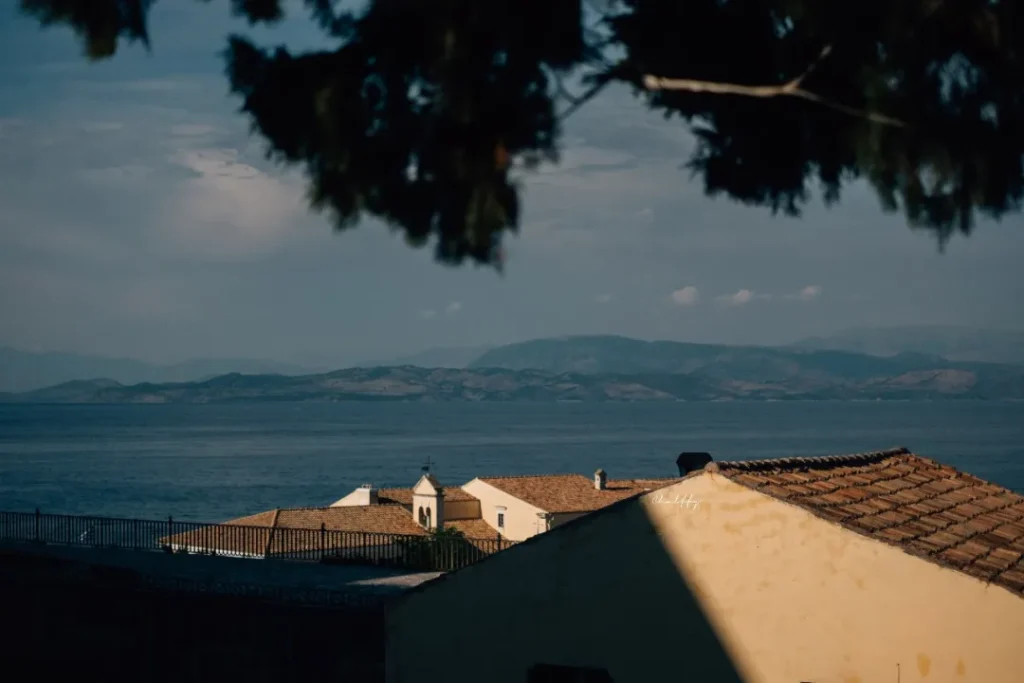
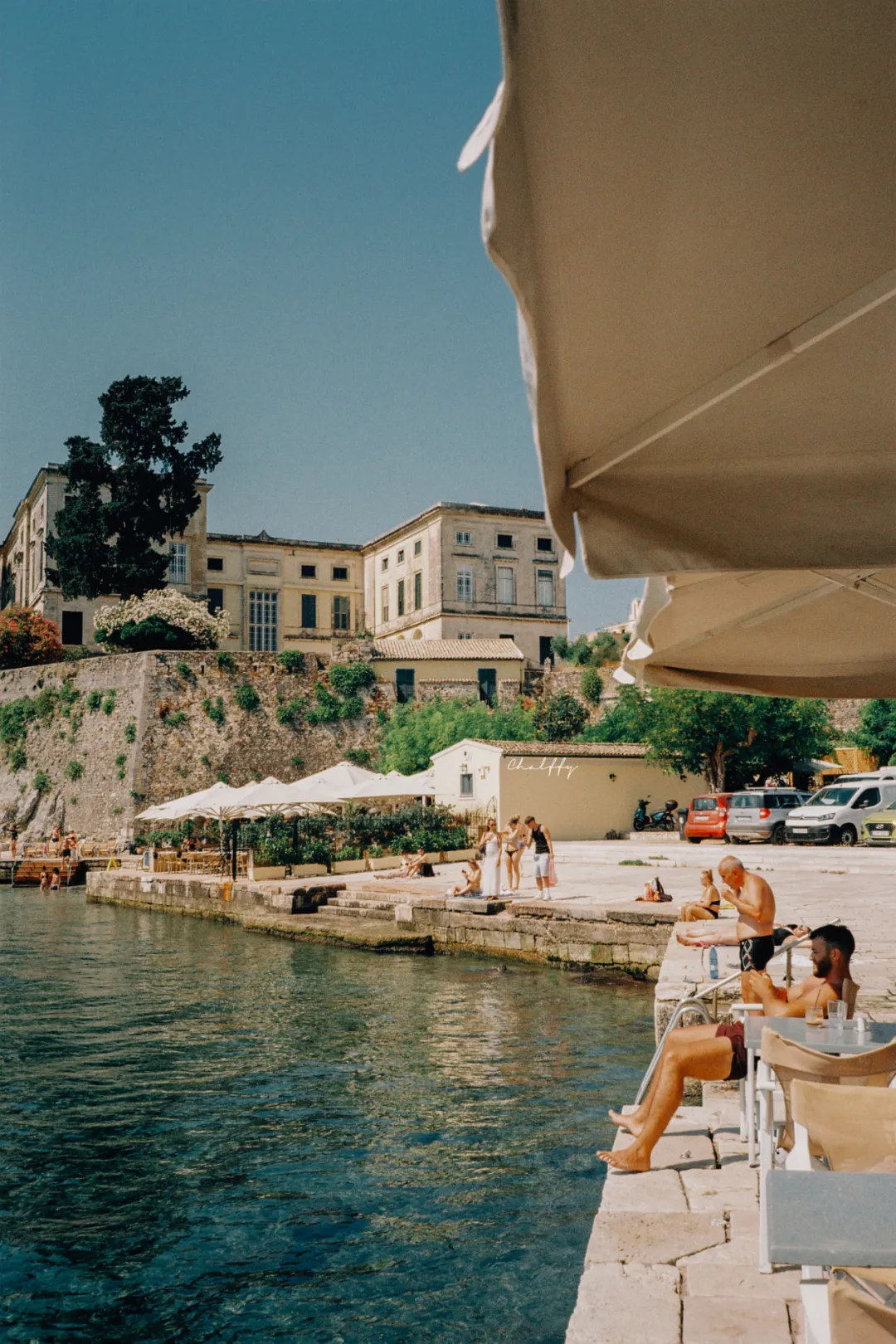
Corfiots believe that in 1087, when the remains of Saint Nicholas were being carried from Asia Minor to Bari in Italy, the ship stopped here, somewhere around what is now Faliraki. A church dedicated to Saint Nicholas was later built to commemorate this brief stay. I often found myself looking at the little church at Faliraki. It seemed to me not simply an isolated religious building, but a particularly Mediterranean story of identity. The remains of a saint set out from the East and travelled westward by sea, pausing along the way on an island suspended between East and West.
More importantly, this has long been a place where Corfiots come to bathe in the sea. It was once known as the Aleko Baths. Sitting on the stone terrace at Faliraki and watching local people go into the water, one realises that this is not a landscape created by modern tourism, but a habit of life that Corfiots themselves have carried forward. People come here not only to swim, but to have a drink, eat ice cream, play billiards and talk. For many Corfiots, Faliraki is something like a vessel for a shared memory of growing up. Many beaches around the Mediterranean have now been reduced to scenery for tourists to consume. Faliraki has retained something of the old instinct of people from the city walking down to the sea. It is an ancient city maintaining its private relationship with the water, and a natural continuation of urban life.
I have always believed that entering the Ionian Sea as the people of Corfu do brings one closer to an imagined Greece than looking at an ancient monument ever could.
At the other end of the bay lies Mon Repos. Were it not for the palace of the same name, and for Prince Philip, who spent part of his childhood here, it could easily be mistaken for an ordinary stretch of woodland outside Corfu Town.
Leaving the old town and following the coast south, the shade gradually deepens and the view opens out. To the left, a crescent shaped bay nearly two kilometres long is filled with private yachts and held in place by a fortress rising abruptly from the sea. The air begins to carry the particular dampness of an island. Ahead, hills covered in dense shade stretch into the distance. This is Mon Repos.
The name itself is already a suggestion. In French, it means “my place of rest”. During the nineteenth century, when Britain ruled Corfu, the British High Commissioner Frederick Adam built a residence here. At the time, Corfu belonged to the United States of the Ionian Islands and was an important British position in the Mediterranean. To the British, the island was both a point on a military and political map and a place of escape from the summer heat. And so, over the remains of an ancient city, an English country villa rose from the ground. Its neoclassical facade and white columns carried the coolness and restraint characteristic of British imperial architecture.
The villa later became a summer residence of the Greek royal family, and Prince Philip was born here. After the political upheaval of 1922, the royal family fled in haste. What followed was decades of dispute over ownership, with the royal family, the republican government and local communities each making their claims. Only in the nineteen nineties was the estate finally returned to the public, becoming the free museum and park it is today.
It is almost a symbol of Corfu itself. Different civilisations arrived carrying their own ways of life, and what they ultimately left behind were buildings, languages, habits and their own ideas of how life on Corfu should be lived. The Venetians left the fortresses and the streets of the old town. The French left the tree lined avenues and a more continental urban character. The British left Mon Repos, together with a more private and unhurried way of life. The Greeks of today, meanwhile, have begun to insist once again on the Greekness of the island itself.
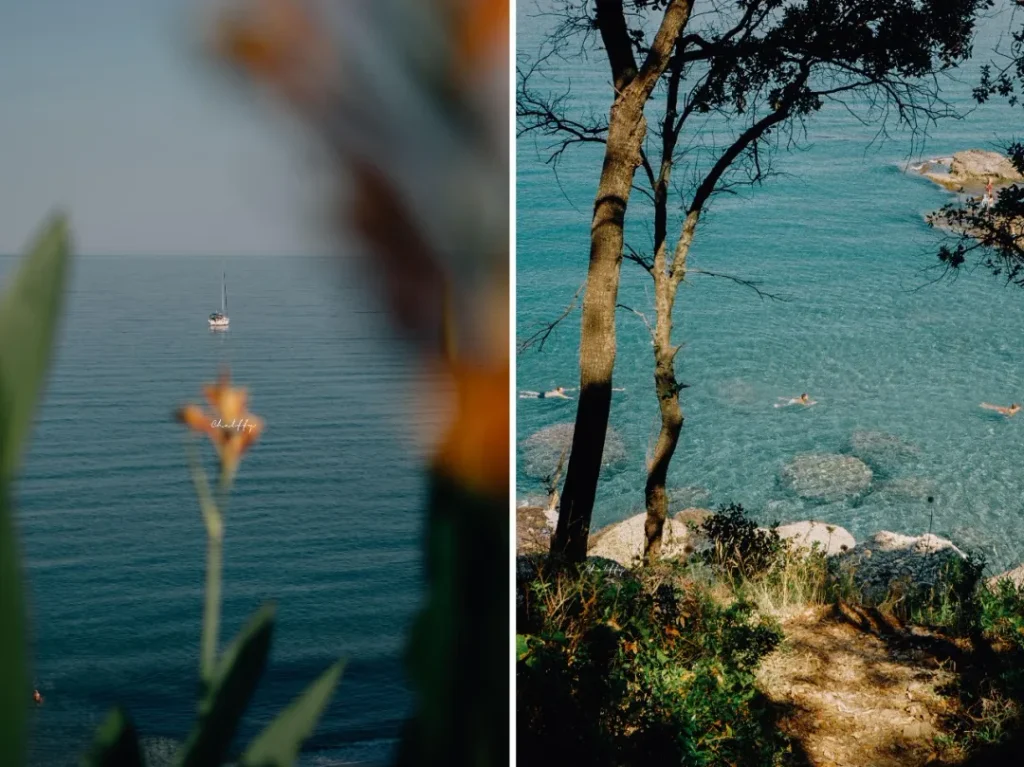
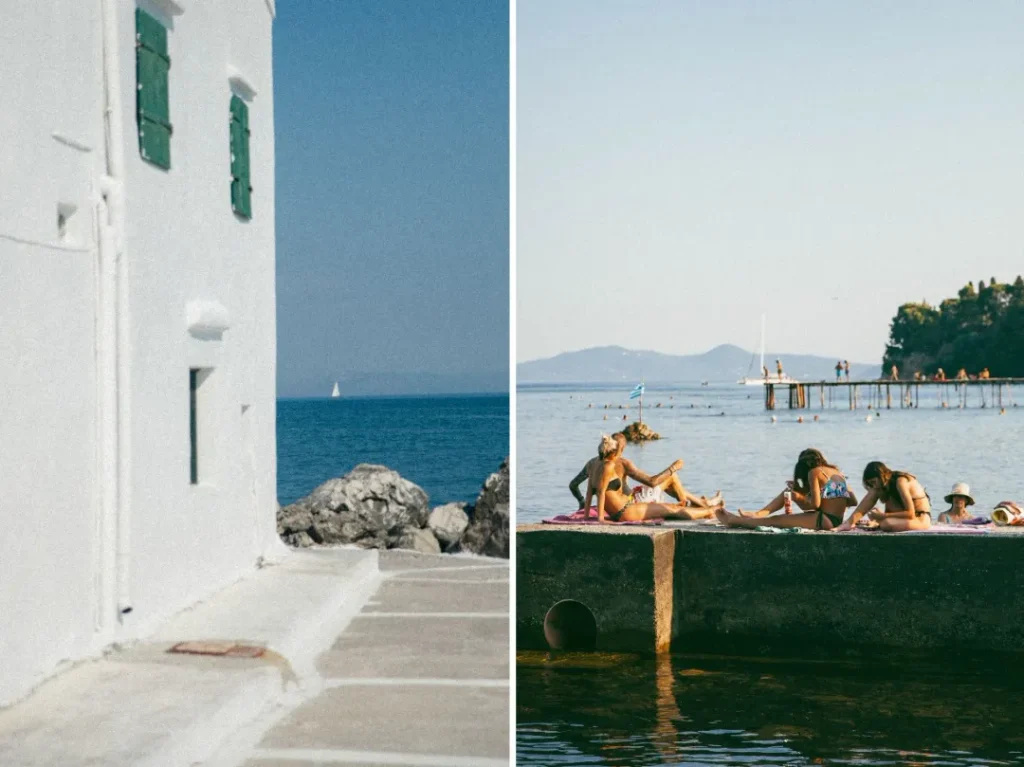
This is also what sets Corfu apart from many other Greek islands.
It does not construct its image, as the Cyclades do, from an almost pure combination of white, blue and bare rock. Nor is it like some of the Aegean islands whose long isolation has produced a culture that seems almost self contained. Corfu has always remained open to the outside world. It lies close to the Adriatic, faces Italy, and stands between the Greek world and Western Europe. The Greekness of Corfu may never have been something pure.
Perhaps that is precisely why it feels so alive. Its past is woven into the sunlight, roads, houses and lives of the present, as Pessoa wrote, “I feel that everything has already happened within me.”
Below the palace lies the sea. Kardaki Beach sits beneath the hill of the estate, quiet and secluded, with a spring, a pebble beach and the remains of a small Doric temple beside its source. Local sailors have believed for generations that anyone who drinks from this spring will one day return to Corfu from the sea.
Following the sound of the water through the depths of the estate, I would pass through dense woodland until the view suddenly opened. A small agate coloured bay lay hidden beneath the trees, and a stone stairway worn by a century of use ran directly from the beach into the sea, like an umbilical cord between life on land and life in the water. Beyond the shade of the trees, the sea caught the light. This was a sea closer to the one that belongs to the Corfiots themselves, closer to the physical, sensuous sea of Henry Miller. Standing here and looking back towards Mon Repos, one can finally understand its spatial relationship. The forest lies above, the palace is hidden within the forest, and the beach lies beneath the palace. Architecture, vegetation and sea are not separate from one another. Together they form one continuous space in the life of Corfu today.
When the Greek writer Patrick Leigh Fermor wrote about the Mani Peninsula, he faced a region that, like Corfu, was not some untouched Greece waiting to be discovered. It too was marked by modern life. Yet for the people who lived there, its villages, stone houses and coastline had never carried the historical weight later placed upon them by outsiders and travellers.
Life with the sea is itself part of the Greek experience. It is a reality made up of history, migration, war, trade, exile, memory and everyday life. The Mediterranean has never isolated Greece from the rest of the world. Quite the opposite. It has always been bringing the world in, continuously folding it into the texture of everyday life.
Scattered through the woods around the palace are the remains of Paleopolis, once part of the ancient city of Corfu. More than two thousand years ago, temples, roads and public buildings were built here. The city later declined, new civilisations covered what remained, and eventually the trees covered civilisation once again. Along the hillside road from the palace to the sea, I would often catch sight of a broken column, the foundation of a wall, or the remains of some ancient structure that had long since lost its original purpose among the trees. Vegetation twisted around the stone. Sunlight slipped through gaps in the canopy and fell upon the damp earth. This place has never been completely enclosed as a historical site for visitors. It remains part of the ordinary life of the city.
What the Greek writer George Seferis returned to again and again in his travels and poetry was precisely this relationship between antiquity and the present, a relationship that cannot easily be severed. When he wrote about Greece, he never treated antiquity as an inheritance that had already come to an end. Fragments of the ancient world, the lives of modern people, language and the land remain entangled with one another. People today can only live among what has been left behind. Ancient Greece is not merely something that happened in the past. It is a form of life that continues to unfold in the present.
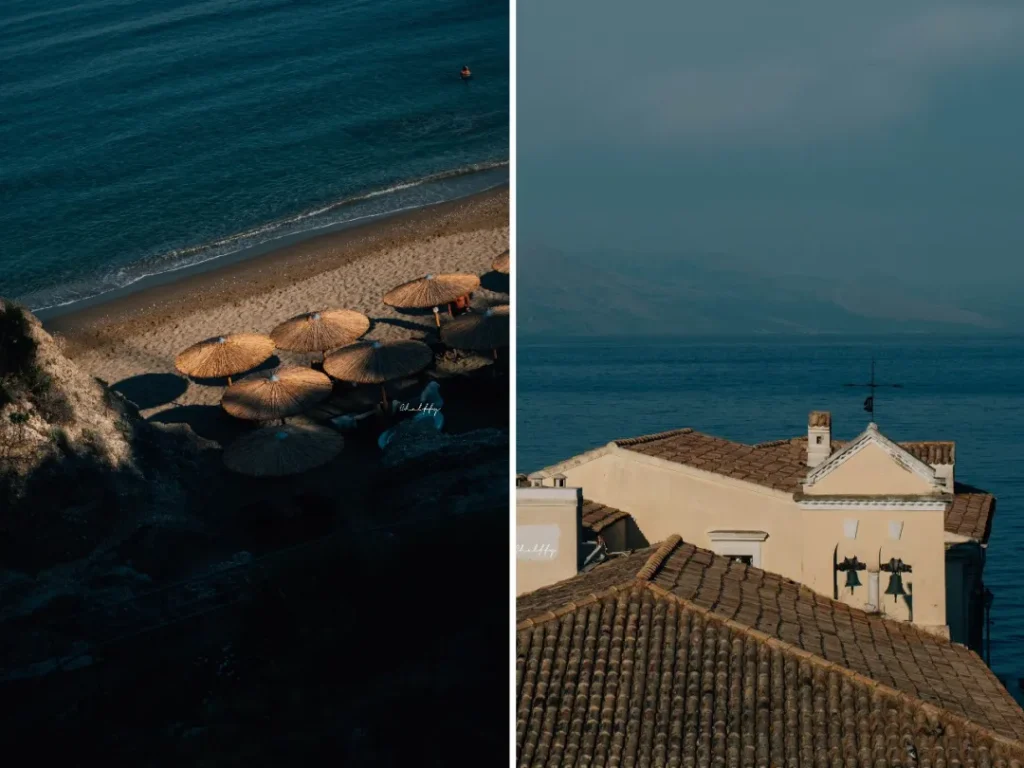
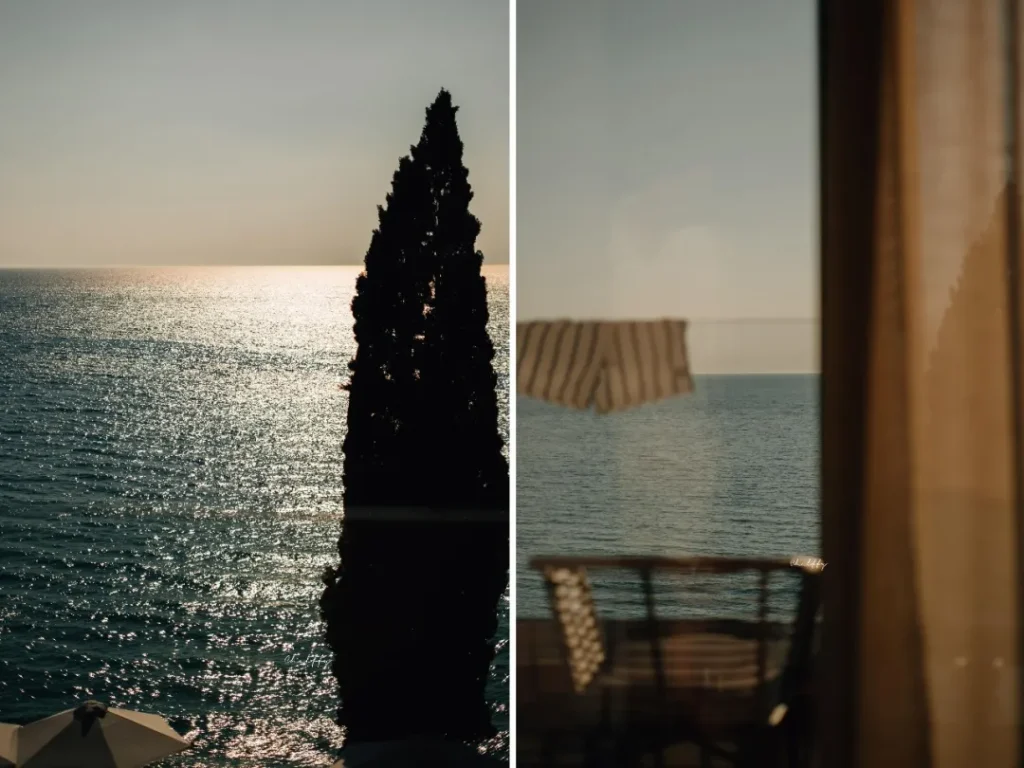
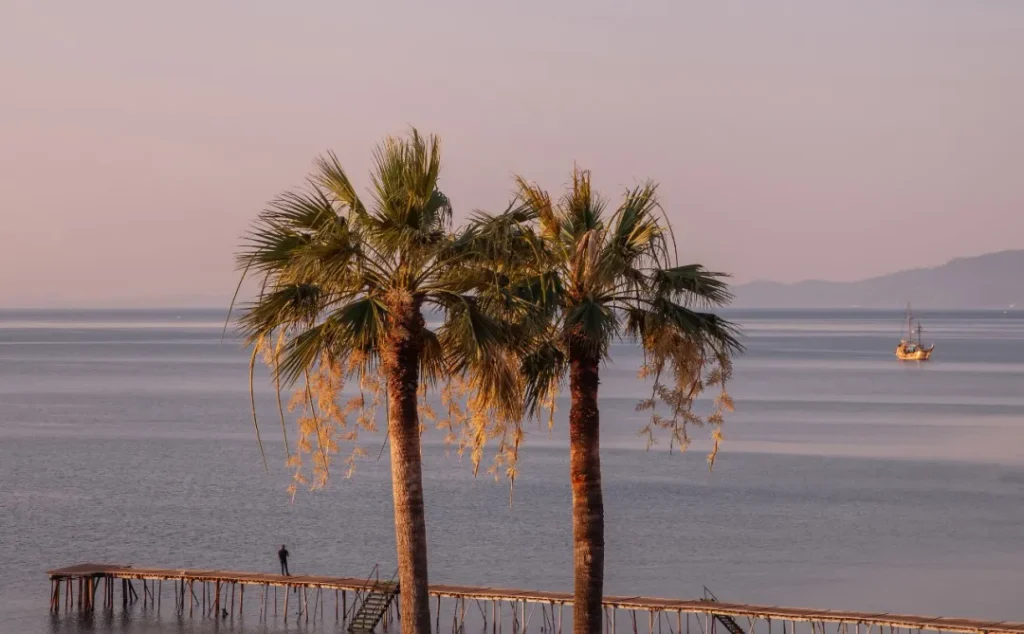
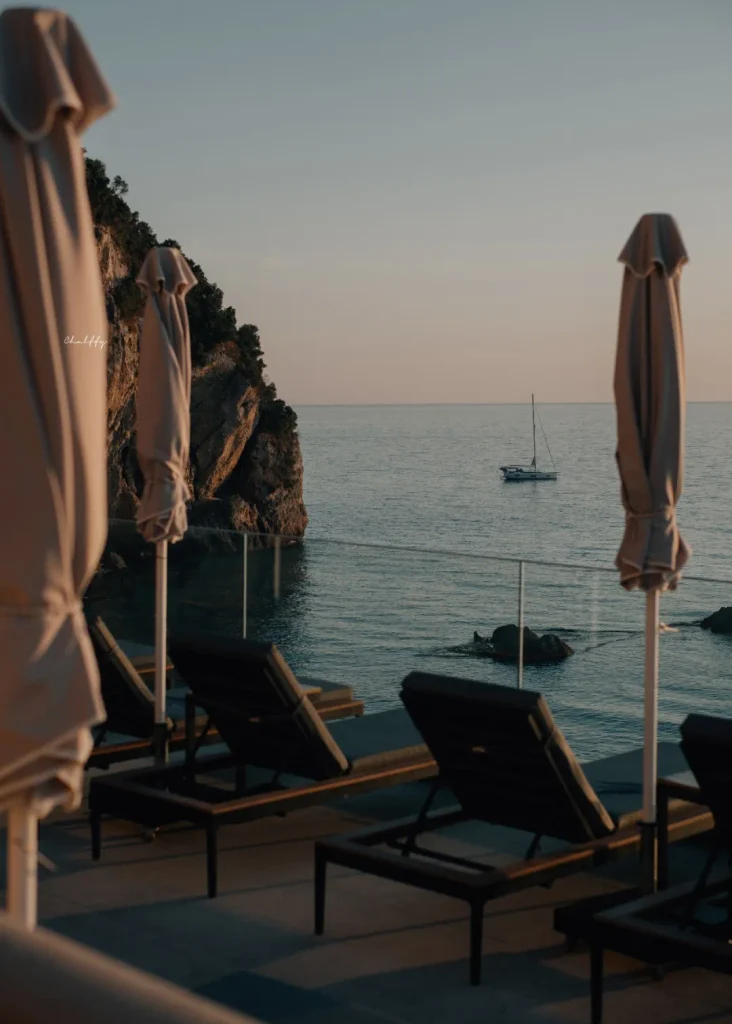
The hotel where I am staying sits on the hills above Kalami Bay, looking out over the stretch of sea that Lawrence Durrell gave a place in literary history. Below are the dark pebble beaches and the scattered roofs of the fishing village. Beyond them, the indigo sea opens out in successive layers towards the horizon, until the eye reaches the mountains of the Albanian coast, touched with a faint ochre light. Each morning, as I sit on the terrace, their outline slowly emerges from the pink and violet air, with a lightness that seems almost to belong to another world. From time to time, an old ferry trailing black smoke moves slowly across the water. It goes at such an unhurried pace that it seems almost motionless, carried towards the distance by the sea itself.
Among the familiar images of summer in the Greek islands, so often painted and embellished, there is something strangely intimate about such a morning. For a moment, Corfu returns to the quiet ordinariness of its daily life, and it seems that little has changed in a hundred years. When Gerald Durrell was still a child, he walked through the olive groves in this same light. The cypresses and olive trees on these hills are still there, their dark branches falling one behind another, enclosing the bay. It was beneath this same light, and across these same shades of water, that Lawrence Durrell wrote Prospero’s Island, the book that would make Corfu part of the memory of the English speaking world.
The hotel is called Nous. In ancient Greek thought, the word refers to the mind, to reason, and to the faculty through which we grasp the essence of things. For Aristotle, it came to mean the part of the human soul closest to the divine, the faculty capable of apprehending truth directly, where the light of reason gives form to what cannot otherwise be seen. A name with such an ancient and weighty meaning naturally asks the hotel to answer to it in its own way.
The hotel itself is a villa built into the hillside, with only three bedrooms, and is rented as a whole. The building follows the contours of the land, made almost entirely from local stone, timber and brick. Large areas of empty space give the interior an almost silent quality. In the open living room, the sea breeze and the changing light move freely through the house, while the view of the entire bay is held quietly between the olive trees.
The landscape, which might otherwise appear scattered, is gathered and composed by a series of openings: the distant mountains, the bay, the olive trees and the sky. The architecture does not create another landscape. It simply allows the landscape that was already there to reveal its own order. In this sense, it is perhaps the clearest metaphor for the name Nous: not to impose a shape upon the world, but to allow the world to show the shape it already has.
This restraint is also part of a tendency now emerging in Corfu, and more broadly in the resort architecture of the Greek islands. Local architects are becoming increasingly conscious of returning luxury hotels to local materials and local forms, searching for a language of design that does not need ornament to announce its presence. The entire structure of Nous is built from local stone, hand cut by Corfiot stonemasons, with the roughness and irregularity of the material deliberately left visible. Large panes of glass and restrained wooden details appear only where they are needed. Tradition and modernity are therefore not simply placed beside one another. They meet and converse within the same building.
The architecture also follows the simplest logic of the traditional houses of the Corfiot countryside. Thick stone walls keep out the summer heat. Deep, narrow windows soften the intensity of the sun. The house itself remains closely bound to the olive trees, the land and the livelihood of the family. Architecture is not an object separated from nature, but something shaped by nature, climate and a way of life. Throughout the day, the light changes across the great panes of glass, falling onto the rough stone walls and leaving shifting shadows behind. The weight of the building seems to breathe, and slowly becomes part of the countryside around it.
The architecture of Corfu has never been the white walls and blue roofs bleached by the Aegean sun that we so often imagine.
Its character is darker, deeper, and more complicated.
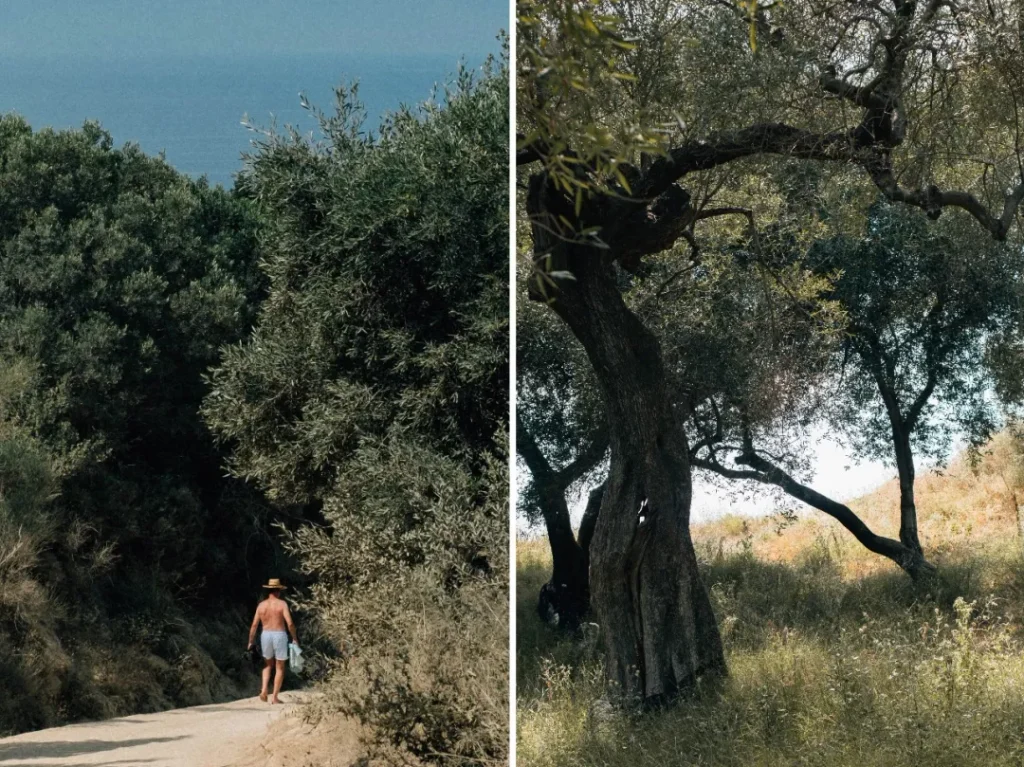
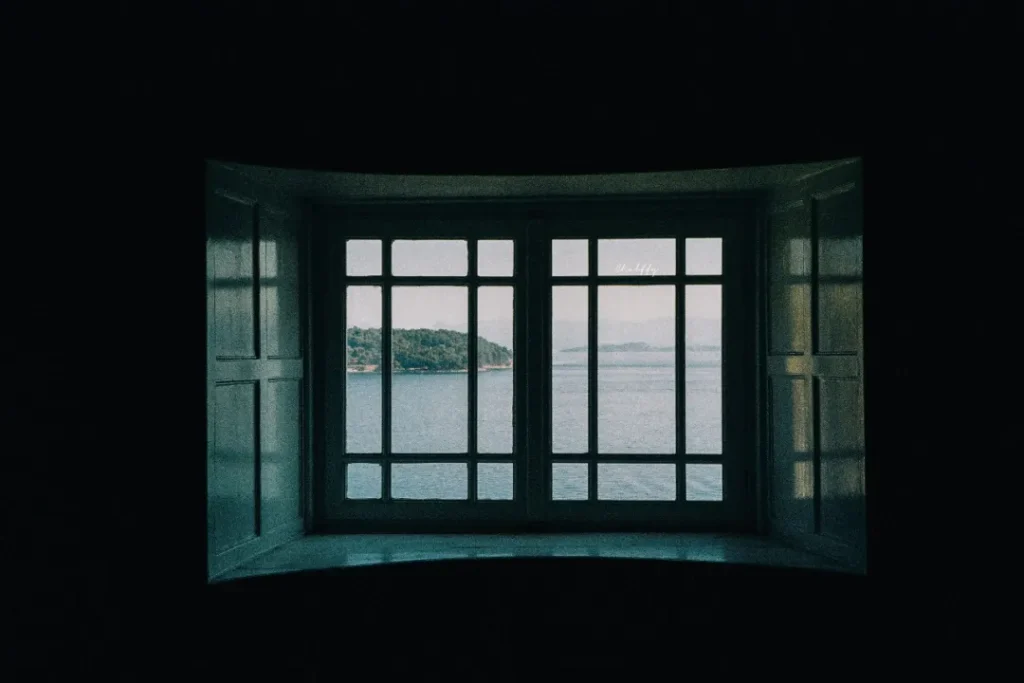
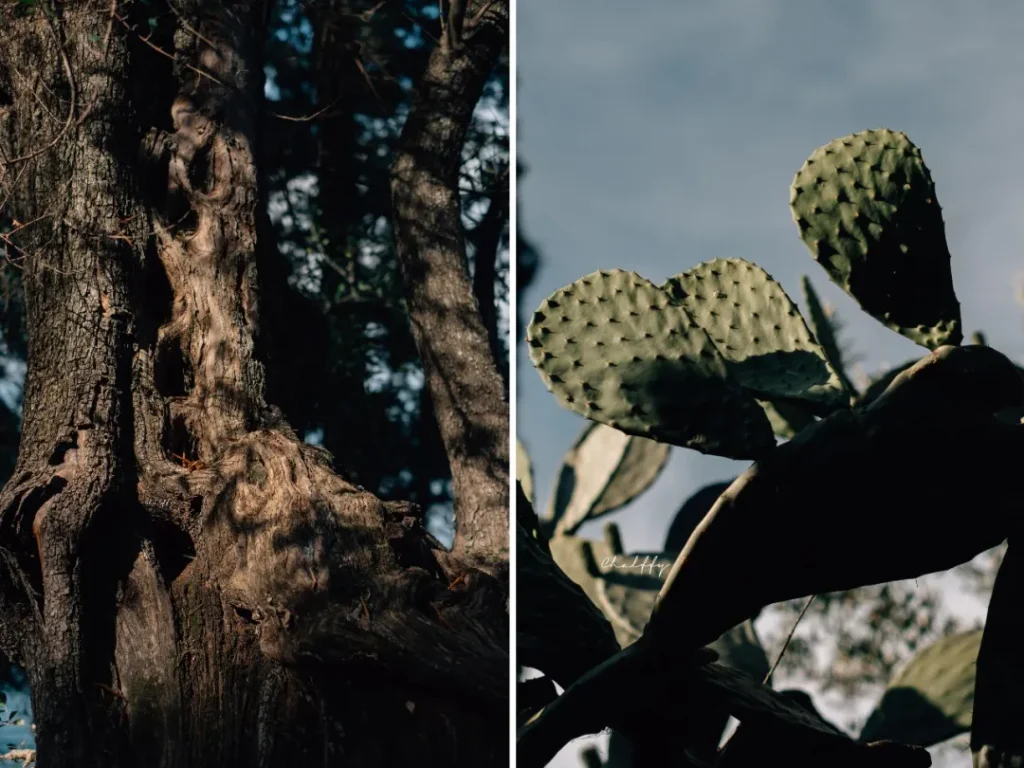
Evening comes slowly to the Old Town of Corfu. The cafés beneath the Liston arcade have just begun to light their lamps. Waiters in white shirts move between the iron tables and chairs, carrying their trays, while the air holds the smell of coffee and sea salt, together with the warmth still rising from stone walls that have spent the whole day in the sun. Above my head, the arcade is modelled on the Rue de Rivoli in Paris. When the British ruled Corfu, they brought this French urban landscape with them. Beneath my feet, the paving stones were laid long ago by the Venetians. The small piece of ground where I sit therefore belongs, all at once, to several different histories: the Phaeacians of Homer, the Venetian merchants, French urban civilisation, and the British colonial officials who came later. The architecture of the Old Town is itself a record of these layers, cultures laid one upon another without any of them being entirely erased. Yet once you leave the Old Town and drive inland towards villages such as Pelekas or Sinarades, another architectural language appears: thick stone walls, narrow windows, roofs of ochre red tiles, olive trees extending along the hillsides, and old olive presses built beneath the foundations of the houses, as though the livelihood and beliefs of an entire family had been built directly into the walls.
Perhaps it is precisely because Corfu has never truly belonged to any single culture that, among the many islands of Greece, it has so often been claimed, interpreted and renamed by different eyes. Homer placed it in the Odyssey, where Odysseus, covered in seawater and salt, came ashore on these beaches and encountered Princess Nausicaa washing clothes by the river. The Venetians saw trade and the great sea routes. They carved gun ports into the walls of the Old Fortress and turned the island into a strategic outpost on the eastern shore of the Adriatic. By the end of the nineteenth century, Empress Elisabeth of Austria, known as Sisi, saw Corfu differently, as a private utopia, a place to which one might escape. She built the Achilleion Palace on the island and named it after Achilles.
I have visited the Achilleion once. A row of marble statues stands in its gardens, among them the dying Achilles, his body taut with muscle, his face marked by pain, yet his posture still strangely beautiful. Sisi herself rarely spoke of the naked suffering embodied in the statue. What fascinated her was instead the romantic figure of the Greek tragic hero, destined to die young, destined to be broken by fate, yet still magnificent in his destruction. It was a distinctly nineteenth century European aristocratic fascination with the sublime in ruin. The palace does not truly belong to ancient Greece. It belongs more to the Greece imagined by nineteenth century Europe: marble, mythology, heroes, death, and an almost romantic private longing for the classical world.
The terrace of the palace faces the sea. Behind it, Achilles turns his back to the Ionian Sea, forever caught in the final moment before he falls.
What makes this layering of names and meanings personal, however, are the two Durrell brothers. Lawrence and Gerald lived on Corfu for the same four years, yet the islands they described are almost unrecognisable as the same place.
For Lawrence, Corfu was material for contemplation and writing. The sea was green beneath a milky light, the olive groves a backdrop to a Shakespearean play, while the local fishermen and farmers seemed almost like figures carefully placed within the scene, there to give it its local character.
His Corfu always kept its literary distance.
What he came to Corfu in search of was an island where both language and the self could be exiled and remade. As war drew closer, the island in his writing ceased to be simply a place of sunlight and local life. It began to carry a deeper historical shadow. He wrote of light, of stone, of the blue of the Ionian Sea, yet always seemed to look beyond that blue towards another destiny for Europe. For him, Corfu was not a paradise reached after leaving Britain behind. It was more like a mirror of Europe itself, reflecting civilisation, war, exile, and the estrangement a man might feel as the old world slowly fell apart.
Gerald, still a child, saw an entirely different Corfu.
His island had fewer symbols, and little of the meditation on civilisation and fate that marked his brother’s writing. It was a world where a boy could lie on the ground watching scorpions mate, smuggle geckos and snakes into the house, and strike up unlikely friendships with local farmers, boatmen and village doctors. The island was not a landscape to be admired from afar, but a living thing to be touched, smelled and explored by turning over stones with your own hands. Corfu became almost a natural history museum untouched by the modern world: animals, plants, seawater, earth and the boundless curiosity of a child came together to form a world that was bright and innocent.
The difference between these two ways of seeing is almost a parable of travel itself.
Corfu changes continually in the eyes of different people and in different ages. Our age, our education, our memories and our desires determine what we see, and ultimately what kind of place we choose to believe it is.
In summer, Corfu belongs to the sea and the mountains, but also to music. Concerts large and small take place every day, scattered between the Old Town and the villages inland. When Corfiots come together for a celebration, they throw themselves into it with an almost ecstatic abandon, as though for a while they were entering something larger than the individual, something connected directly to the ancient collective memory of Greece.
Tonight’s concert takes place in the woods of Mon Repos, in a clearing facing the palace where Prince Philip grew up. Before the concert, I have dinner at Rouvas. Rick Stein included it among his examples of traditional Corfiot food in his journey around the Mediterranean. Unlike the place I remember, it now feels more like a neighbourhood kitchen: fishermen, old men, and people from nearby, sitting together and talking about the small, inconsequential things of everyday life. The Old Town may be in celebration every evening, but Rouvas, just beyond the tourist gaze, has chosen to stay closer to the land and to the life of Corfu itself.
After a brief summer storm, the woods turn orange and pink in the fading light. In the clearing, a semicircle of temporary seats has been arranged in the manner of an ancient theatre. A trio plays traditional songs from Greece and Corfu. Surrounded by trees, far from the life of the town, the bustle of the Old Town falls away. There is only the music, and the fireflies appearing among the shadows of the trees. It takes me back to my first visit to Corfu, when I watched a folk song competition beside a church by the sea, late at night.
Corfu has a deep musical tradition, but it was never, from the beginning, the preserve of an elite. Music here has always been a public art, rooted in the everyday life of ordinary people. The founder of one of Corfu’s civic brass bands was Nikolaos Mantzaros, the composer of the Greek national anthem. His former home stands on the edge of the Old Town, surrounded by swallows and overlooking a horseshoe shaped bay. Today, Corfu has nearly eighteen musical ensembles. Among them is the Philharmonic Society, the first modern military band in Greece, which performed at the first modern Olympic Games in 1896. Today, it is open to people from every part of the island, offering professional musical education to anyone, regardless of background.
Among the audience are olive farmers, fishermen and the mayor of Corfu. None of them are professionals, yet during the intervals they talk about music with one another with an almost solemn seriousness. When Henry Miller visited Lawrence Durrell, it was this Corfu that fascinated him: not Greece as a monument, but a kind of public life that still existed in the ordinary world, almost as though it had no need to be useful or productive.
The people of Corfu seem, at first glance, to possess an unstudied kind of happiness. There is little of the performance demanded by social etiquette, little concern with status or class. Instead, there is the simple physical pleasure of being carried along by music, a way of living that has not been entirely subdued by the logic of usefulness. They sing, work, dance, quarrel and embrace, allowing their emotions to show without reserve. Life may be simple and rough, but the spirit is far from poor.
They seem to possess a complete sense of self, still intact and not entirely estranged from the life around them.
For the people of Corfu, what is truly precious in life may be precisely these moments of conversation that can continue indefinitely, with no destination and no purpose, leading nowhere in particular. They exist simply for the pleasure of being together.