6 p.m. in Siem Reap during the rainy season—darkness has yet to fully descend upon the city.
Three hours of wandering through jungle temples had just come to an end, and I found myself gliding through a dream rendered in shades of blush and grey. The vehicle I rode in—a 1965 extended antique Mercedes limousine—had once belonged to Prince Norodom Sihanouk of Cambodia. Now preserved by Amansara, it is reserved for hotel guests exploring the city. The vast moat of Angkor Wat lay smooth and still, like a sheet of black crystal. Banyan trees stood tall and upright, their trunks glowing silver, their tangled limbs and dense leaves forming a dark net across the Siem Reap sky.
The heat had faded, the tourists had vanished, and something resembling order returned to the air. The city, quietly, was given back to its residents. In the spreading shade, they began to live again, the trees gently folding away the edges of the day.
Everything outside the car window at that moment aligned perfectly with my romantic imagination of Siem Reap and the ancient city of Angkor—composed, complete. Even with the burden of housing one of the world’s most iconic architectural wonders, the place seemed to return to itself again each dusk.
Some long-buried ideals and dreams of Cambodia were beginning to stir in the night.
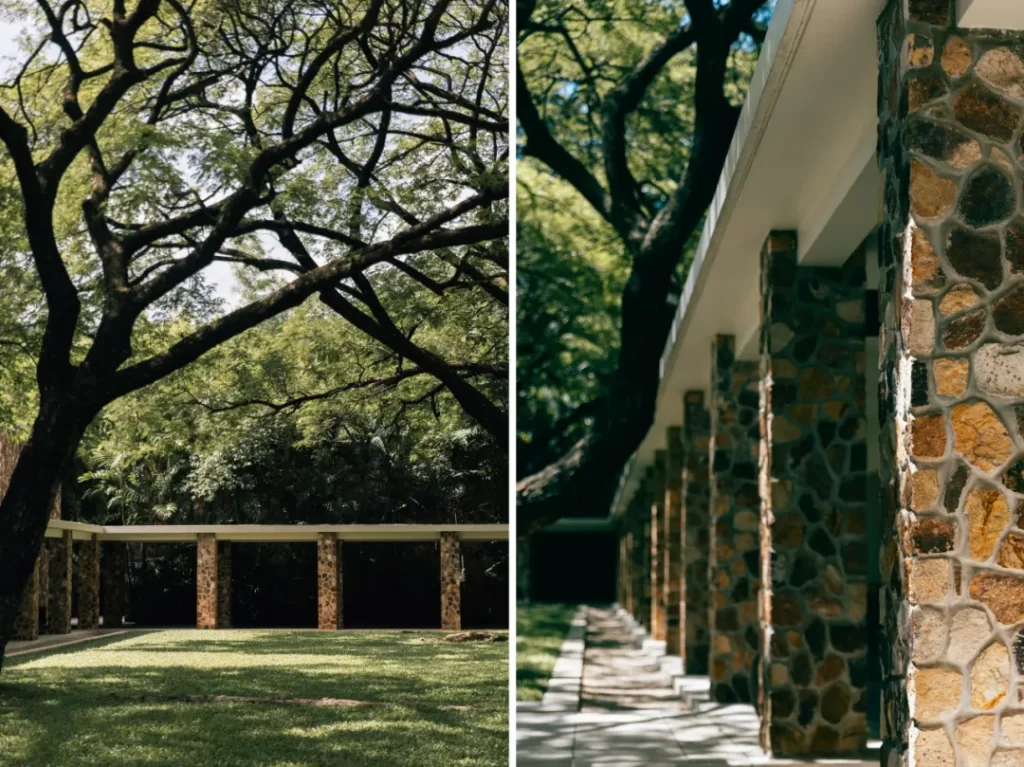
The courtyard at Amansara is framed by the bold, rectilinear volumes of New Khmer modernism, where the interplay of horizontal and vertical lines creates a quiet tension. Rooflines, cantilevered eaves, and staircases often converge into sharp, geometric compositions.Photo: Chalffy Chan
By the time we pulled into Amansara, I was still suspended in the quiet beauty of the city. The hotel is tucked away behind low walls and lush vegetation, just at the edge of the bustle. As the wheels crackled softly over gravel, I heard the driver and butler murmur a gentle greeting: “Welcome home.”
Those familiar with Aman know well its serenity. In every city it inhabits, it is like a refined gentleman—never ostentatious, worldly but composed.
But here at Amansara, the serenity carries another voice—quiet, but never absent. It is the voice of an unfulfilled ideal, one of the few living examples of New Khmer Modernism. Through the turbulence of national rebirth, chaos, and renewal, the dream it once represented—a tropical idealism rooted in this land—has never entirely left. Beneath the shade of two towering frangipani trees, in the sunlight dancing on stone walls, in the downpours of an afternoon storm, we might begin to understand what fleeting dreams once meant to a young nation.
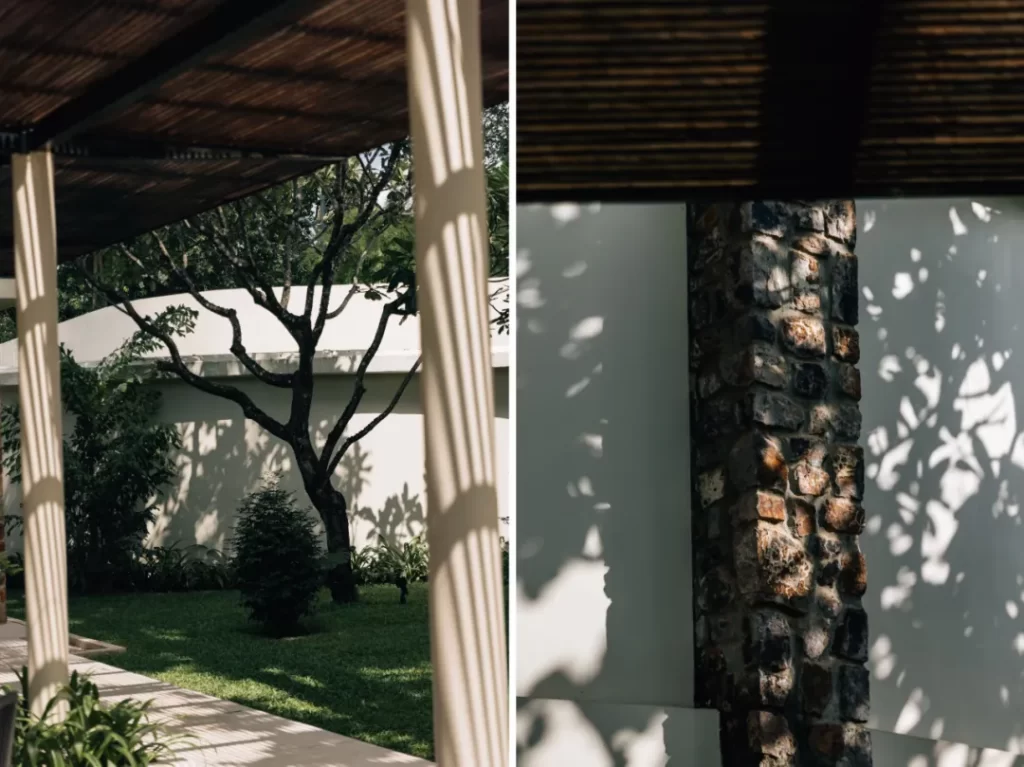
At the entrance to the courtyard, the white walls come alive at noon, adorned with elegant patterns of light and shadow.Photo: Chalffy Chan
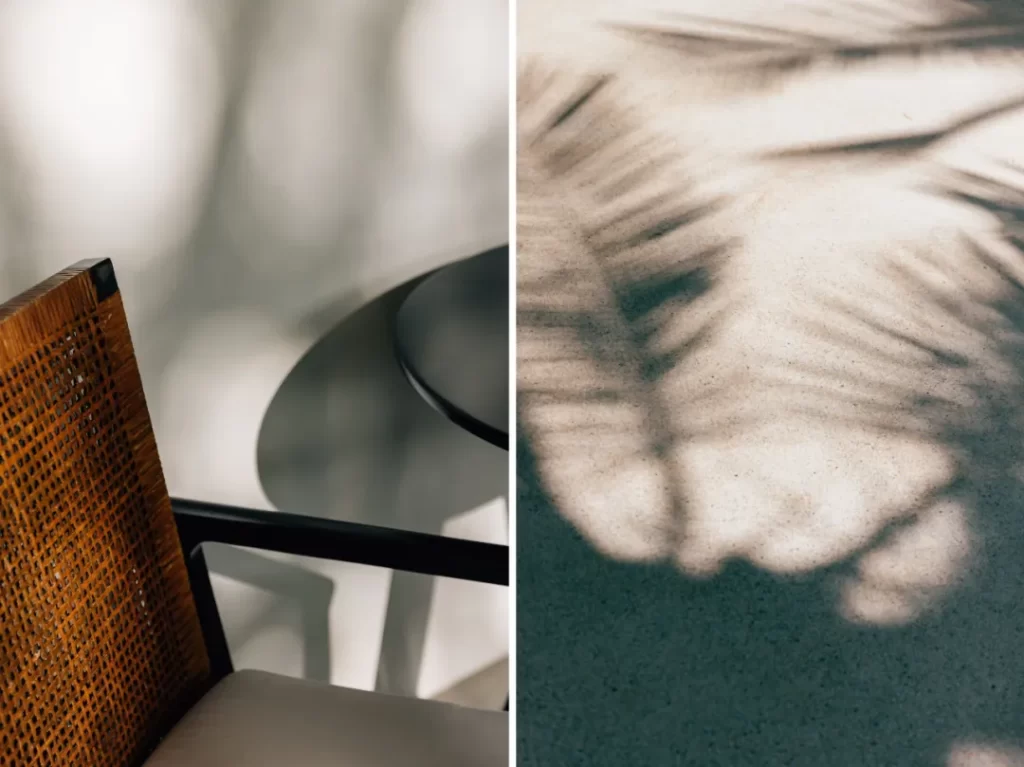
Throughout the hotel, shadows of greenery dance gently in the breeze, casting shifting patterns of light and shade.Photo: Chalffy Chan
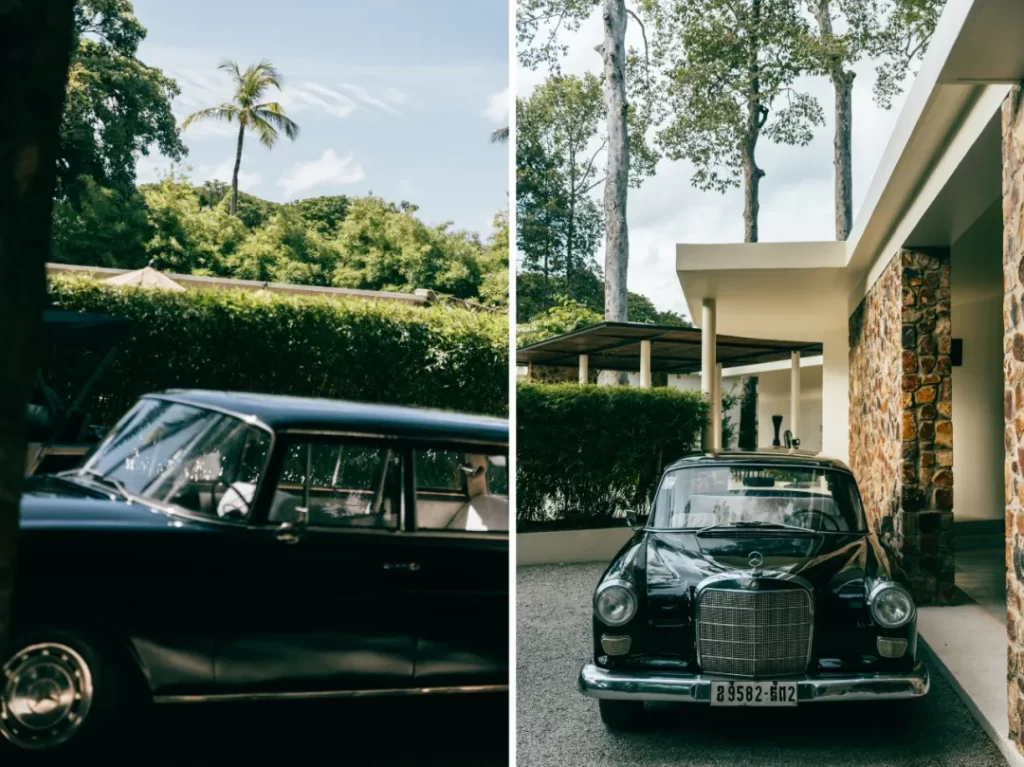
The 1965 antique Mercedes I rode in once formed part of Prince Sihanouk’s welcoming convoy during Jacqueline Kennedy’s discreet visit to Cambodia in 1967.Photo: Chalffy Chan
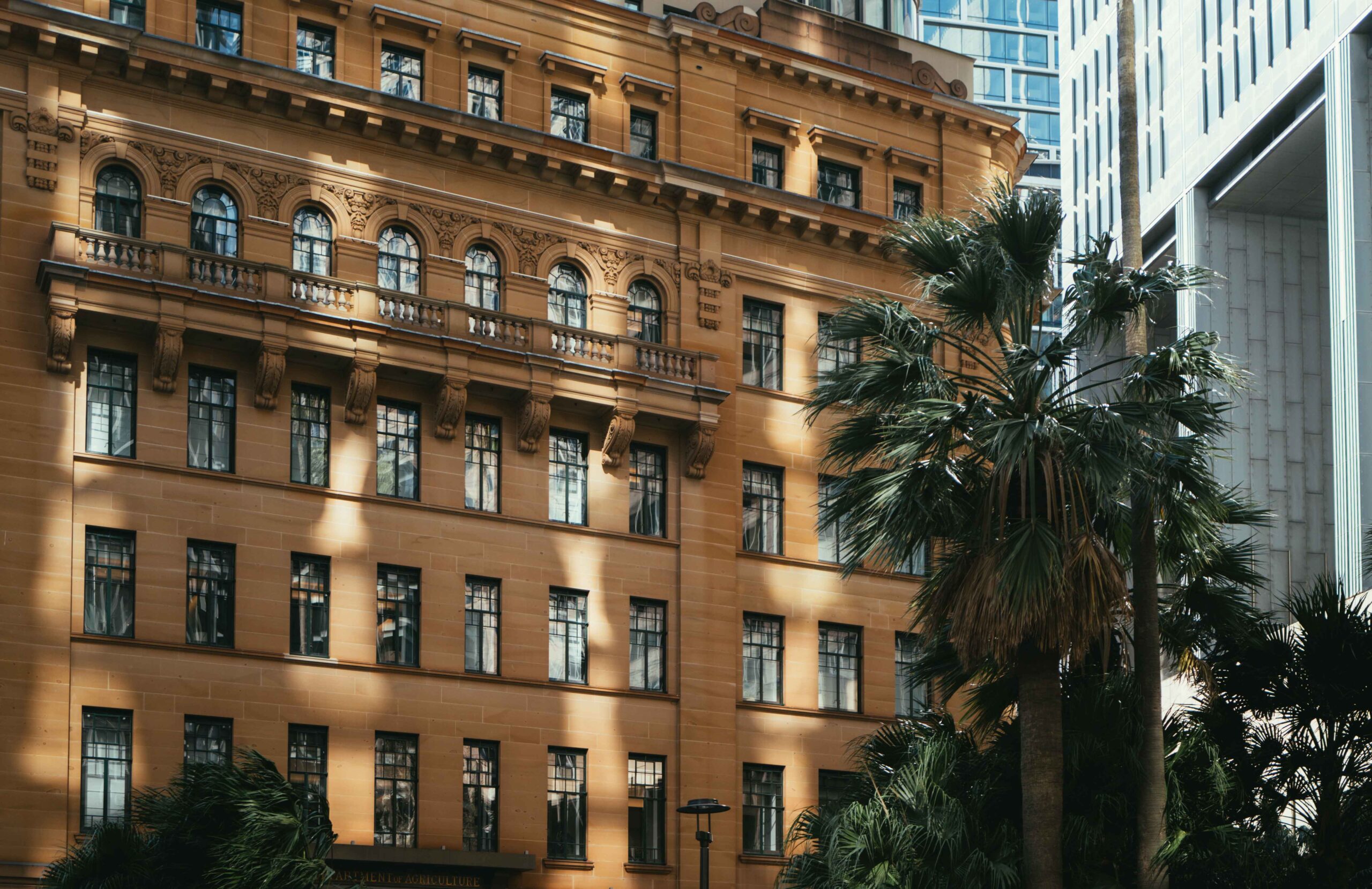
Amansara was once the royal guest villa built in the 1960s by Prince Sihanouk. It was designed by the French architect Laurent Mondet—a contemporary of Vann Molyvann, the soul of New Khmer Modernism. Originally named Villa Princière, its guest list was almost a catalogue of Cambodia’s golden age of hope. Khrushchev, Sukarno, de Gaulle all passed through these doors, as did Jacqueline Kennedy in a discreet visit. It was, for a time, a symbolic space for Cambodia’s policy of “positive neutrality,” and a stage for a young nation to express confidence and beauty amid Cold War tensions.
Today, it no longer hosts heads of state, but travelers who value quiet, restraint, and a sense of history.
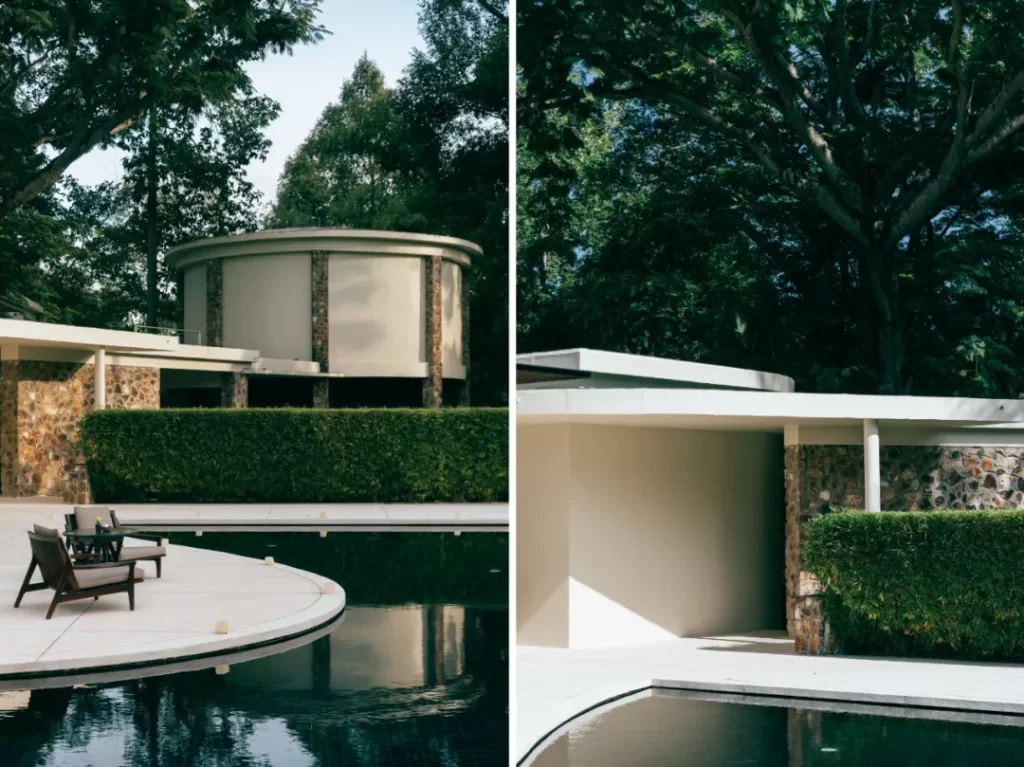
The hotel has preserved the original circular pool, a feature typical of New Khmer modernism, which often incorporated ponds, channels, and fountains into its design—both to cool the air and to cultivate a sense of visual serenity.Photo: Chalffy Chan
During the rainy season, guests are few. Aside from the occasional staff member, the hotel becomes the embodiment of stillness. From the semi-open reception, one passes through a narrow corridor into a courtyard that is both open and self-contained. The architecture is low and modest, its outlines gentle. Sunlight reflected from the circular pool flickers silver against the milky walls. Guest rooms are arranged asymmetrically around the central pool, each corner free of excess. Indoor and outdoor spaces fold into each other, a continuation of the spatial spirit of Angkor’s temples—between sacred and human, inside and outside, light and shadow.
Past the circular dining area and pool, two grand frangipani trees stand on a wide lawn, their canopy stretching above, nearly blanketing the guest wing. The main building is laid out symmetrically around a central courtyard, echoing the spatial logic of Angkor’s hollow-core temples. The roofline extends gently outward, with deep eaves to shield against tropical downpours and fierce sun. The walls are thick, doors and windows deeply set, offering a soft transition between interior and exterior. These design choices are not merely functional—they speak to a cultural identification with tropical notions of shadow and depth.
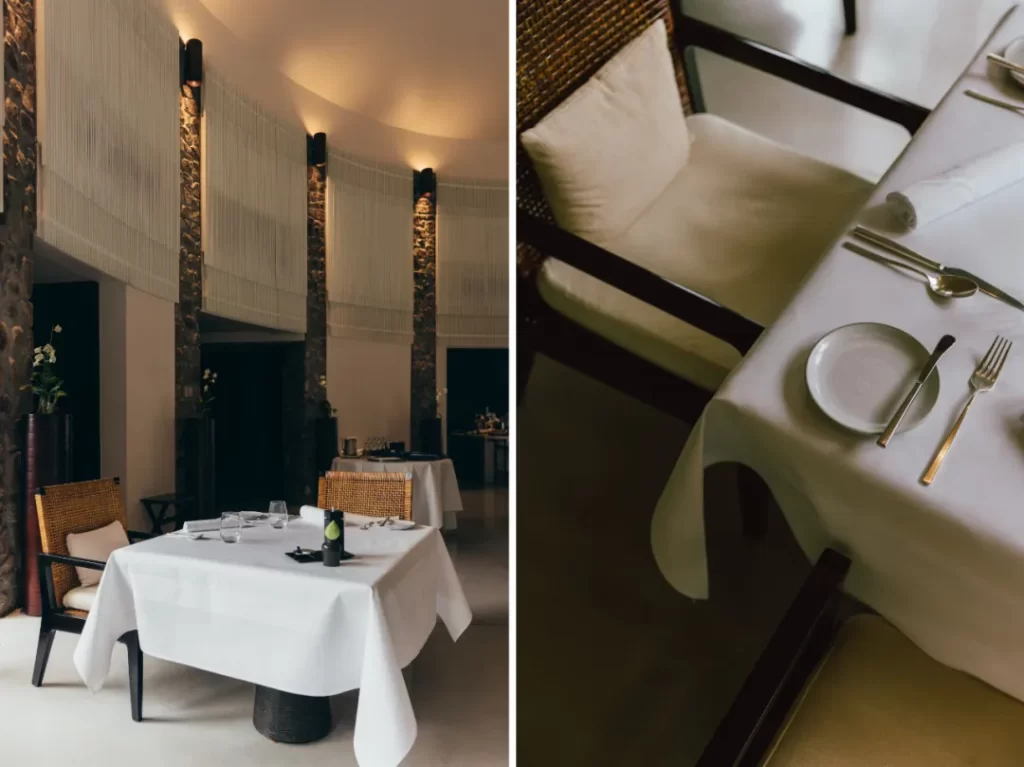
The circular dining room.
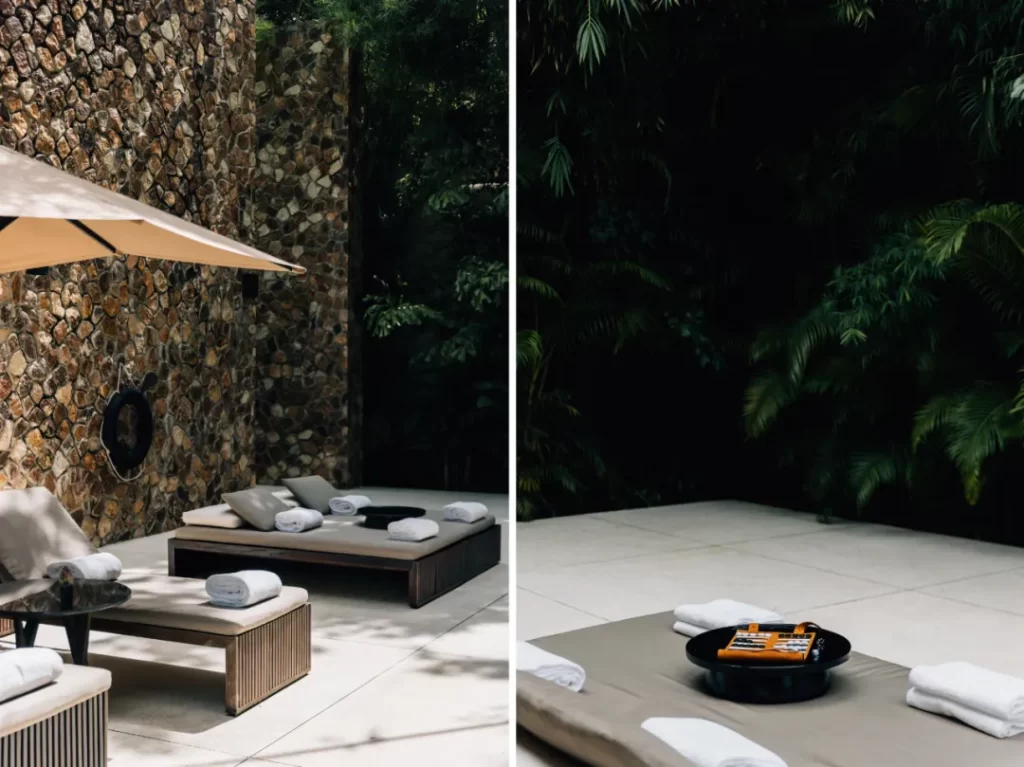
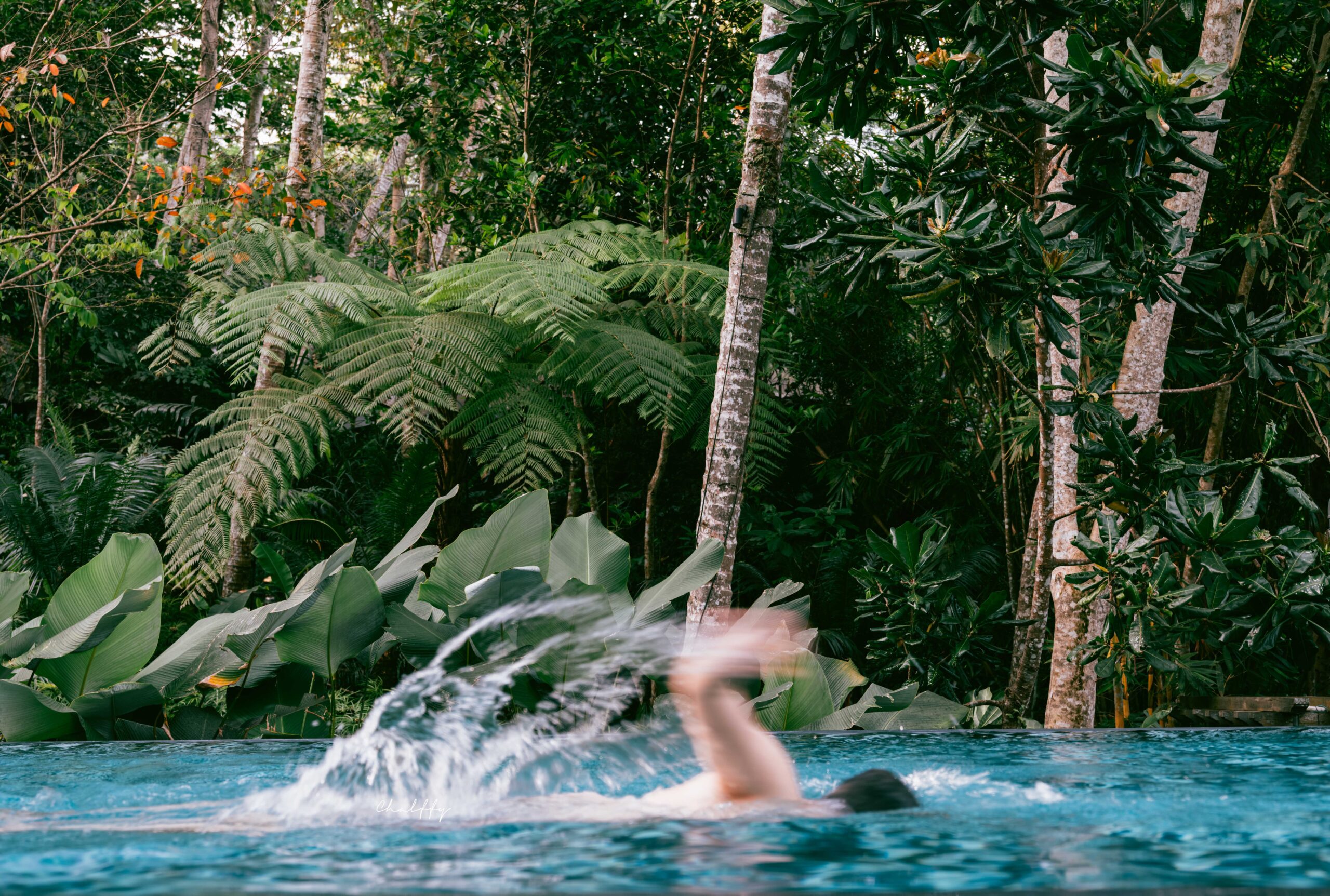
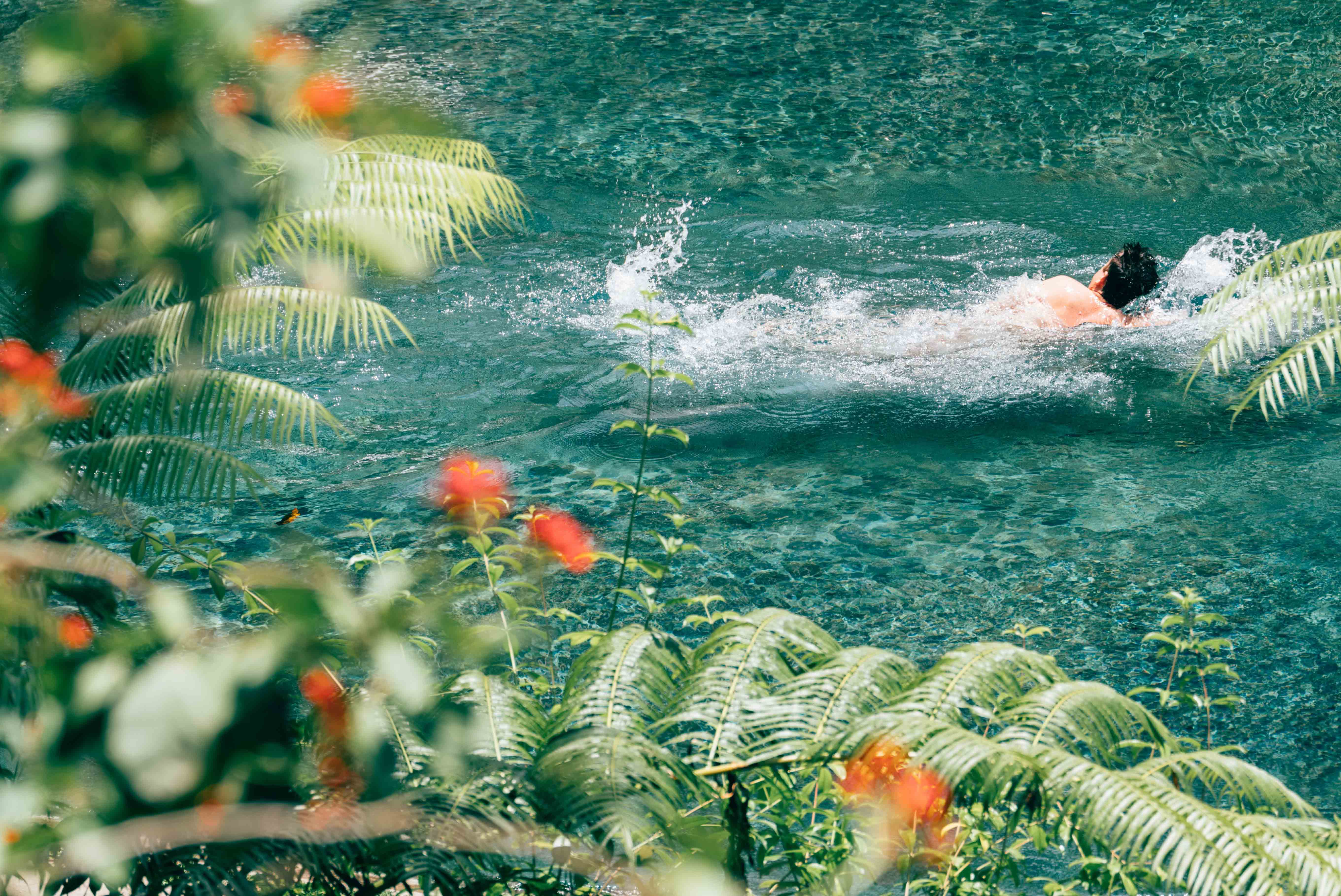
Another communal pool lies hidden beneath a canopy of lush foliage.

The private pool in the suite sparkles with scattered glimmers after three in the afternoon.

The circular pool.
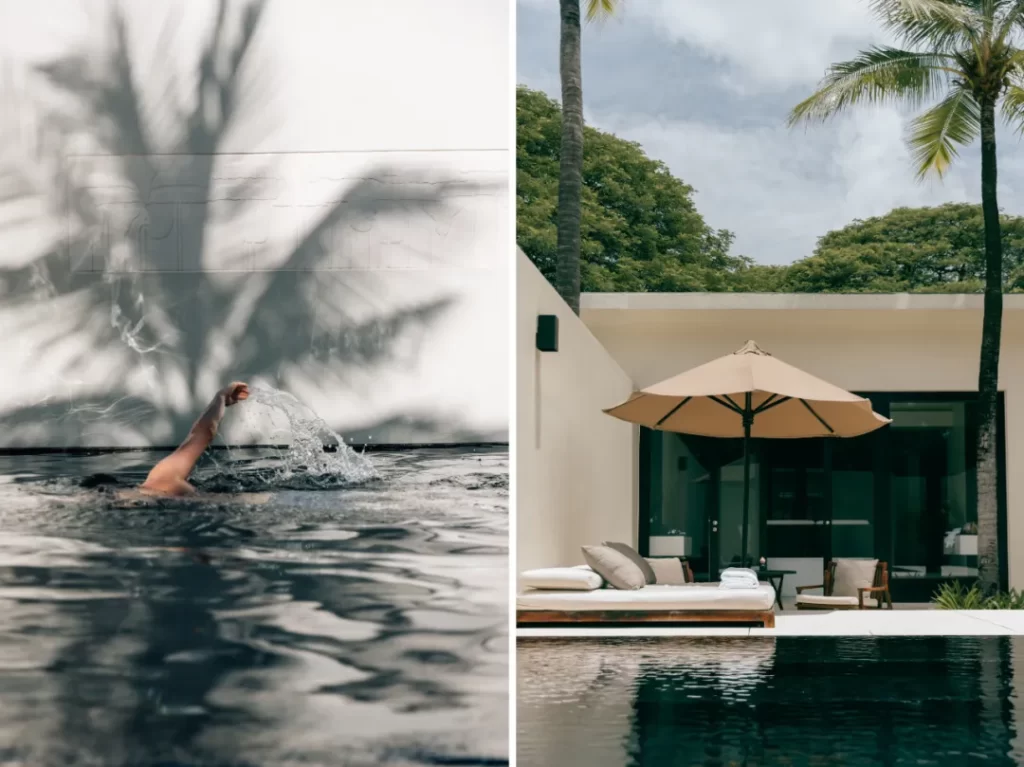
Pool suite.
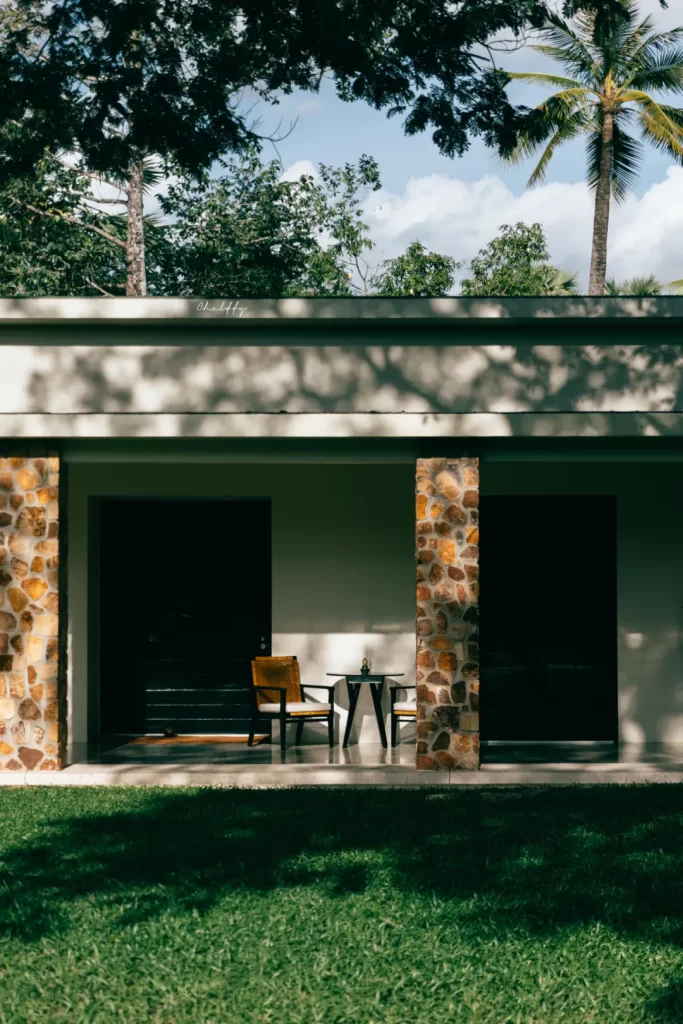
The suite entrance is adorned with a blend of brick, wood, and woven bamboo, preserving the tactile quality of traditional craftsmanship.
In the 1960s, Cambodia had only just emerged from French protectorate rule and was entering a new era of self-definition. King Sihanouk sought to construct a modern national identity through culture, art, and architecture. He neither clung to colonial legacies nor blindly imported Western models. Instead, he placed his trust in a new generation of architects—foreign-trained but locally rooted. Foremost among them was Vann Molyvann, the central figure of New Khmer Modernism.
Vann Molyvann was a modernist with conviction. Though trained in France, he did not revere the international style. What he pursued was the sacredness of Khmer temples, rediscovered through the logic of modernism. Alongside a group of like-minded architects, he developed a distinctive style—what we now call New Khmer Modernism. It was not mere ornament or superficial pastiche, but a profound adaptation to the tropics, a cultural interiority: buildings imbued with Angkorian spatial imagery—shadow, corridor, open axis, and harmony between humans and nature.
Modernity, here, was not a departure from tradition, but its continuation in new form.
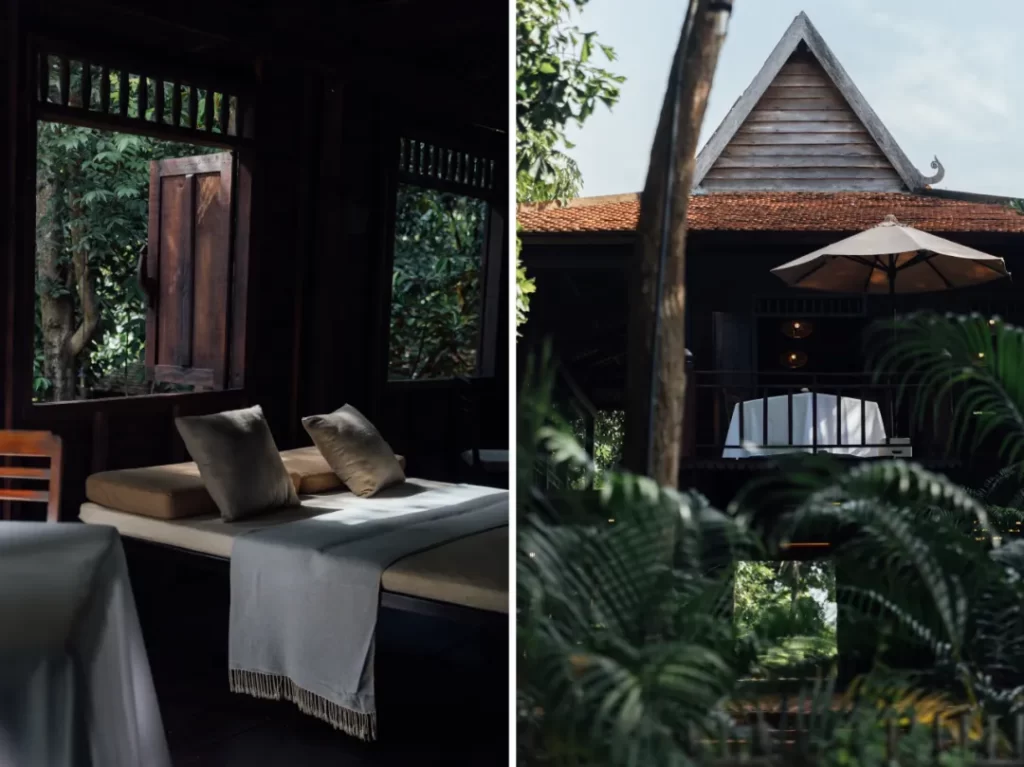
Amansara boasts a traditional Khmer stilt house, where guests can rest between visits to the temples.
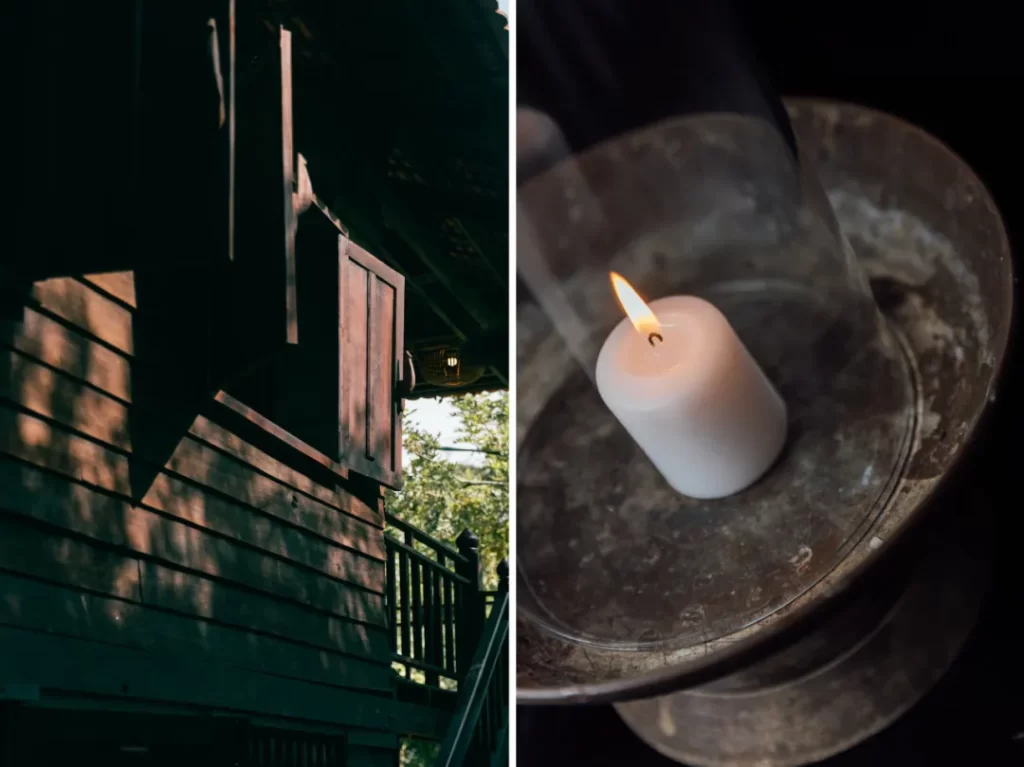
Apart from the later addition of electric fans, the entire stilt house retains its original appearance and structure.
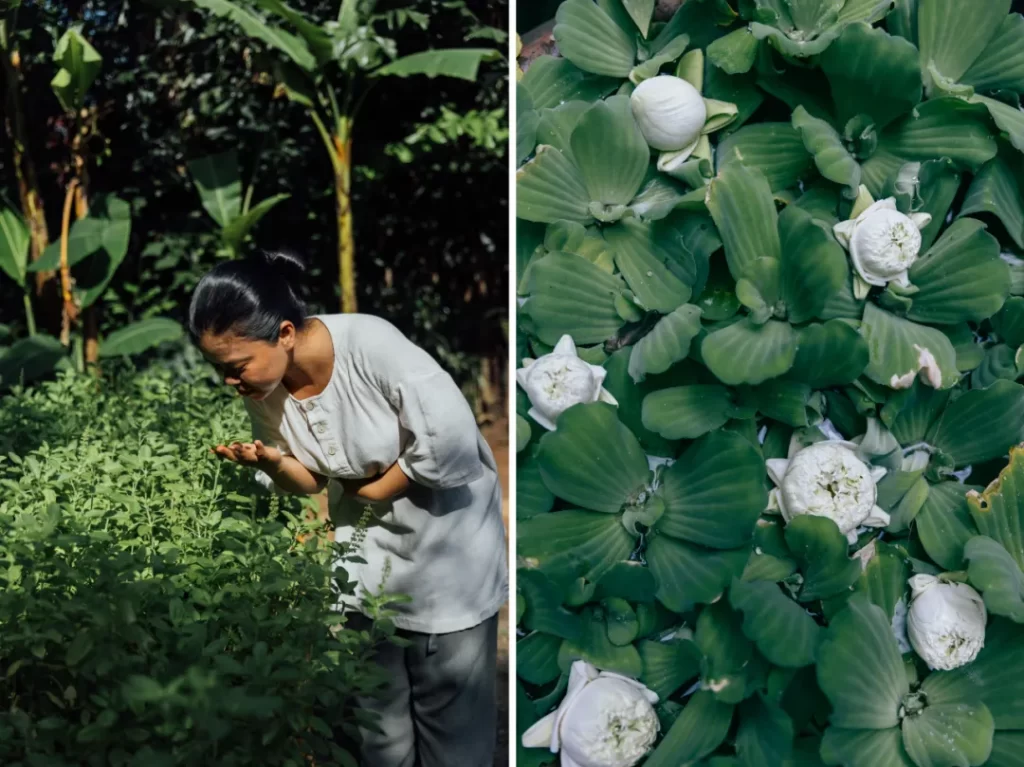
Outside the stilt house lies the hotel’s own plantation.
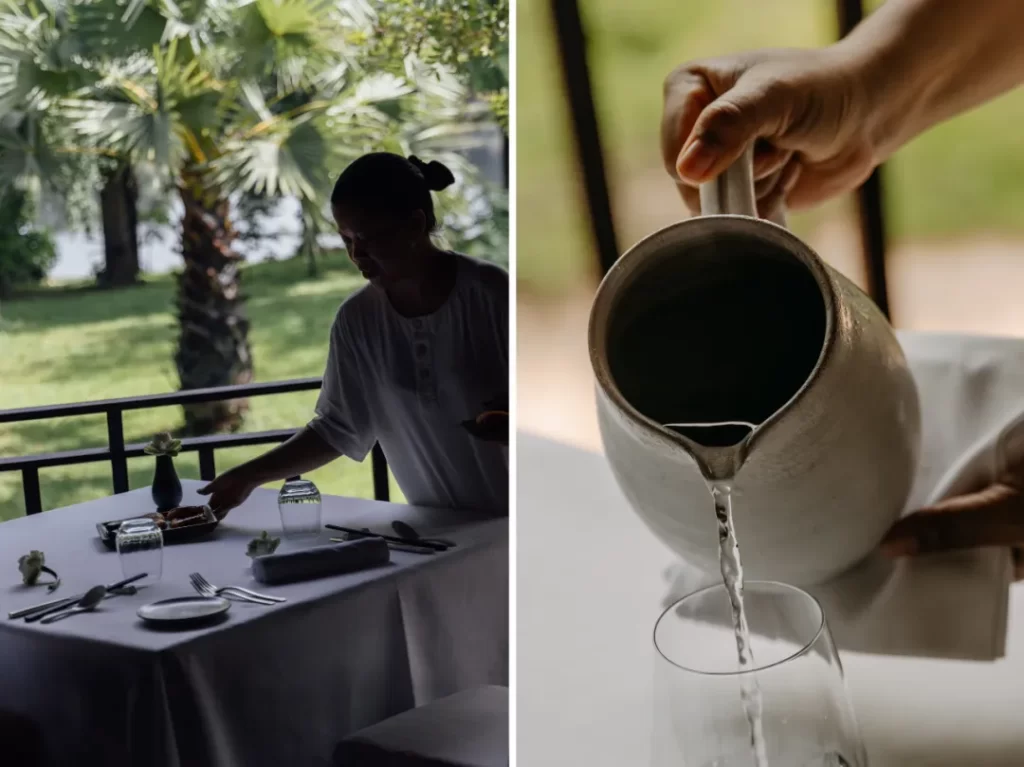
Beyond serving as a resting place, the stilt house also offers guests traditional Khmer breakfasts and dinners.
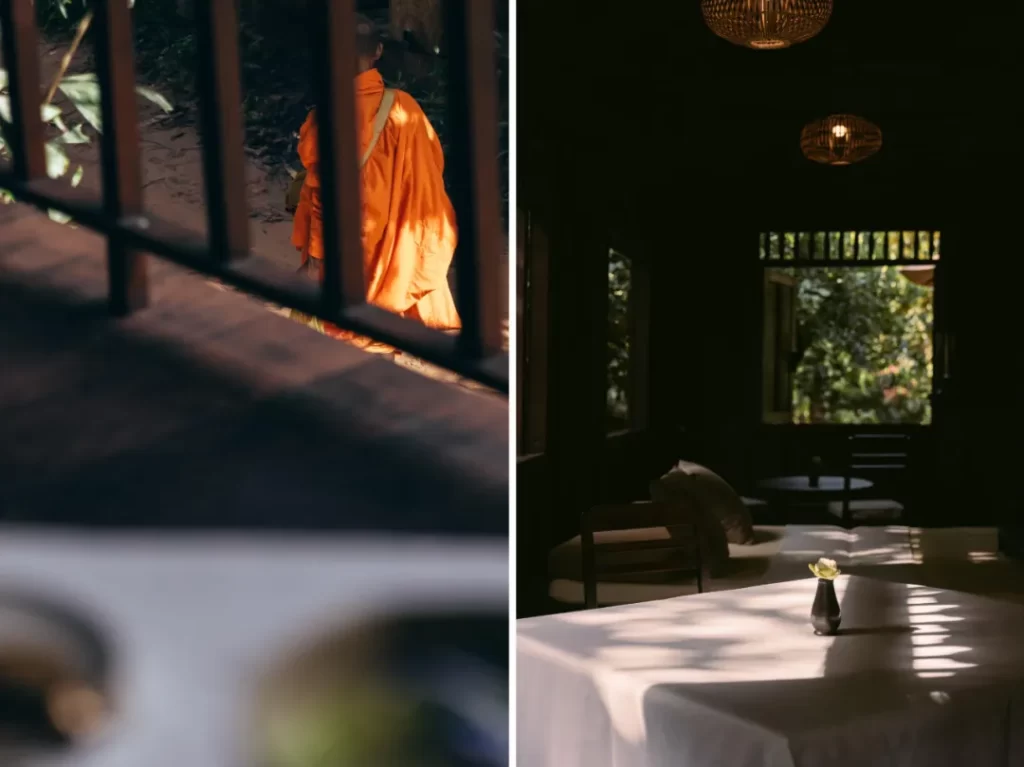
A monk passing by during breakfast at the stilt house.
Amansara remains a gentle vestige of that idealism. Its low buildings, wide overhangs, and enclosed courtyards evoke a quiet power, achieved through minimalist form and spiritual coherence. It is not tall, but dignified; it speaks no grand rhetoric, but is full of symbolism. It no longer declares a national narrative, but holds, within the scale of its architecture and the restraint of its details, the echo of a modernist idealism.
That era in Cambodia truly possessed a unique confidence.
People no longer built only pagodas and French villas—they began to envision a future of their own. Phnom Penh’s National Theatre, Olympic Stadium, university campuses, diplomatic quarters—all pulsed with new energy. New Khmer Modernism was not just an aesthetic experiment; it was part of the national identity—a tropical country’s architectural enlightenment.
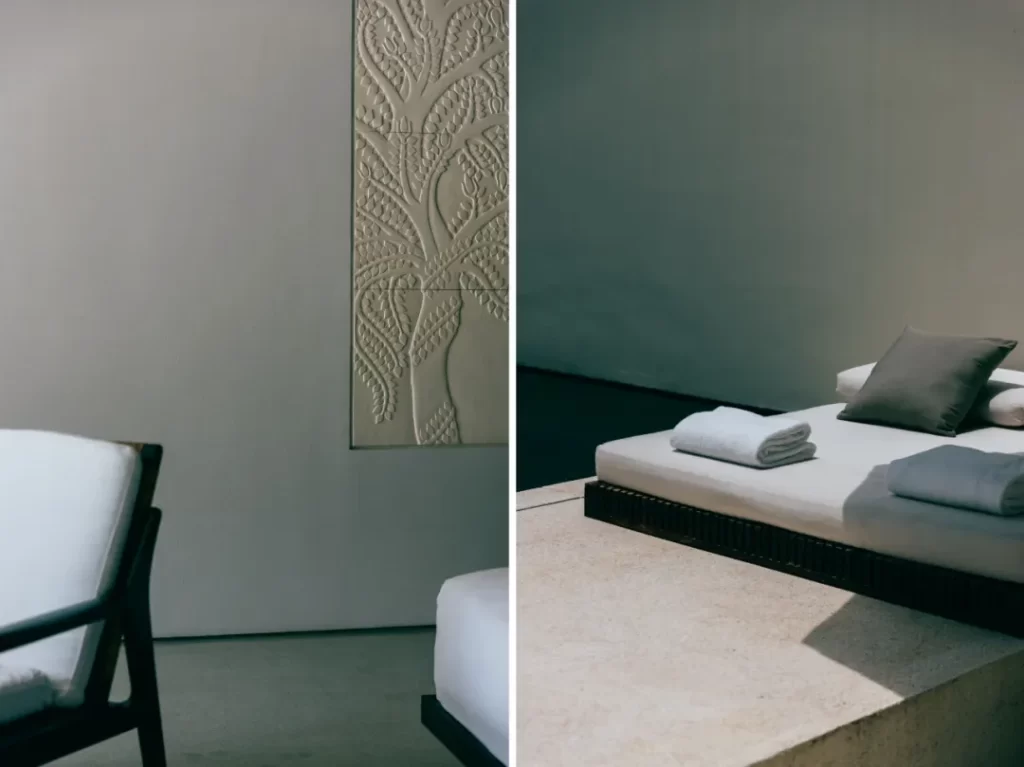
Inside the guest room, Amansara’s signature black-and-white minimalist decor unfolds quietly.
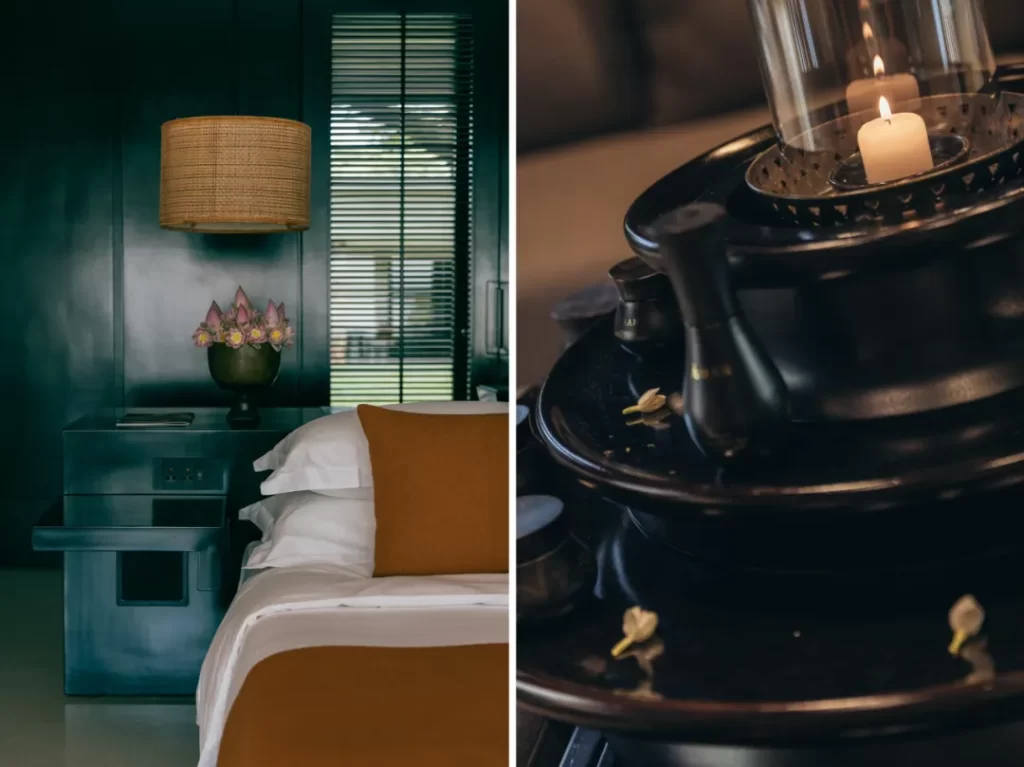
The concrete lattice walls and adjustable shutters serve both to ventilate and to filter the light.
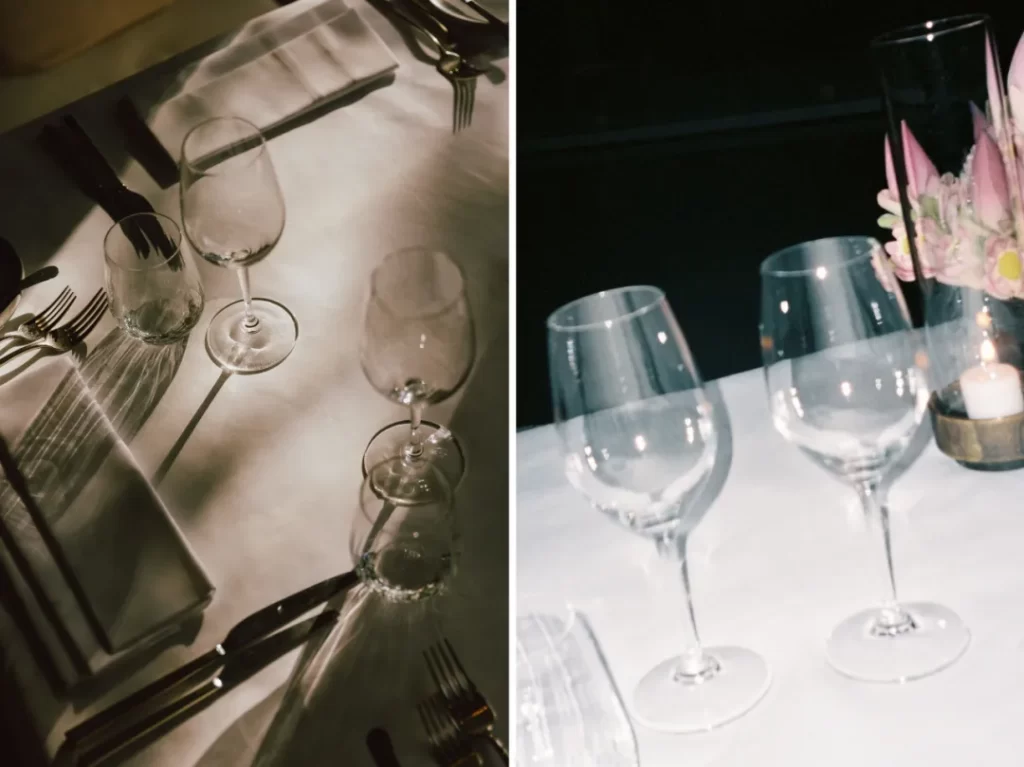
The play of light and shadow within the dining room.
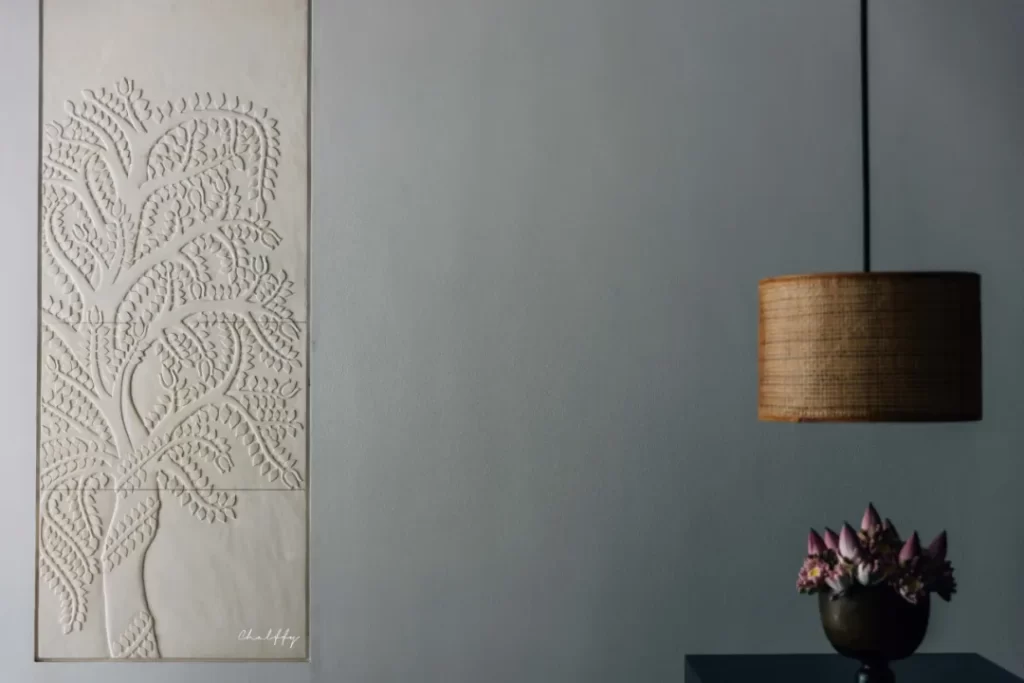
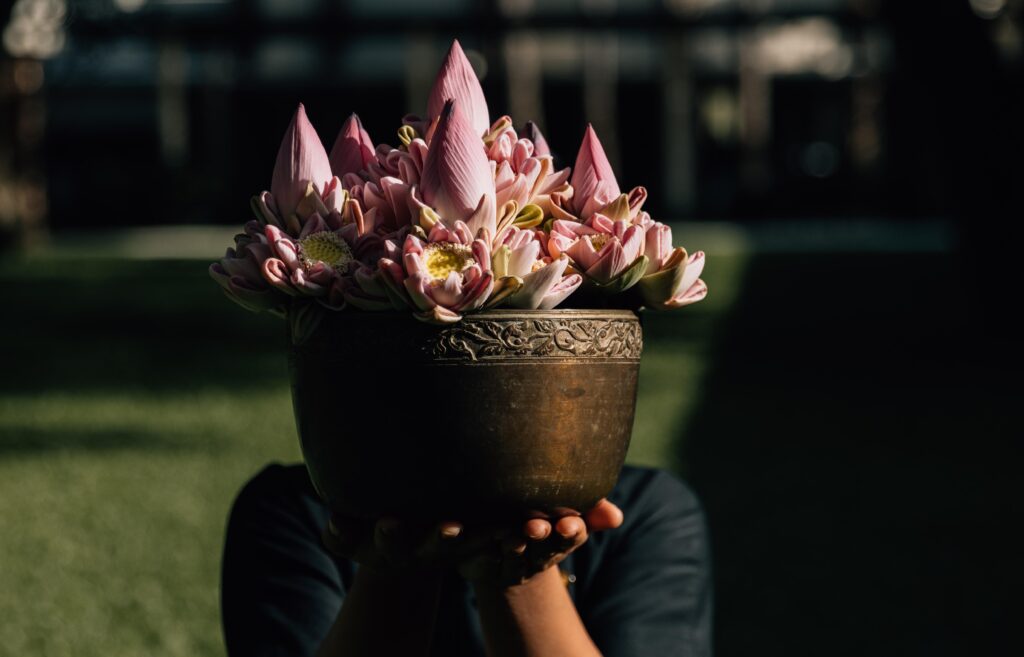
The minimalist decor creates an atmosphere of calm. At Amansara, I often noticed how New Khmer modernism abstracted traditional motifs—the Khmer lotus, the serpent deity Nāga, the mythical Garuda bird—embedding them subtly into railings, lattices, and wall details.
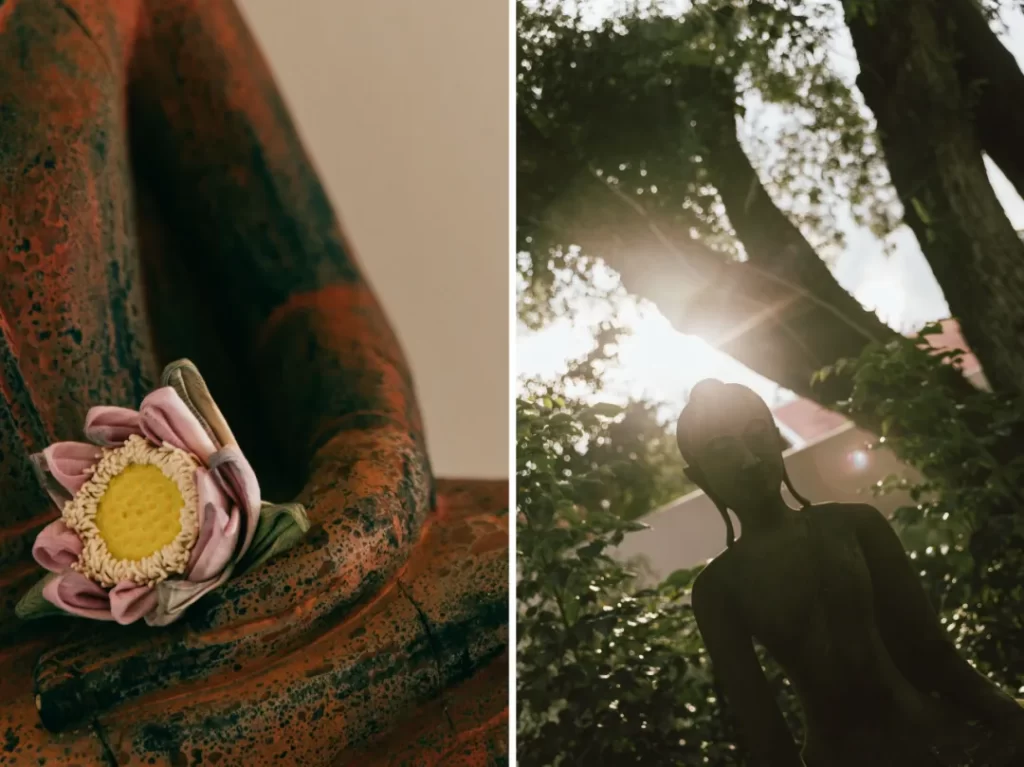
Buddha statues can be found throughout the hotel.
But as Orhan Pamuk once wrote, “a nation’s moment of self-discovery is often its most fragile.”
One war, one extreme ideology, was enough to reduce these artistic blueprints to dust.
In the 1970s, Cambodia’s fate turned sharply. Amansara’s villa, too, fell into silence. The royal family fled, the building was abandoned. It was not until 2002 that Aman inherited this ruin. Rather than rebuild or over-restore, they preserved the muted materials, maintained the rhythm of the corridors, and filled the absences with natural stone. Every brick and tile seemed to whisper: You can still be seen. And the villa resumed its unfinished story.
Jan Morris once said that a city is not defined by its buildings, but by the gaps and echoes between them. At Amansara, the architecture seems always to step aside, giving way to time and memory. It is neither tall nor deep, but possesses a quiet dignity—the kind left behind by another age. It does not rely on opulence or extravagance, but on proportion, restraint, and lasting patience.
Some say the highest purpose of architecture is to resist time.
In Cambodia, that resistance is gentle.
Every afternoon, sitting quietly in the courtyard, you might hear birdsong or the hum of an electric scooter in the distance. But clearest of all is the echo of a shared memory—a nation that once tried to become itself, and an architect who sought to write faith and identity into the spaces he shaped.
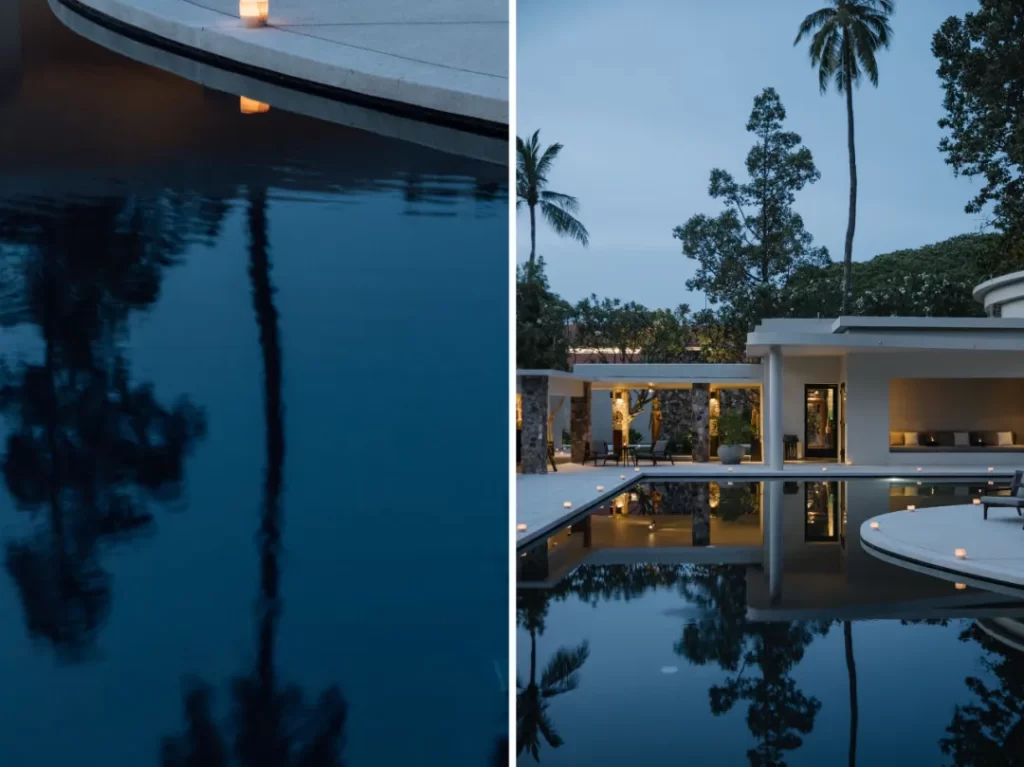
Amansara bathed in the glow of the fading light.Photo: Chalffy Chan
During my stay at Amansara, I would set out each morning in the hotel’s courtesy car to visit the temples. By the time I returned, the sun had just risen over the jungle, the city still lay dormant, and both within and beyond the hotel grounds, a hush lingered—as if time had paused in a pre-modern stillness. It was not a lack of modernity, but rather a gentle recalibration of time itself, a rhythm tuned ever so slightly slower.
This time, instead of choosing the grandeur of Angkor Wat, I asked my butler to arrange a route through a series of smaller temples—those half-lost in the jungle, modest and seemingly forsaken. Ta Prohm, Preah Khan, Ta Nei… these sites, installations crafted jointly by time and nature, resonated more deeply with my poetic vision of the Angkor complex. They also echoed Amansara’s sense of historical choreography: a gentle interval suspended between memory and reality.
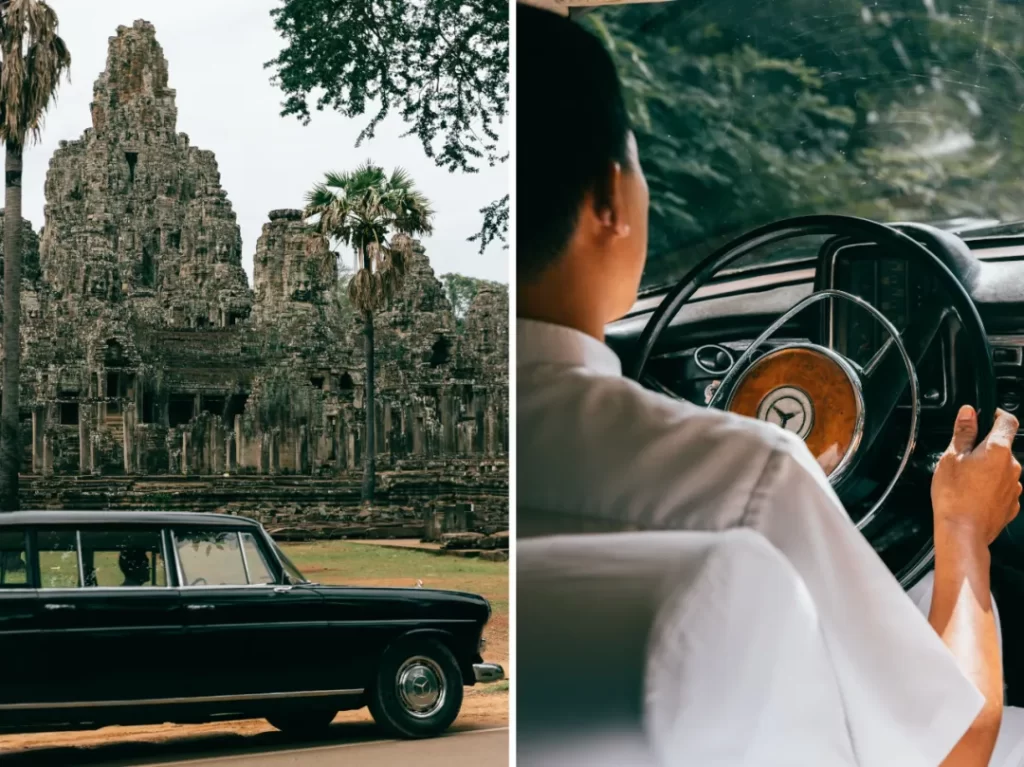
The antique Mercedes limousine used during temple visits was once Prince Sihanouk’s personal car. Since the day Amansara opened, the driver has been behind its wheel for over twenty years, proudly remarking, “This very seat has been occupied by Angelina Jolie.”Photo: Chalffy Chan
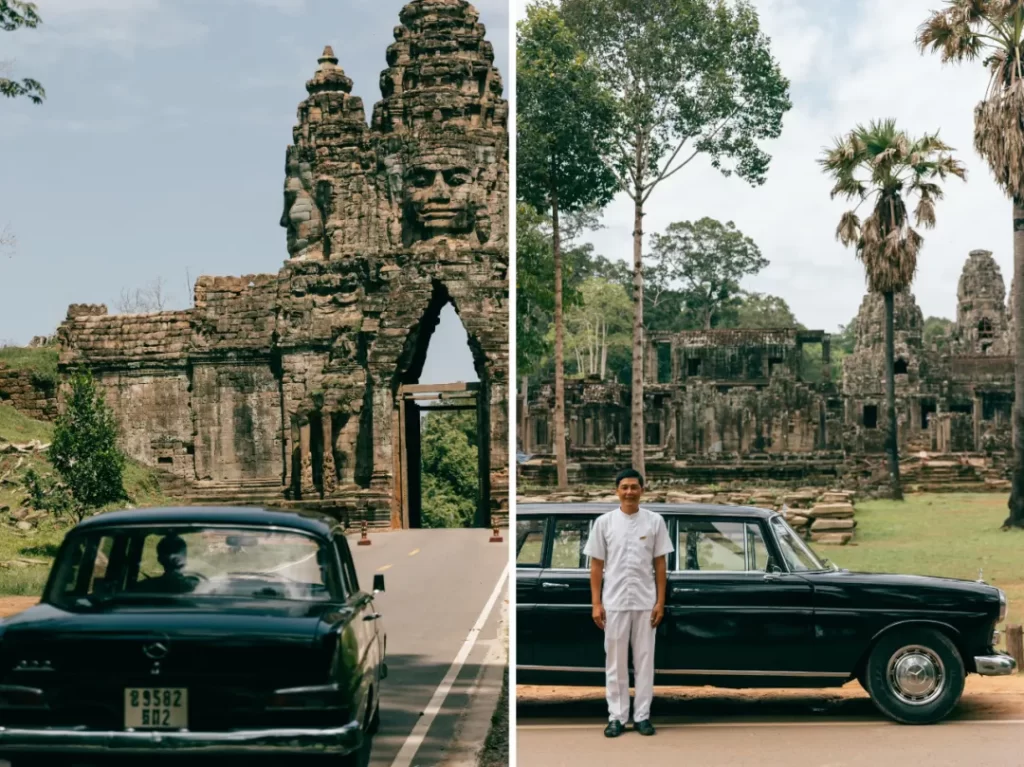
Whenever we passed by the iconic landmarks, the driver would patiently stop to let guests take photos.
Ta Prohm Temple in the early morning.
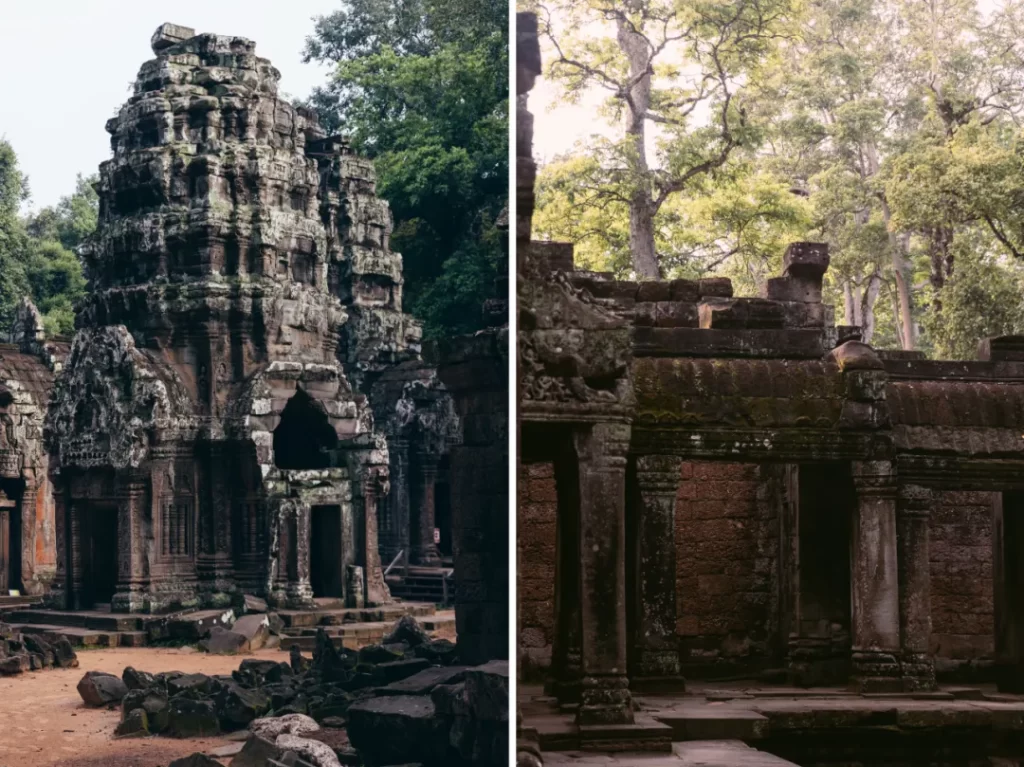
Thanks to the itinerary arranged by the Amansara guide and a private entrance, we enjoyed Ta Prohm Temple entirely to ourselves, perfectly avoiding the crowds.
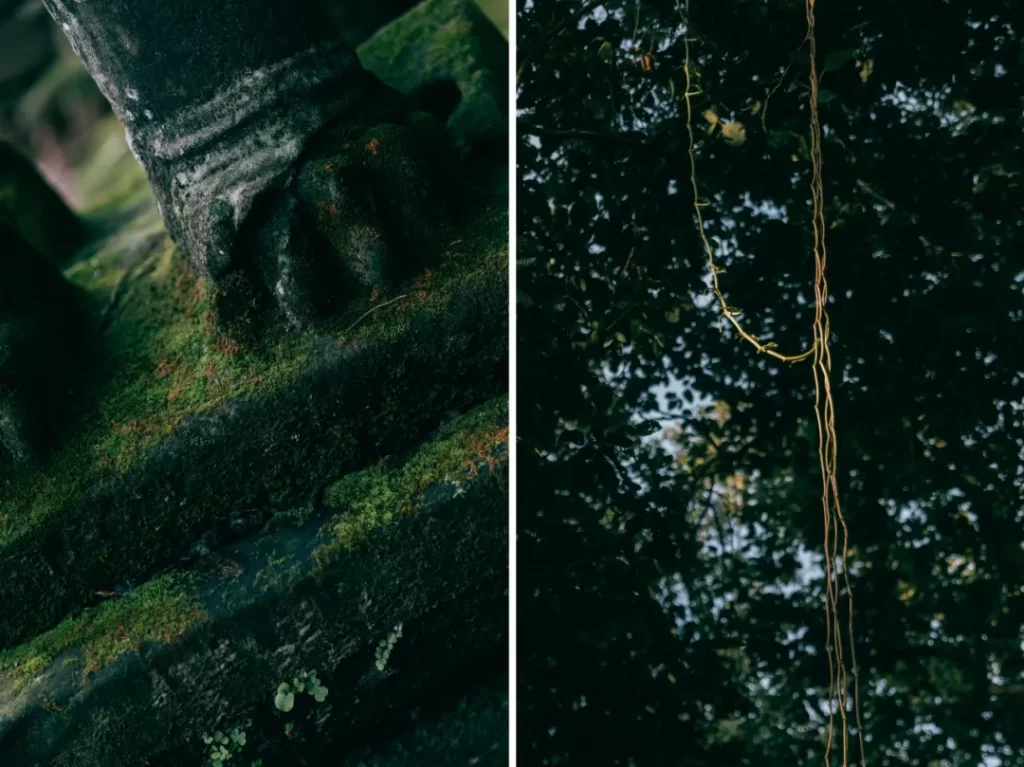
The traces of time etched upon the jungle temple.
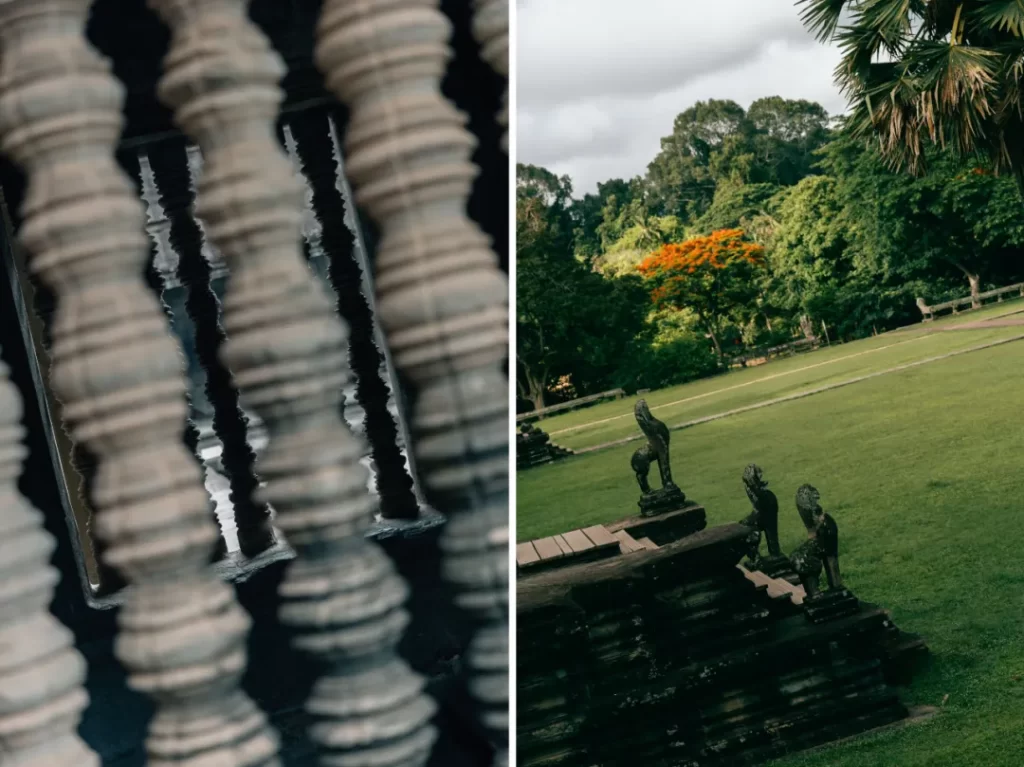
Angkor Wat at dawn.
At Ta Prohm, enormous strangler figs have taken root in the cracks, their tendrilled roots coiling around the stones like sentient limbs. Underfoot, soft leaves and crumbled gravel; around me, ancient bricks, moss, and the light of morning cascading through collapsed roofs—an entire age descending in a wash of gold. Standing before the slanted stone walls of Ta Prohm, I gazed at the faded figures on the bas-reliefs—dancers, soldiers, lotuses, flames—and suddenly I understood why so much of Orhan Pamuk’s writing turns to melancholy and time. It is not that the past was better, but that the past can no longer be possessed in any precise way. It can only be remembered, reimagined, gently interpreted.
These temples were built, then abandoned, then rediscovered—slowly restored by time. In this, their story is not unlike that of Amansara itself, or of Cambodia as a nation.
One was built to receive royal guests, bearing the promise of the modern. The other housed the gods, enshrining a faith in eternity. Both seem engaged in an unfinished struggle: between architecture and nature, between order and wildness.
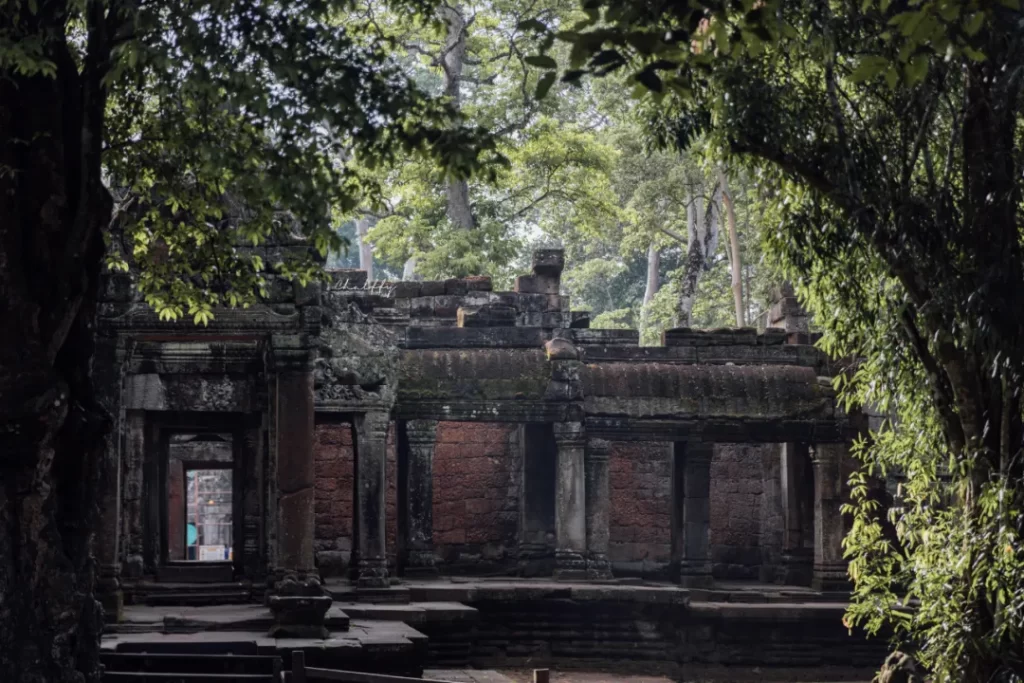
The jungle temple — a silent awe at first sight.
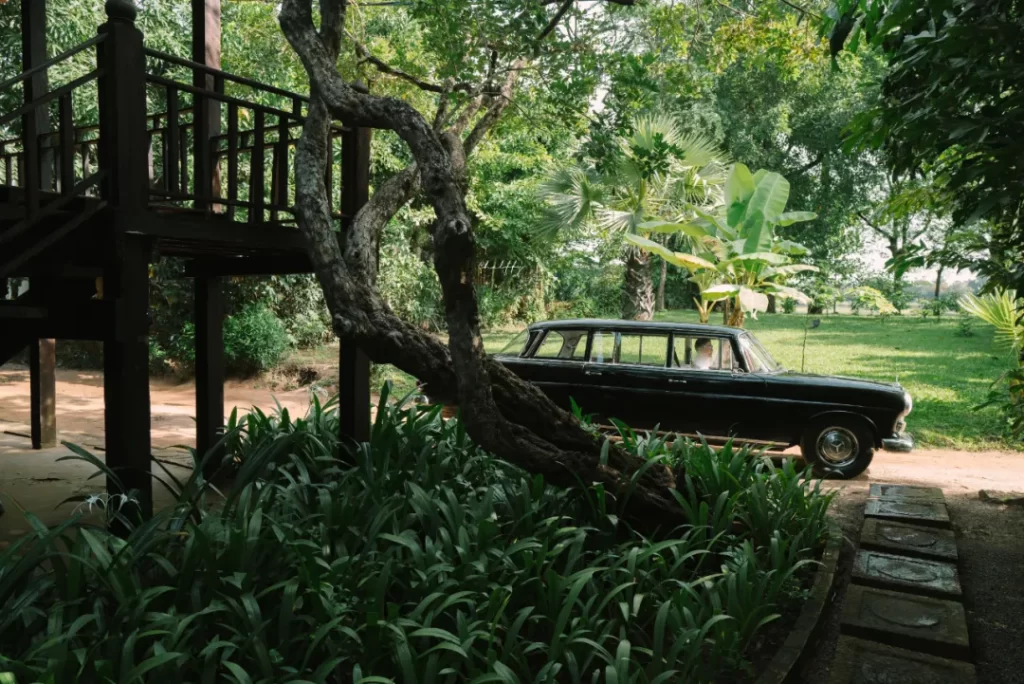
The limousine parked beneath the stilt house.
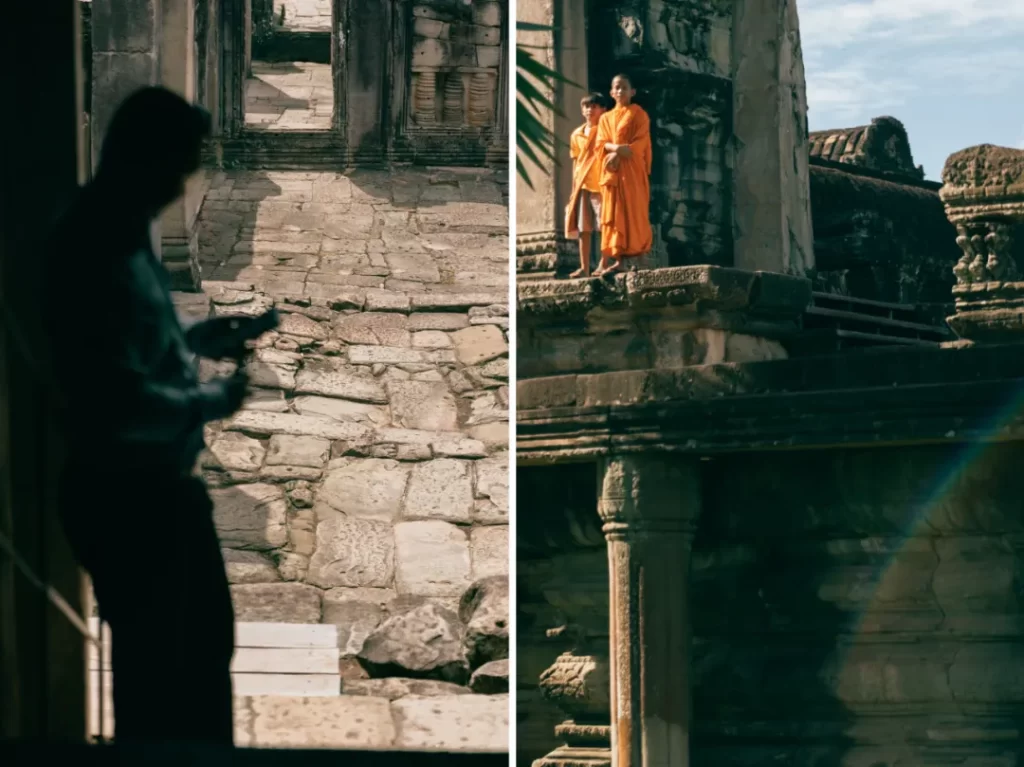
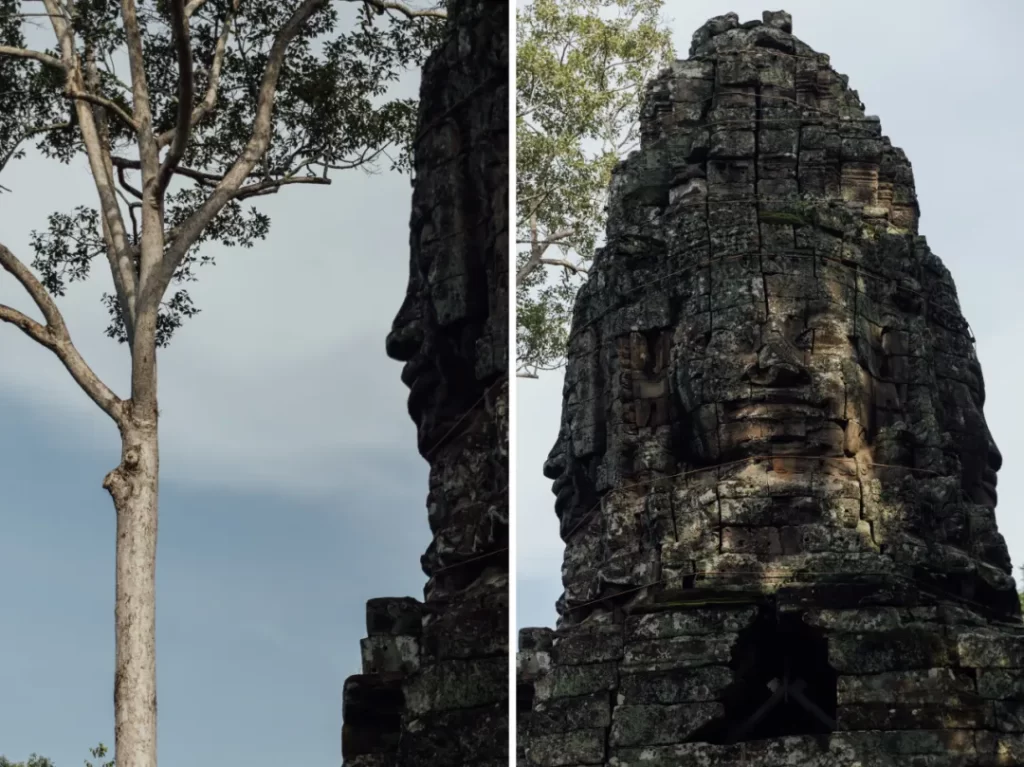
Visitors and young monks at Bayon Temple and Angkor Wat.
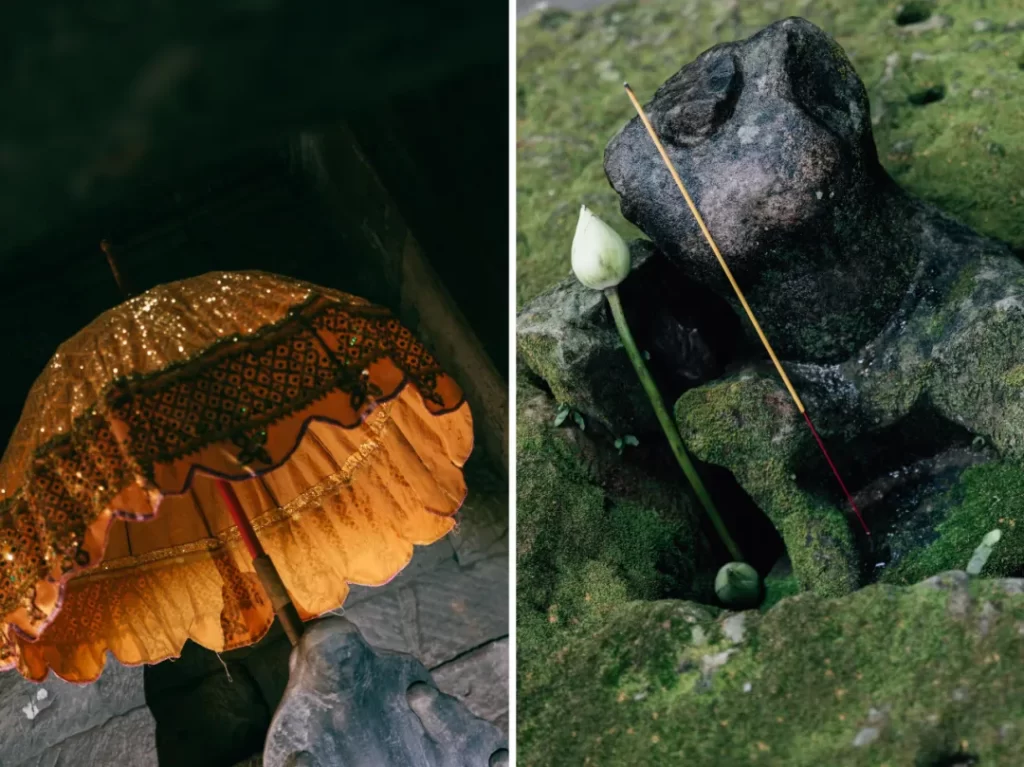
Bayon Temple
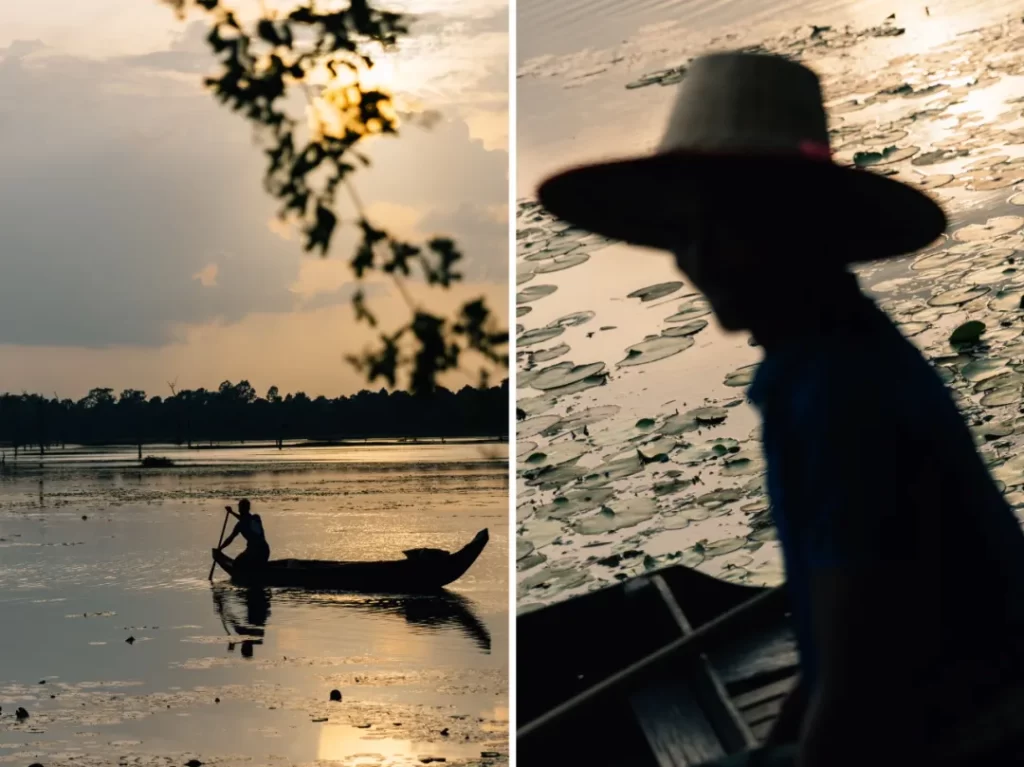
At sunset during the rainy season, the Amansara boatman paddled us across to the island temple.
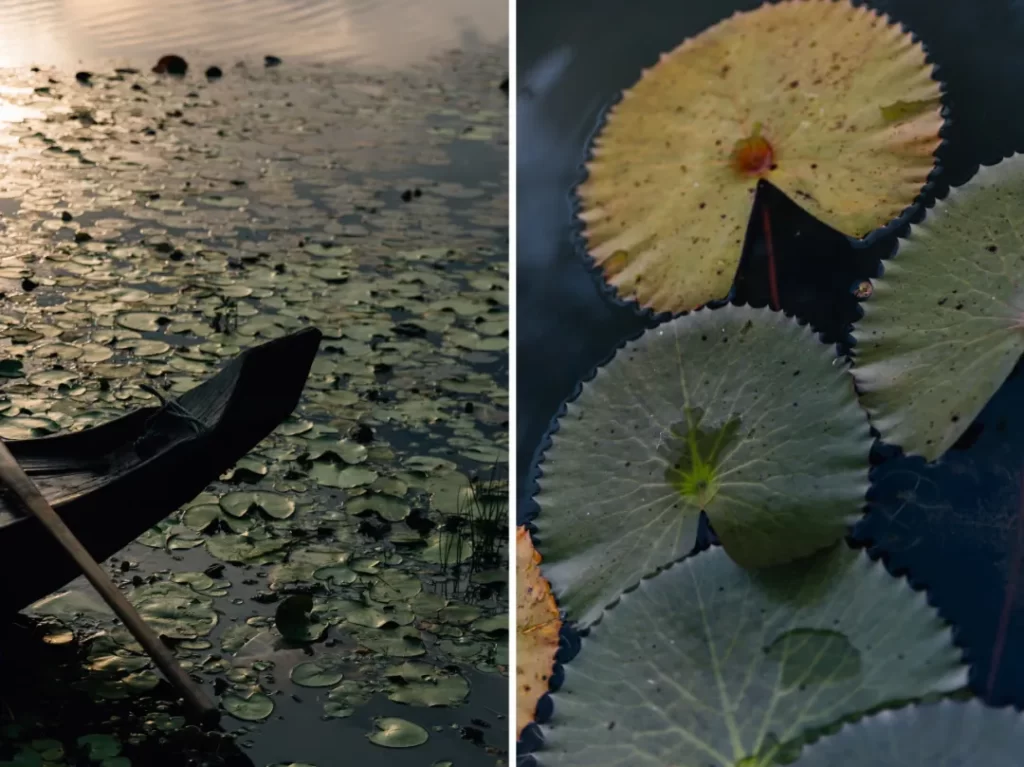
The lotus leaves on the lake still recall the water’s nearly black-diamond calm.
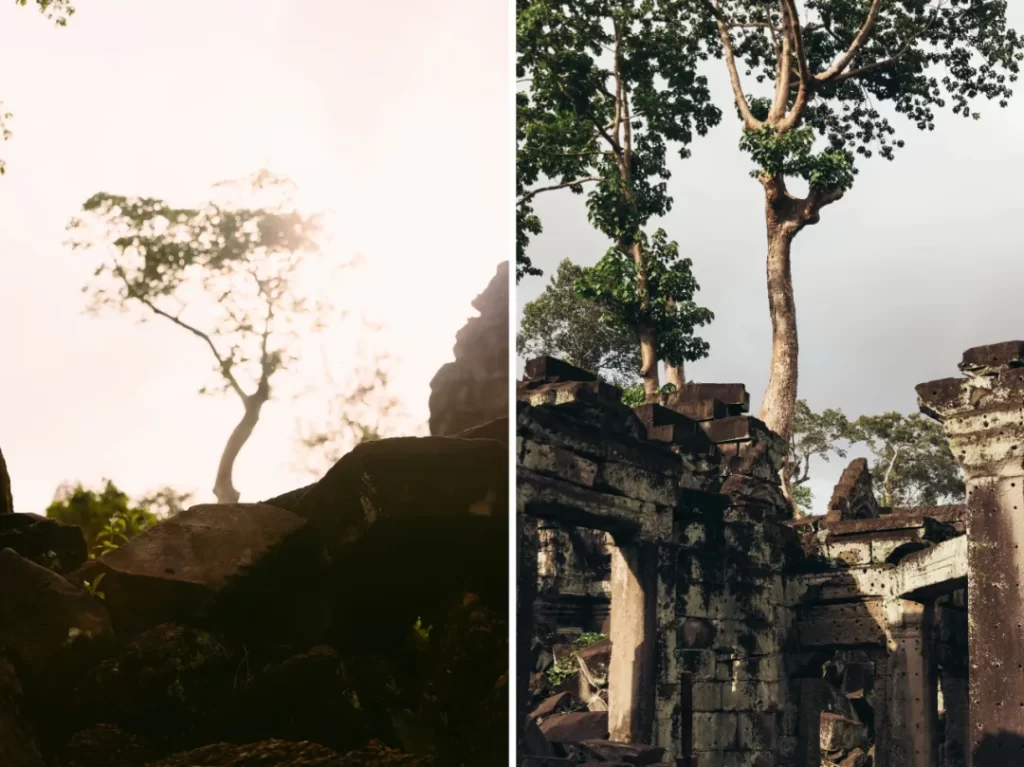
Ancient trees of the jungle.
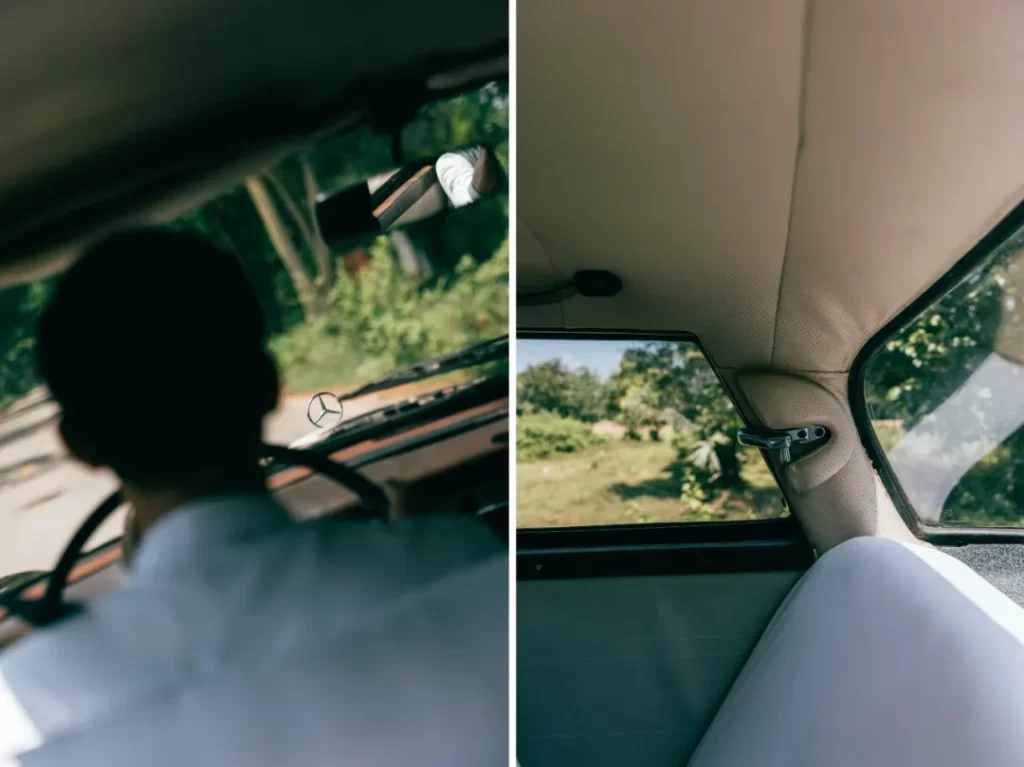
The limousine passed through vast fields and shaded groves bathed in sunlight.
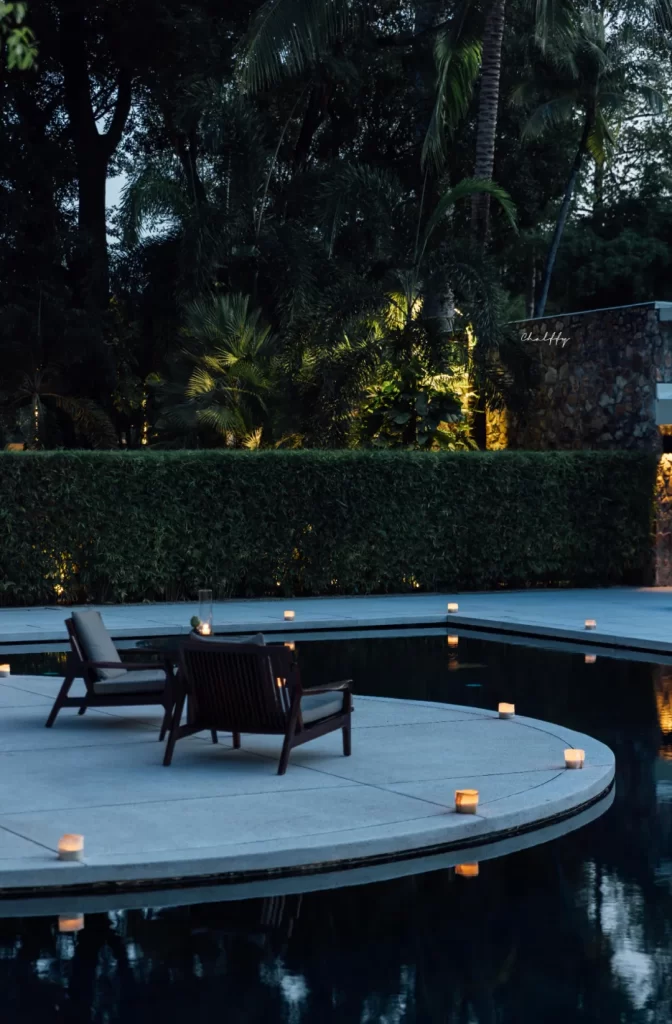
Amansara by night.
In the Amansara library, I came across a history of Cambodian architecture. The author noted that Ta Prohm is preserved by a principle of “maintenance as found”—only the most minimal structural support is provided, with no attempt at reconstruction. It is not merely a conservation technique, but a philosophical stance: to accept incompleteness, to let nature and history tell the rest of the story.
Perhaps that is what Amansara means.
Unfinished—not as a loss, but as a form of openness. A continuation. A kind of eternity in progress.