
I left Siem Reap at dawn, bound for the rainforest seven hours away.
Ahead of me lay a long-awaited destination—seven years in the making—a realm untouched and unknown, and a promise made to the spirit of exploration.
The 1950s and ’60s were, in retrospect, the golden age of postcolonial Cambodia. The horrors yet to come had not descended upon this land; the old elegance of Indochina still lingered in the rhythms of everyday life. As William Shawcross once wrote in Sideshow, it was “a land of pastoral poetry, unspoiled by the cruelties of the modern world.” If each of us carries some imagined version of traditional Southeast Asia—refined, transcendent, spiritual—then Cambodia in 1967 may have been its last clear manifestation.
That same year, four years after the assassination of President Kennedy, Jacqueline Kennedy paid a quiet visit to Cambodia. Prince Sihanouk welcomed her with a ceremony both grand and restrained, as if to offer the world one final glimpse of the region’s regal Eastern grace. In the hotel where she once stayed, people still preserve the glass she drank from, a pearl necklace, faded photographs—tokens of stories and a gilded age now long gone.
Jacqueline herself never made it to southern Cambodia on that brief journey, nor did the Prince arrange for a discreet, luxurious trek into the rainforest. But deep within the Cardamom Mountains of southwest Cambodia, far from any road or settlement, Shinta Mani Wild has, in the new century, composed a romantic continuation of her mysterious, half-whispered visit.
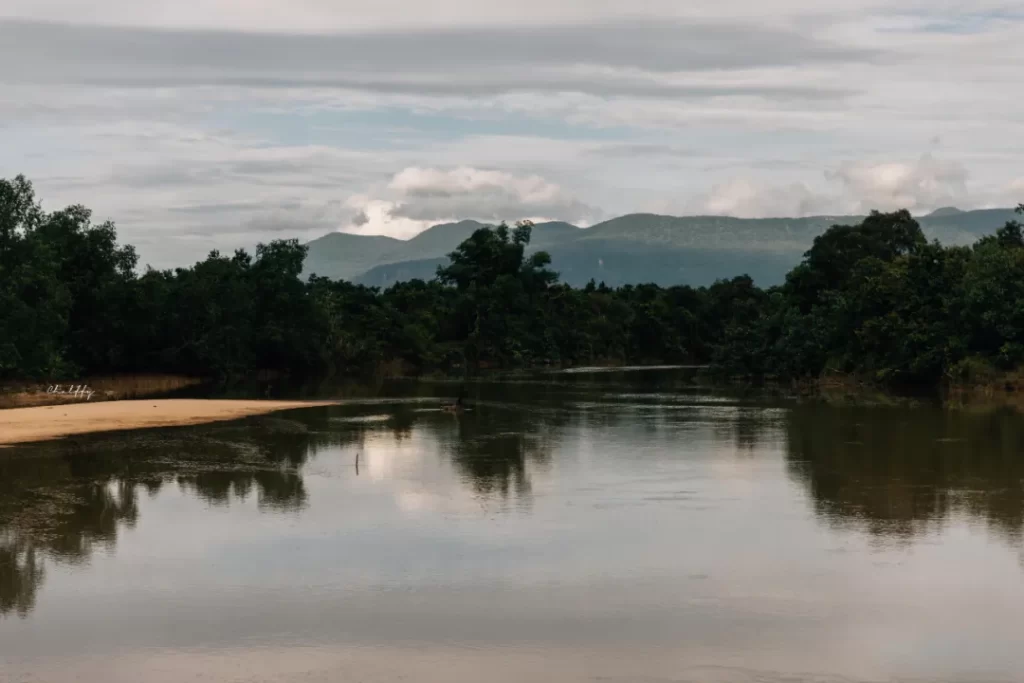
After six and a half hours on the road, the towns and villages had long since disappeared. We passed crumbling asphalt, glints of rice paddies and wetlands, and then, just beyond the final bend where phone signal gave out, we turned onto a dirt-red road snaking through dense mango groves. The silhouette of the Cardamom range emerged faintly in the mist, rising abruptly from the flat Cambodian plains, solemn and still.
The world grew suddenly quiet. Though the car jolted along the uneven road, a hush fell over everything, as though the forest itself demanded our attention.
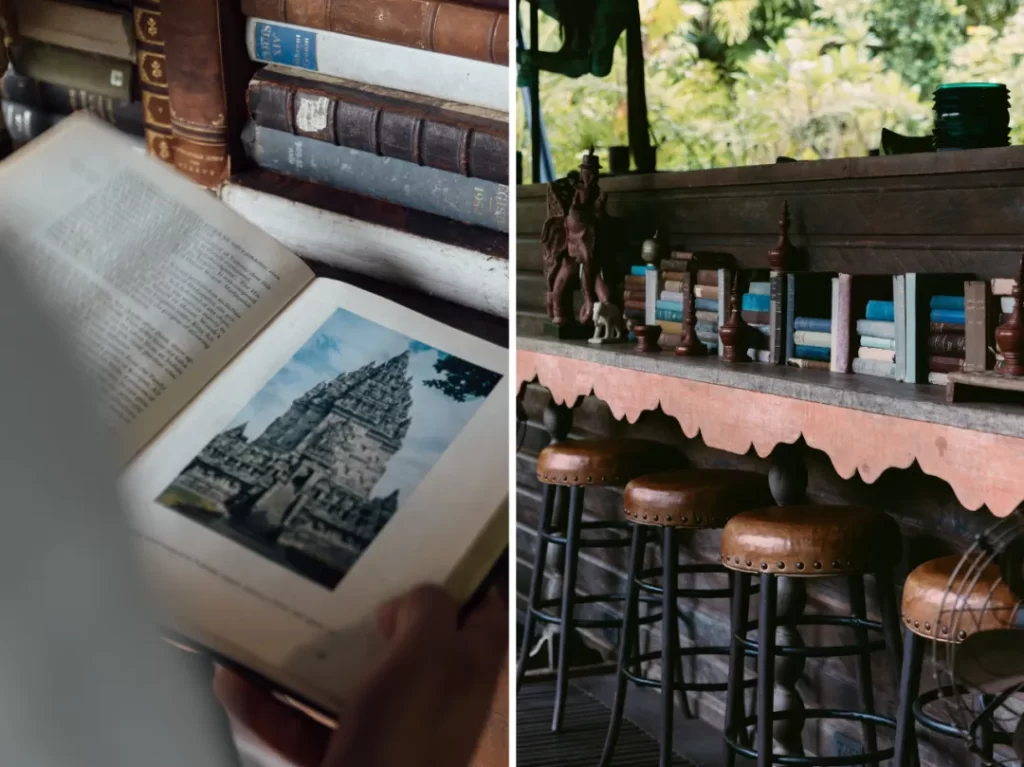
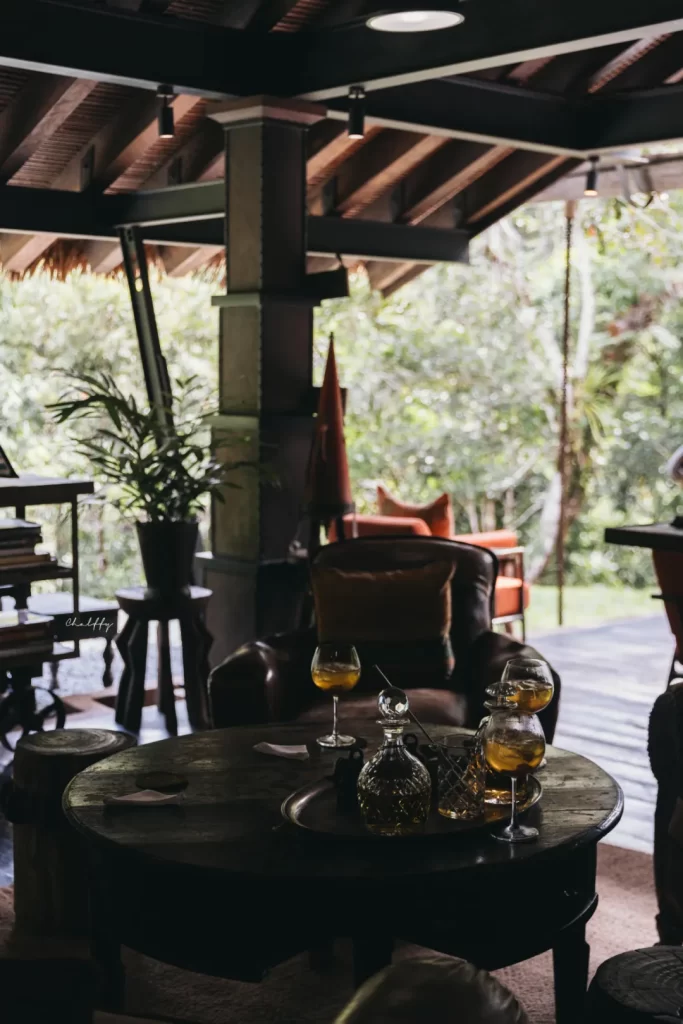
Because Shinta Mani Wild sits in the heart of a protected conservation area, outside vehicles are not allowed inside. At the edge of the reserve, we transferred to one of the lodge’s open-top Jeeps. In the blink of an eye, the wide dirt road narrowed into a shaded jungle path. The Jeep inched forward, its wheels barely fitting the mossy stone trail, brushing against thick tropical foliage on either side. Amid the bumps and lurches, a low pale-yellow structure appeared among the trees—the lodge’s Headquarter area. This would be the only communal space in a rainforest the size of Central Park, spread over 350 hectares.

“Hello, Bong!” A butler stepped forward, palms pressed together in greeting, smiling warmly.
During my time in Cambodia, everyone addressed me as “Bong,” meaning friend. Even locals speaking to one another used the same word, regardless of age or gender. I often wondered how they distinguished one from another. Yet somehow, this gentle ambiguity felt particularly apt in the rainforest. Here, where humanity and nature meet without pretense, titles lose their edge. In the wild, all are friends—rank and name fade in the presence of trees.
After the long drive through mountain and forest, the sudden human warmth and rising mist in the valley lent the moment a dreamlike quality.
No sooner had I settled in than the first rains of the season fell without warning, as though the rainforest itself were staging a jubilant welcome.



Though the property spans a great area, beyond the Headquarter, which serves as both social hub and gathering place, there are just 15 tented suites scattered through the wilderness. Hidden beneath towering ancient trees, the tents are spaced far apart, ensuring that guests are truly immersed in solitude.
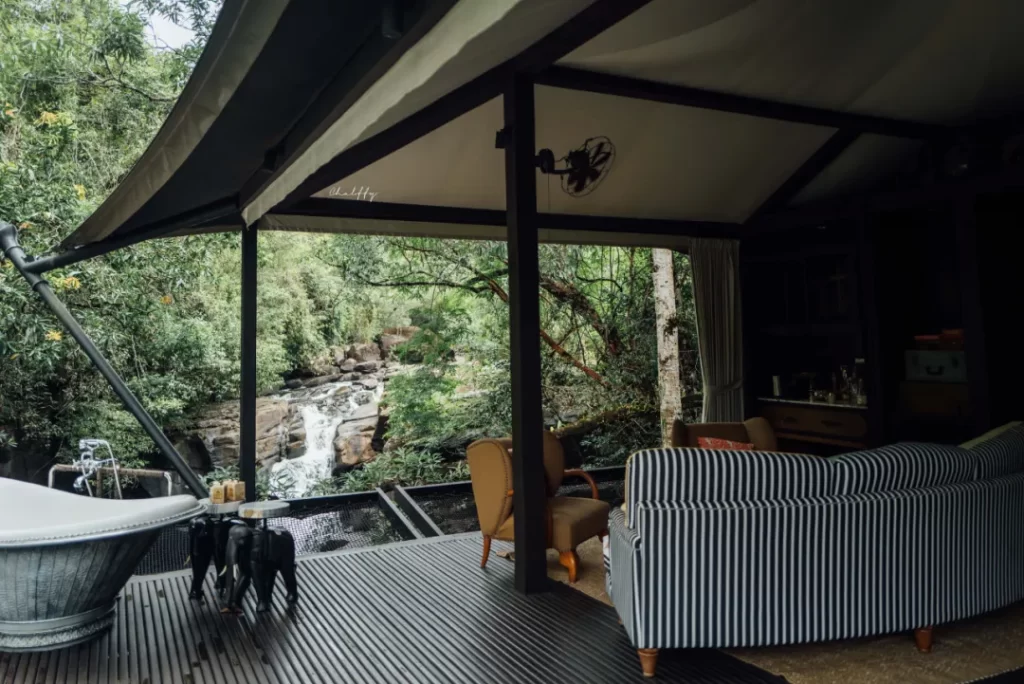
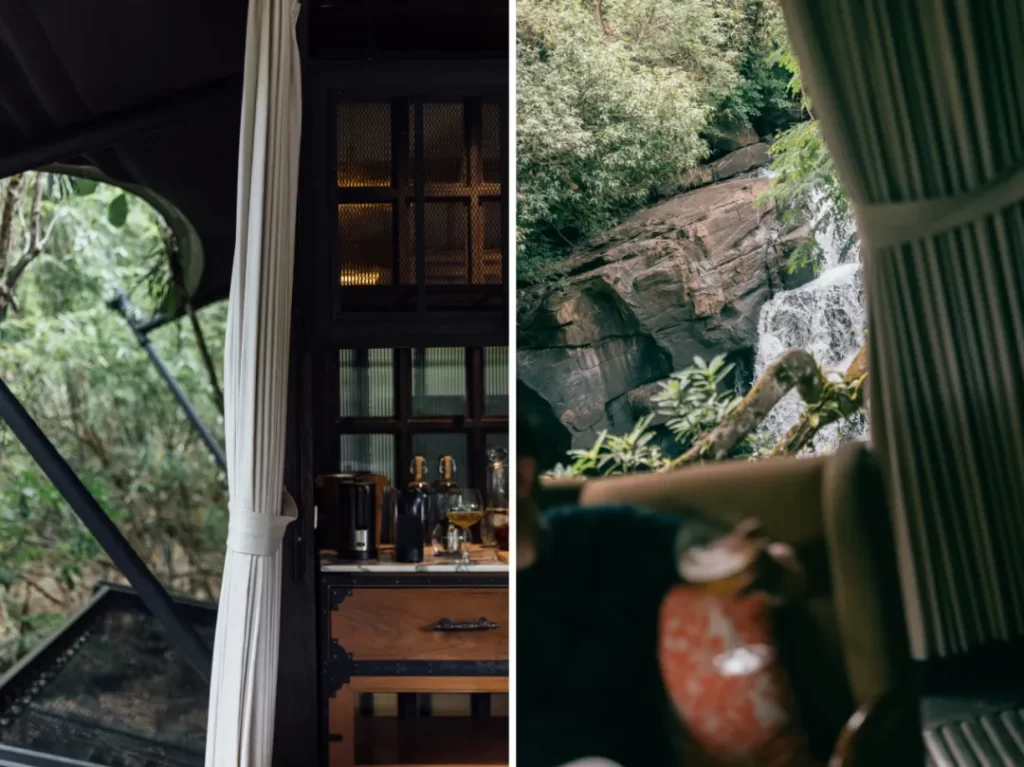
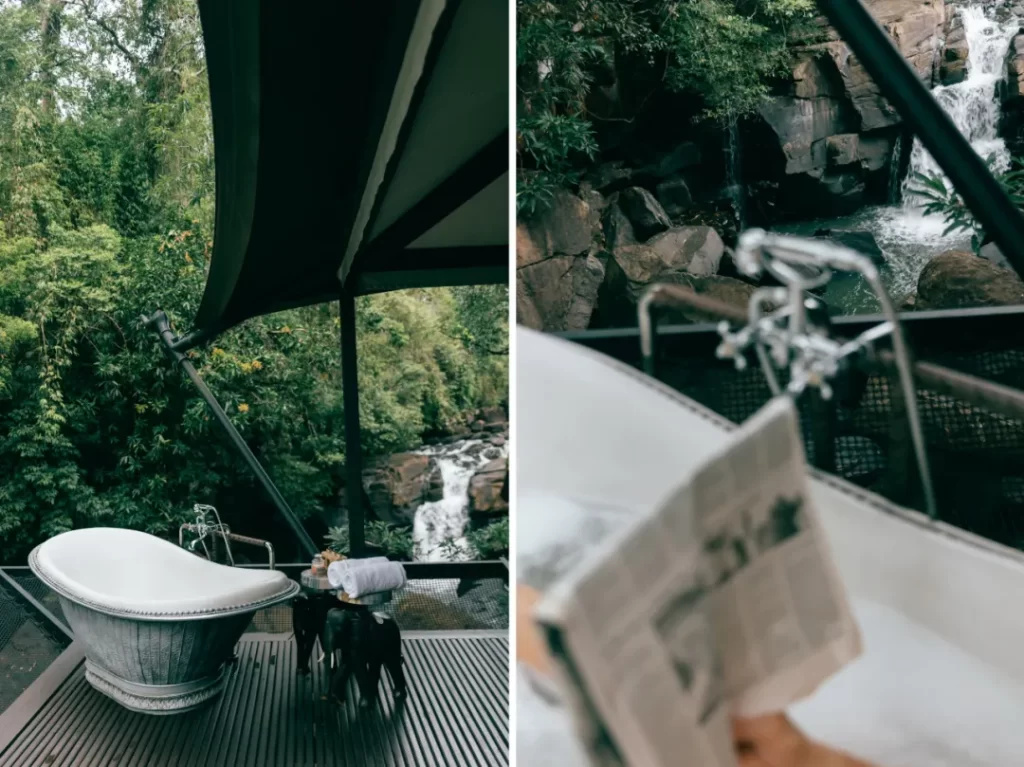
Mine was Tent 14, themed after National Geographic, nestled deep in the forest and facing a waterfall. Each day, simply walking to the restaurant required a twenty-minute trek through the woods. In designing the lodge, Bill Bensley had insisted on preserving every tree; the trails follow the land’s contours like veins grown naturally from the forest itself. There is no motor noise here—only birdsong, the rustle of leaves, and often the faint, unexpected perfume of jungle blossoms. The trees stand old and tall. Lizards and chameleons vanish in and out of view. Though paths are laid, each walk through the forest feels like an expedition. The rawness of it all echoes the tent’s adventurous theme: Shinta Mani Wild rekindles the traveler’s yearning for luxurious discovery in the heart of the unknown.


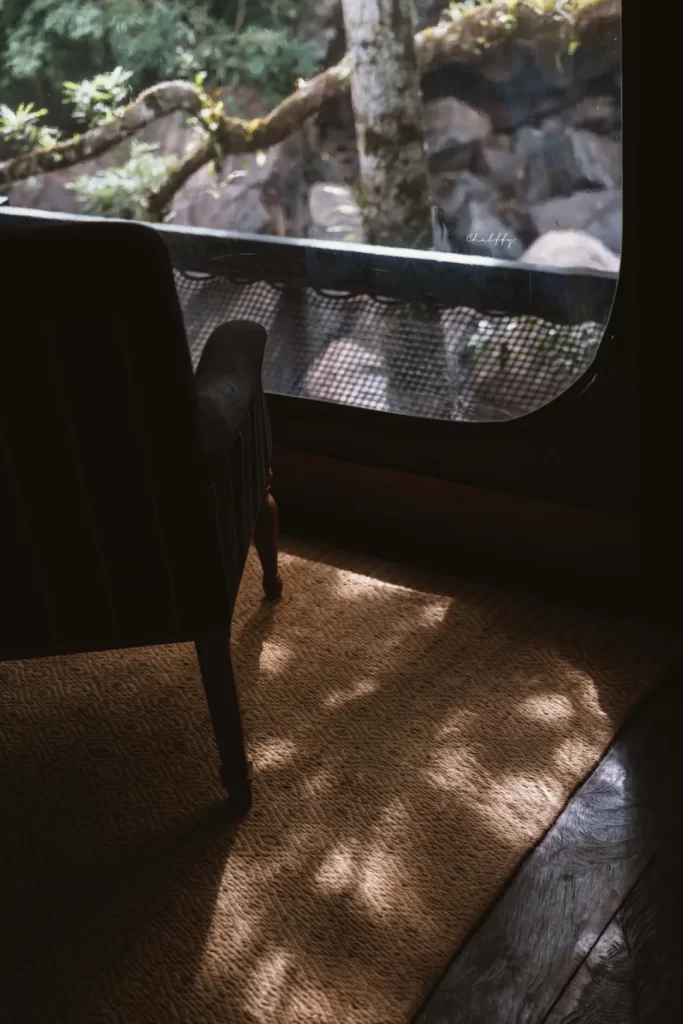
To me, the “wildness” of Shinta Mani Wild is not unruly but cultivated—like a silent discipline, a relaxation achieved through meticulous restraint. The lodge behaves like a respectful guest, offering minimal interference, allowing the forest to grow, wither, and renew on its own terms.
This philosophy lies hidden in the smallest gestures. There are no single-use plastics in the rooms. Rainwater collection systems hum discreetly in the background. Everything feels like a quiet conversation between nature and inhabitant.
Here, “luxury” is not chandeliers, velvet, or gold leaf—it is the reallocation of space and time. It is a deliberate balance, poised delicately between human intention and the limits of nature.
When designing the property, Bill Bensley drew his greatest inspiration from dreams of Cambodia’s golden era: What if Prince Sihanouk and Jacqueline Kennedy had ventured into the jungle—what would their palace have looked like?
So even in the wild, the lodge offers a level of service and design that is the epitome of refined jungle hospitality. Each tent has a distinct theme—royalty, Jacqueline Kennedy, and in my case, National Geographic. The furnishings are whimsical and bold: French leather armchairs from the 1920s, ancient Burmese animal carvings, over 300 vintage Indian print trays, a restored 1950s hunting Jeep, old teak cabinets heavy with history. The canvas walls are adorned with murals of otters, leopards, elephants—creatures of the forest keeping silent vigil, reminding me that I was a visitor in their domain.
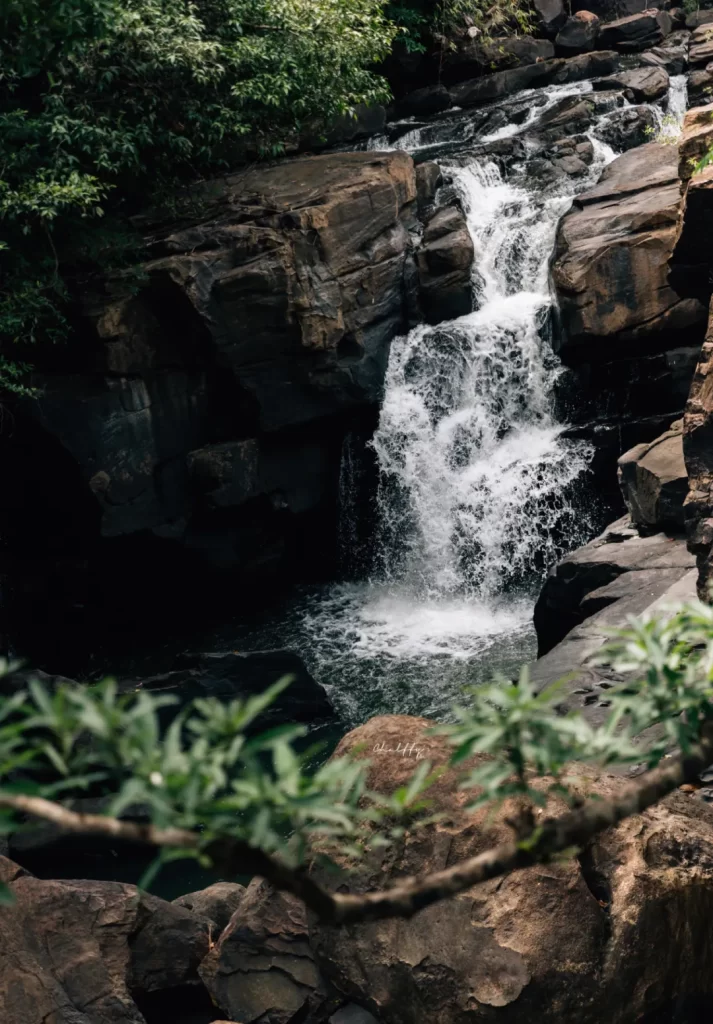

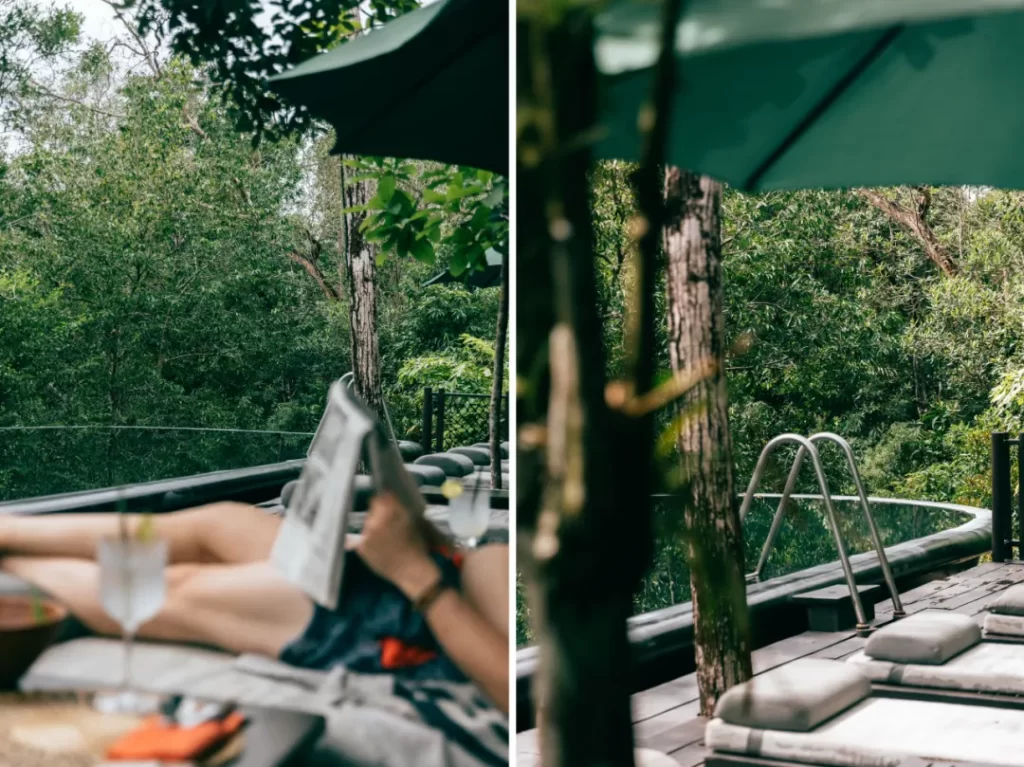
Each evening, returning to the tent, I would find a small lamp left lit inside. Outside was utter darkness, pierced only by the sound of the waterfall, the pulse of the rainforest, and the life within it. The outdoor bathtub, placed at the far end of the deck where the tent meets the trees, became my vessel. Seated in it, my back to the room, I was surrounded by nothing but blackness. The tub itself seemed to drift like a boat, afloat in the nighttime jungle.
The waterfall could be heard but not seen, its roar like crashing waves, as though the whole forest were whispering in tongues.
In Cambodia’s historical narrative, most explorers confined their gaze to Angkor and its surroundings. But here, in the forgotten depths of the jungle, Shinta Mani Wild flickers like a mirage—reviving echoes of an era when exploration and elegance went hand in hand.
Had Jacqueline Kennedy truly reached this place, perhaps she might have found, amid her chaotic and theatrical life, a fleeting moment of peace.

Deep in the Cardamom Mountains, a band of unnamed forest rangers patrols the land daily. They go by the name Wildlife Alliance. Through the Southern Cardamom Forest Protection Program, this nonprofit defends over 860,000 hectares of tropical rainforest. This land once teetered on the brink of destruction by logging and poaching—one of Cambodia’s most painful open wounds. Now, these rangers work side by side with forestry officials and police, patrolling between seven outposts—not only to track wildlife, but to safeguard one of Southeast Asia’s last intact rainforests.
But conservation does not rely on patrols alone. The program has helped over 5,000 locals—once dependent on felling trees, hunting, or trafficking animals—transition toward more sustainable livelihoods. It is this slow and delicate transformation that has slowed ecological destruction across southern Cardamom. And at the center of it all stands Shinta Mani Wild.
From its inception, the lodge has prioritized hiring locally. Many of its current staff were once poachers themselves. Today, the Cardamom patrol program is regarded as one of the most vital rainforest protection initiatives in Asia. The Wildlife Alliance operates like a silent army, fighting against climate change and extinction. From route planning to ranger training, they adapt constantly to the challenges of a complex and threatened ecosystem.
To offer guests a more tangible sense of the hotel’s commitment to rainforest conservation in collaboration with wildlife protection organizations, Shinta Mani Wild arranges patrol experiences that allow for direct participation.
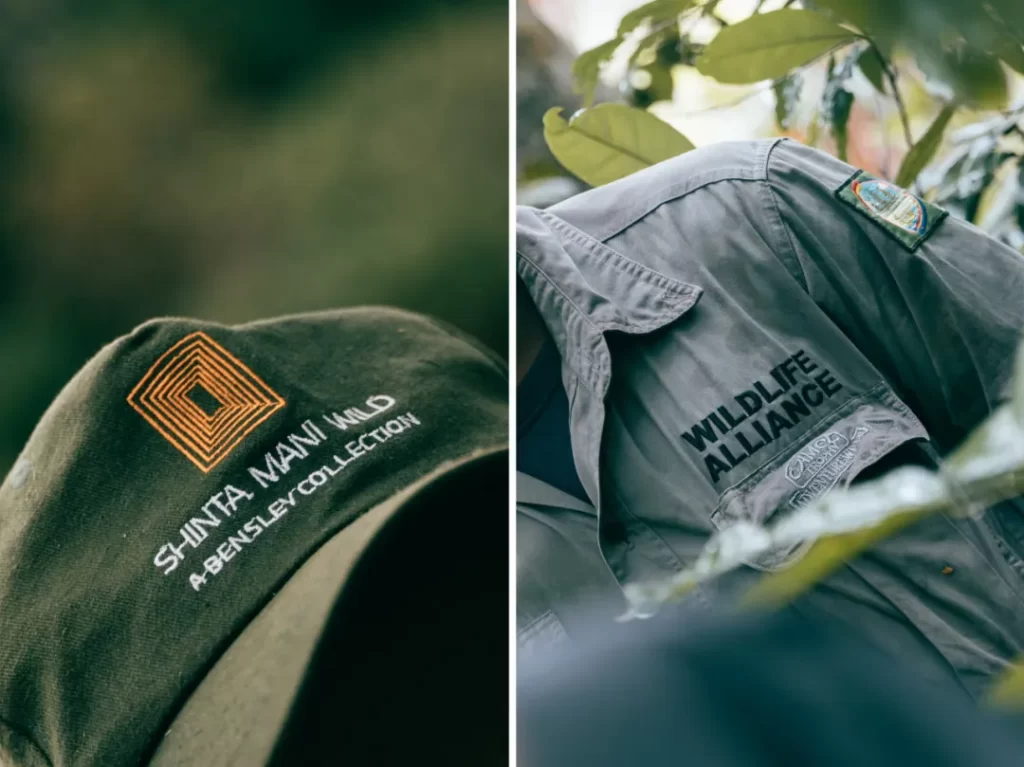
At dawn, shrouded in mist, I climbed onto the back of my butler’s motorbike and sped through forest paths. We reached a resting point just outside the hotel grounds. Following the sound of approaching engines, I turned to see five more bikes kicking up red dust in the distance. Two of the riders wore uniforms and were heavily armed, rifles slung across their backs—a standard configuration for these patrols, which require the presence of local militia and police. Together, they accompany conservation workers into the rainforest.
What I had assumed would be a light-hearted hotel activity was, in fact, a sobering operation in environmental defense.
Behind the romance of the rainforest lie poaching, slaughter, arson, and armed conflict. Reality is tangled, and the allure of the tropics has never been pure.
Confronted by the wild, my earlier thrill gave way to unease and tension.
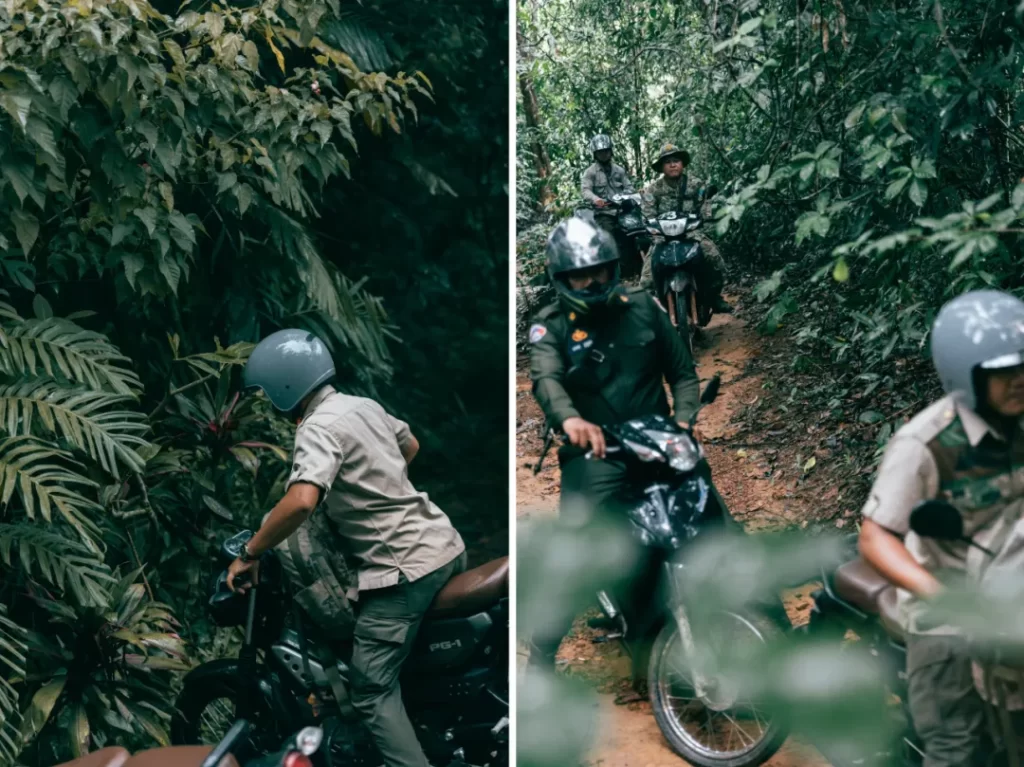
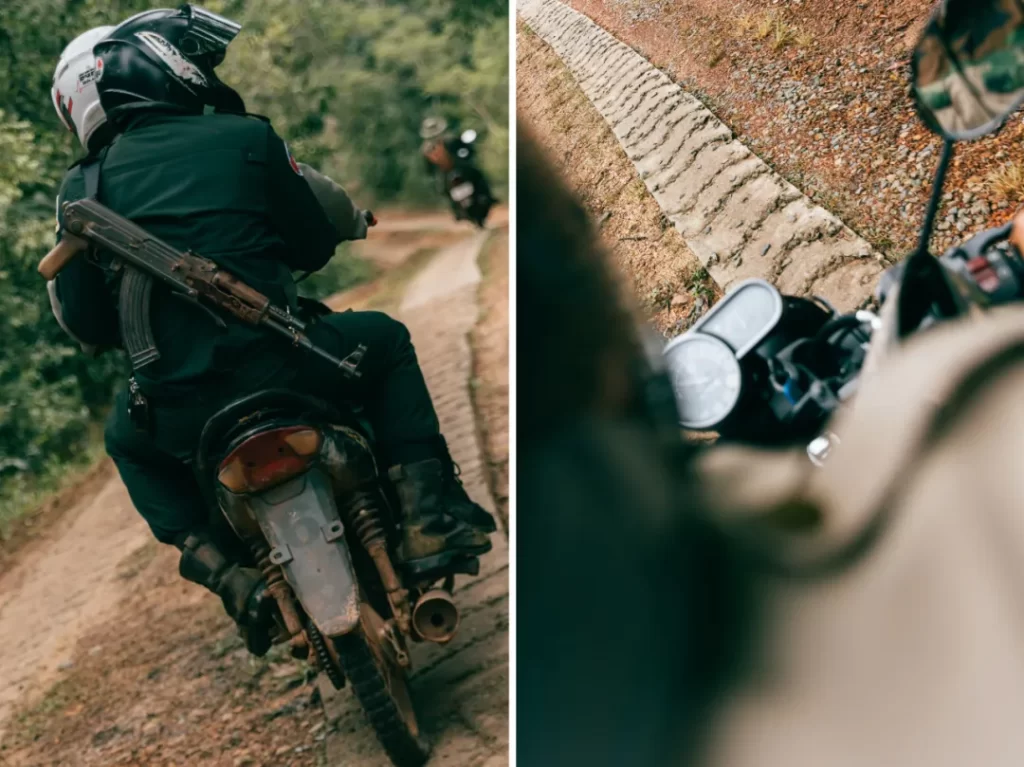
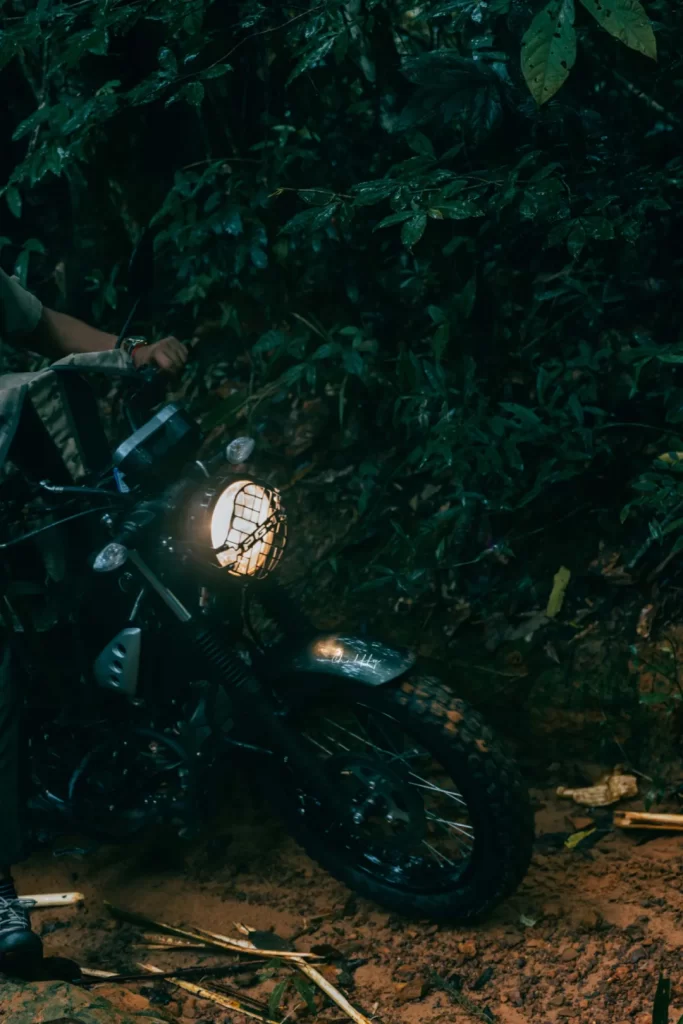
Our leader was a Russian man. After a brief exchange of greetings, he pulled on a raincoat, started his motorbike, and gestured for us to follow. Seven motorbikes roared into the rainforest, vibrating and rumbling through the trees.
A morning rain had just passed. The manicured hotel paths had long disappeared, replaced by raw, muddy tracks. The trail was treacherous. Our small bikes struggled up the steep hills, and branches on both sides whipped against our arms. I once rode a jeep across the savannahs of South Africa in search of lions, but that now felt tame compared to this mud-slick climb. The ride jolted violently, and the view ahead was a haze of mist. I understood then that this haze was no poetic veil—it was the very texture of danger, of uncertainty, faced daily by those who lead these patrols.
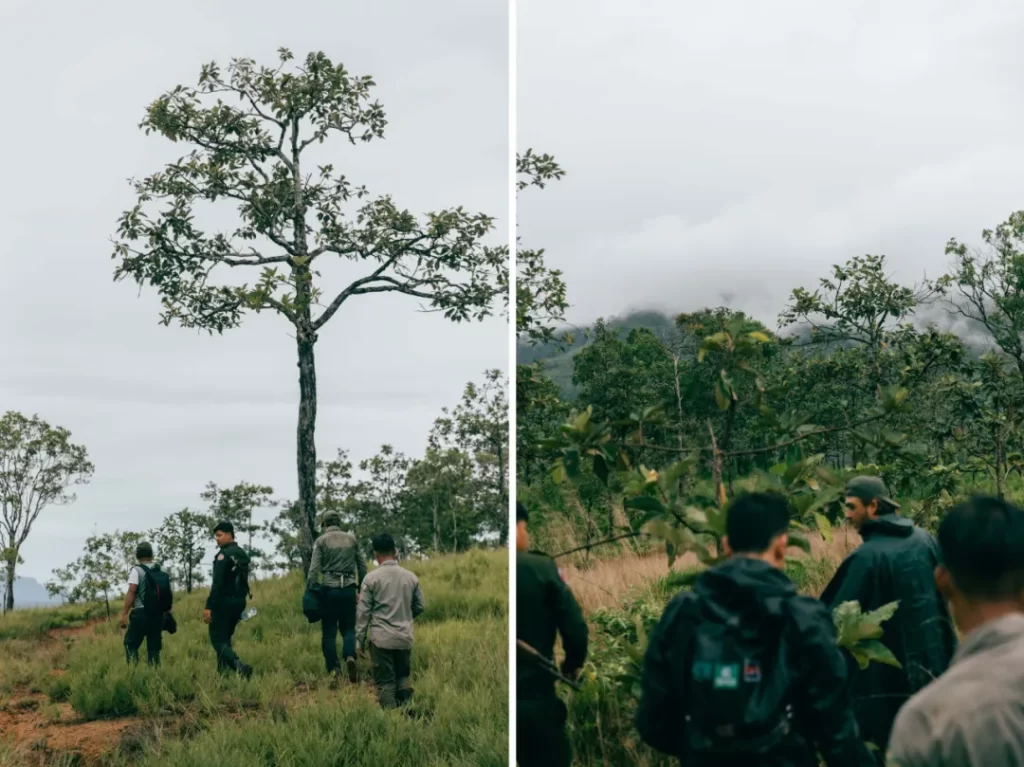
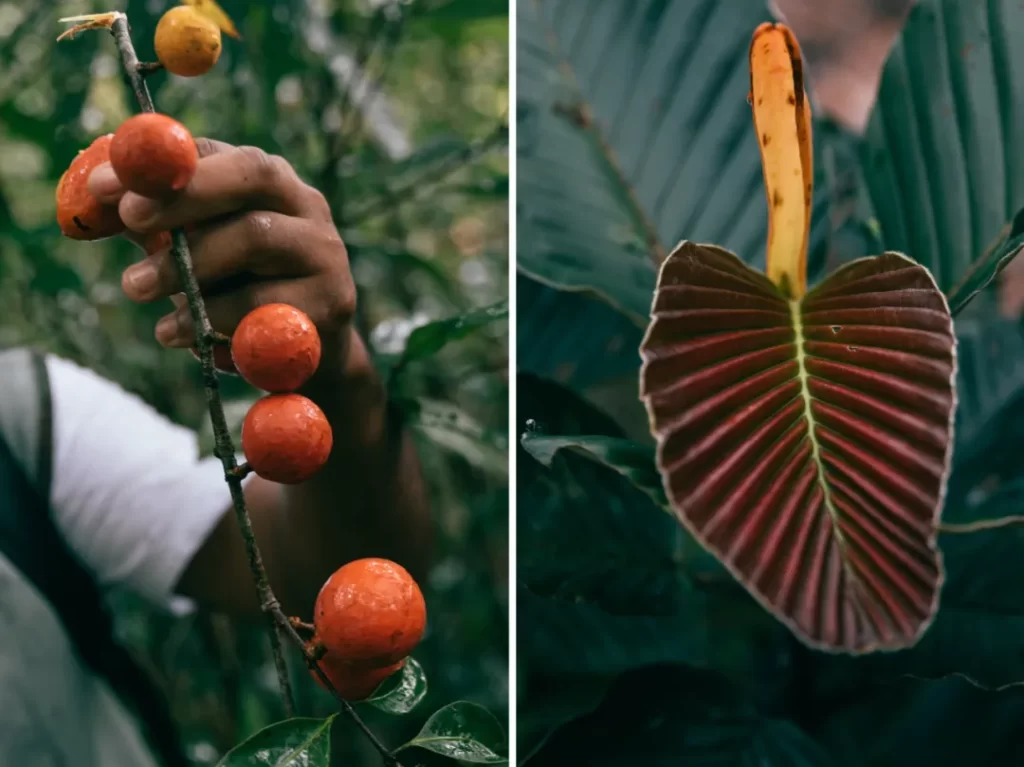
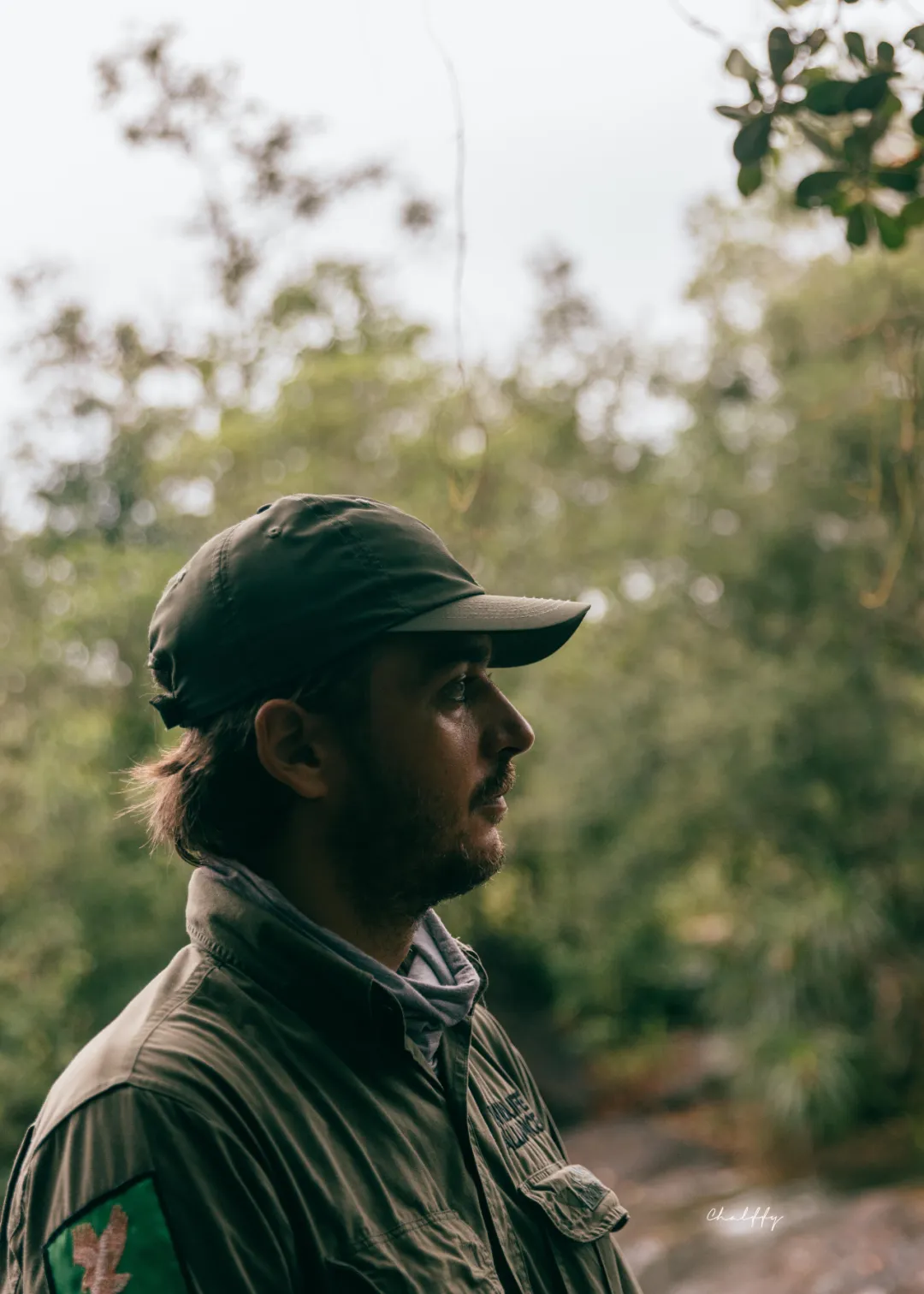
We reached a plateau high in the hills and began the next leg on foot. Ahead of me walked two conservation workers and an armed officer; behind me followed two hotel staff. The rest of the group remained by the motorbikes. Compared to the ride, walking felt almost gentle. Unfamiliar plants brushed past our legs, and strange animal cries echoed around us. The leader, though quiet, moved with practiced vigilance. Their daily tasks included tracing poachers, dismantling animal traps, and even searching for signs of explosive devices. The group communicated in hushed tones, scanning the forest for footprints—but mostly, there was silence.
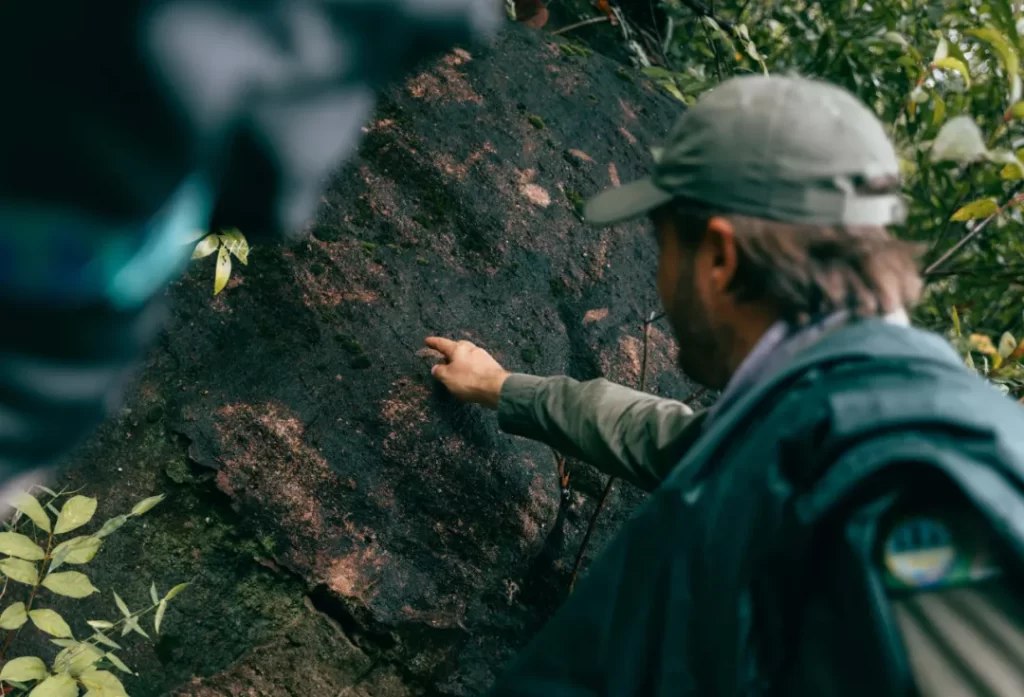
Over the course of a three-hour patrol, we encountered only two traces of poachers and their dogs. Otherwise, we found nothing—and in this work, nothing is the best outcome.
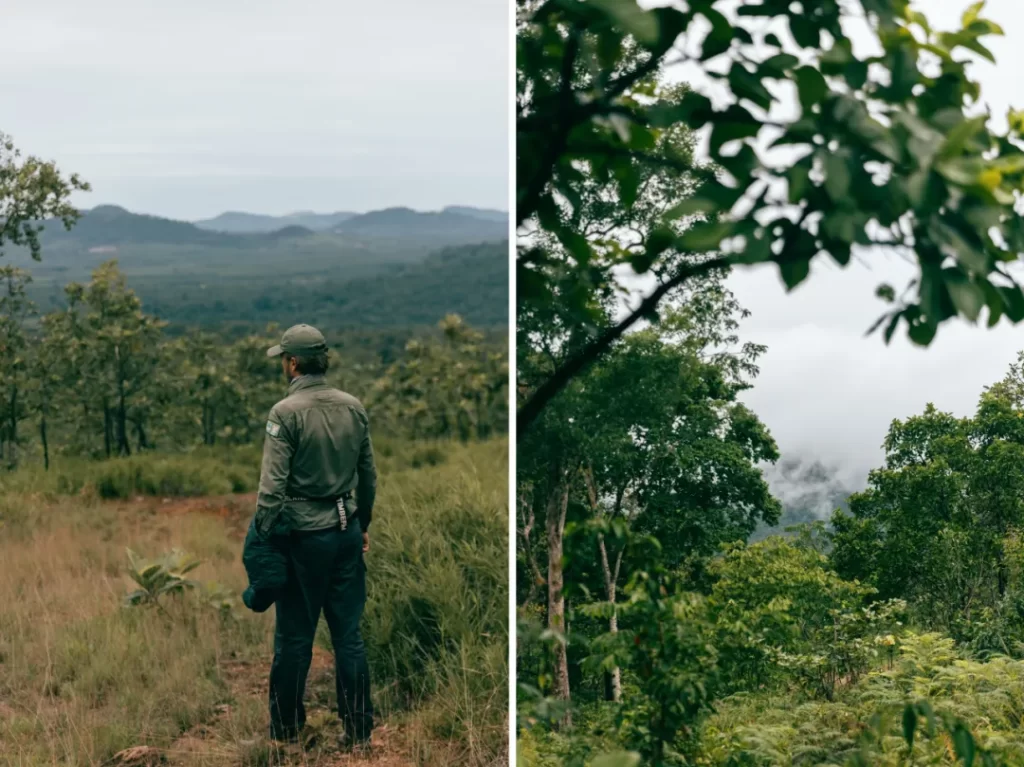
On our way back, the team led me to an open clearing with the best view of the Cardamom Mountains. The mist draped over the slopes like a veil. There was something tender in that wildness, silent yet immense—like the protection leader who stood quietly, his back to us, watching the mountains.
The forest held its breath. Life here moved according to its own rhythms. In that vast, quiet silence, I sensed a symphony beyond measure.
In the battle against environmental degradation, the hotel’s very presence is a fragile but unwavering form of resistance. Its aim is not to make the land “prettier,” but to ensure it is not devoured entirely. Environmental protection is not just the slogan of idealists; it is a tug-of-war played out in the dark, in the mud, in the narrow gaps between greed and regulation. And Shinta Mani Wild stands at the frontlines of that war, wielding the quietest of weapons: space, stillness, respect, perseverance.
Memory is the most honest relationship we can have with a place. Perhaps, for this rainforest, what Shinta Mani Wild is building is a memory of the future—a form of remembrance that does not wait to be written or carved into stone.
It lives in the ash of the campfire, in the damp breath of the forest.